
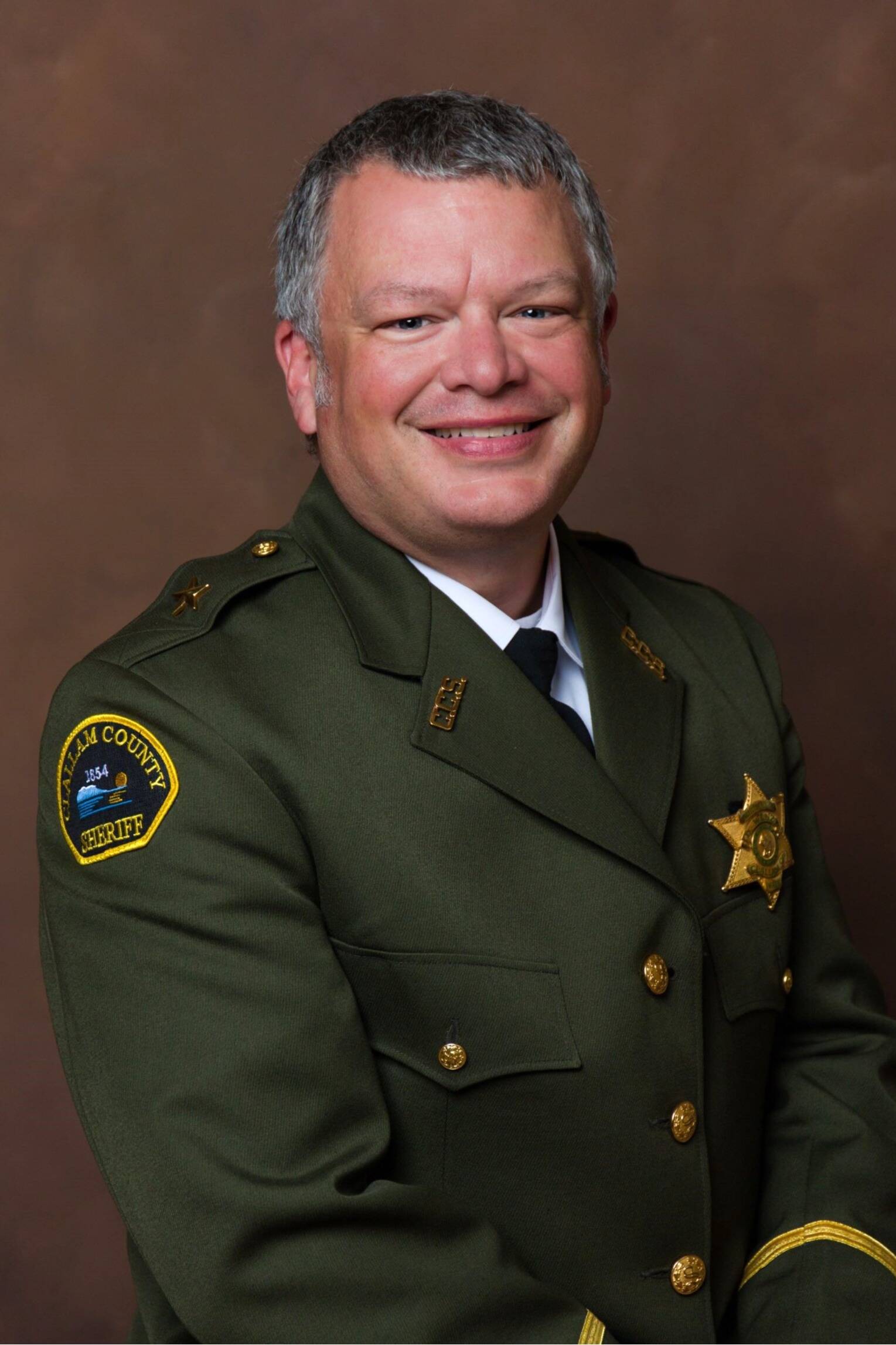
I WISH TO express my concern and to urge opposition to state Senate Bill 5974. Commonly referred to as the Police Chiefs and Sheriff’s Qualifications Bill, SB 5974 in its current form undermines the ability of citizens to choose who serves as their elected sheriff.
Working closely with the Washington State Sheriff’s Association (WSSA) and the Washington State Association of Sheriffs and Police Chiefs (WASPC), it is clear that we do not oppose reasonable professional standards for sheriffs or chiefs.
However, such standards must be carefully crafted and free from political ideology or advantage. As drafted, SB 5974 raises serious constitutional and practical concerns, including:
• Violating Article I, Section 19 of the state Constitution by requiring candidates for sheriff to submit to a Washington State Patrol background investigation and allowing the Criminal Justice Training Commission (CJTC) to deem a candidate “unsuitable for election,” thereby barring them from running.
• Violating Article I, Section 33 of the state Constitution by vacating the office of sheriff if CJTC certification is not maintained and/or revoked by a state-appointed civilian board.
• Eliminating enforcement discretion by mandating that all state laws “shall” be enforced, removing the ability of sheriffs and deputies to exercise judgment
• Severely limiting the use of volunteers and specially commissioned officers, which many departments rely upon to reduce costs and increase capacity.
Leadership in law enforcement is critical, and experience and expertise matter. I fully support requiring sheriffs, chiefs and marshals to meet certification and decertification standards consistent with other peace officers. Nonetheless, the language of this bill risks restricting volunteer programs and imposing unintended consequences on local agencies.
WSSA and WASPC have worked collaboratively to develop counterproposals and amendments informed by the collective input of sheriffs and police chiefs statewide. That these professional voices have been largely disregarded by legislators is deeply troubling.
There should be no doubt that SB 5974 is politically motivated and would significantly alter the office of sheriff. Supporters claim it is necessary to “rein in rogue sheriffs” or “bring accountability” to law enforcement leadership, relying on inflammatory rhetoric rather than facts. The vast majority of sheriffs are not “rogue” and are committed to the rule of law and public service.
This bill also creates serious ambiguity regarding governance — raising the question of whether sheriffs and police chiefs are accountable to the counties and cities they serve or to the state itself. Such uncertainty erodes local authority and undermines the constitutional balance of power.
Centralized control is not the solution. Recent statewide policy shifts have too often ignored local voices, including victims and law enforcement professionals, resulting in unintended consequences and rising crime. While sheriffs are at least as accountable as any other elected official, no comparable legislation has been proposed to impose similar controls on legislators or other elected offices. This bill places legislative will above voter choice.
There is a saying in law enforcement that “every policy has a name behind it.” SB 5974 reflects this reality. Many of its provisions appear aimed at silencing or removing elected sheriffs whose views are unpopular with certain political interests. The truth is, there are sheriffs who I disagree with and who I believe are not fit to hold the office. However, disagreement with speech or opinions should never justify overturning the will of the voters.
The separation of powers is a foundational principle of both the United States and state Constitutions. Article I, Section 1 of the state Constitution affirms that all political power is inherent in the people. SB 5974 represents a direct attempt by the legislative branch to control who voters may elect, encroaching upon the executive role of the sheriff and stripping citizens of their constitutional authority. Simply put, the office of sheriff belongs to the people of each county — not the Legislature.
Sheriffs are uniquely positioned as both law enforcement leaders and elected representatives. They are already directly accountable through elections, recall and public scrutiny. Recent history demonstrates that voters are fully capable of holding sheriffs accountable:
• Jerry Hatcher (Benton County) was removed from office through recall.
• Adam Fortney (Snohomish County) was not re-elected following public controversy.
• John Snaza (Thurston County) was defeated by a challenger after multiple terms.
These examples underscore the effectiveness of democratic accountability and not the will of a state-appointed commission on “oversight.”
Professional standards are already being met. Every elected sheriff in Washington has either entered office as a certified peace officer or obtained certification immediately thereafter. No sheriff in recent memory has been decertified and remained in office. This reflects the strong professional culture within the office of sheriff.
The office of sheriff is already held to high standards of professionalism and accountability. Legislative efforts to impose additional controls must not override voter authority or undermine democratic principles. Accountability must remain consistent, transparent and rooted in the will of the people — not selectively applied.
I urge Clallam County to join me in voicing concerns to your 24th District legislators and oppose SB 5974.
________
Brian King is the Clallam County sheriff.
