
Nature is both more loved and more ignored than ever before.
Less than 1 percent of the state’s general fund goes to support natural resource agencies, and many in our state go through their daily lives not realizing how much nature provides to us all, nor the challenges it faces.
We may be an exception here on the coast. In this region, we are more aware of what we have — with beautiful beaches, wind-swept forests and ocean vistas just minutes away, and the reminder of our ocean bounty present in every local farmers’ market and on many of our tables.
We have enjoyed abundant shellfish gathering opportunity — whether clams, crabs or oysters — attracting hundreds of thousands of visitors, and producing livelihoods and prosperity for people all around coastal Washington and the Olympic Peninsula.
Nevertheless, threats to what makes this place spectacular abound. They range from marine toxins to warming waters to invasive species to diseases that can affect clams, crab and oysters, to poachers stealing nature from the rest of us — all in the context of a Washington state population that is growing faster than almost anywhere else in the nation.
The state Department of Fish and Wildlife (WDFW) sees these as threats that need to be urgently addressed. The challenges are immense, the opportunities cannot be missed, and frankly WDFW is on the front line to conserve what we have and protect both commercial and recreational lifestyles and livelihoods in our part of the state specifically.
Yet, the department is currently under-resourced for the task before it. WDFW has not had its budget capacity restored since the economic downturn in 2009. Further, it doesn’t have the resources to fully achieve its mission to conserve fish and wildlife, which, in turn, sustains nature-based livelihoods.
WDFW is requesting $19 million as an ongoing appropriation to avoid making cuts to services that will have direct impact on fishing livelihoods, the tourism economy, the natural environment and enjoyment of recreational opportunities throughout the state.
For example, the department may be facing the potential need to curtail sanitary shellfish patrols, which ensure the safety of our food and the health of an industry that adds $270 million to the economy and creates local living-wage jobs. These businesses also provide local, sustainable seafood that our state’s residents enjoy.
Razor clamming, the number one recreational harvest activity for parts of the coast — an activity that generates as much as $40 million in tourist-related income in support of local economies each year — remains underfunded. This could potentially reduce the number of days that the public is able to go clamming, with impacts to livelihoods, local culture, and a distinctively Washington way of life that is dedicated to the outdoors.
Clam and oyster recreational shellfish enhancement is also at risk for areas around the Peninsula from a potential lack of investment, including potential loss of annual seeding of suitable beaches around the region with juvenile clams and oysters.
WDFW’s funding challenges span well beyond shellfish, but these examples help make clear that a healthy and adequately funded WDFW is a good investment. For every dollar in state general funds it receives, WDFW’s work to support an outdoor economy delivers a 250 percent return on investment back to the general fund. Beyond this, these investments perpetuate millions of dollars in overall economic opportunity.
Given all the challenges we face, the work of supporting strong communities and habitat conservation is becoming even more critical. Fish and Wildlife’s role is to preserve and protect the state’s wildlife, fish and shellfish, the ocean and coastal habitats that are their homes, and the places where we live and thrive as well.
In this short, 60-day legislative session it could be easy to take the natural bounty of the shellfish resources that define the Peninsula’s and Washington’s culture, economy, and outdoors identity for granted.
We believe that’s a mistake. Whether you live here, make a livelihood alongside nature, or are visiting from any part of Washington, the fish and wildlife here contributes to your quality of life, as does WDFW’s work to sustain it.
________
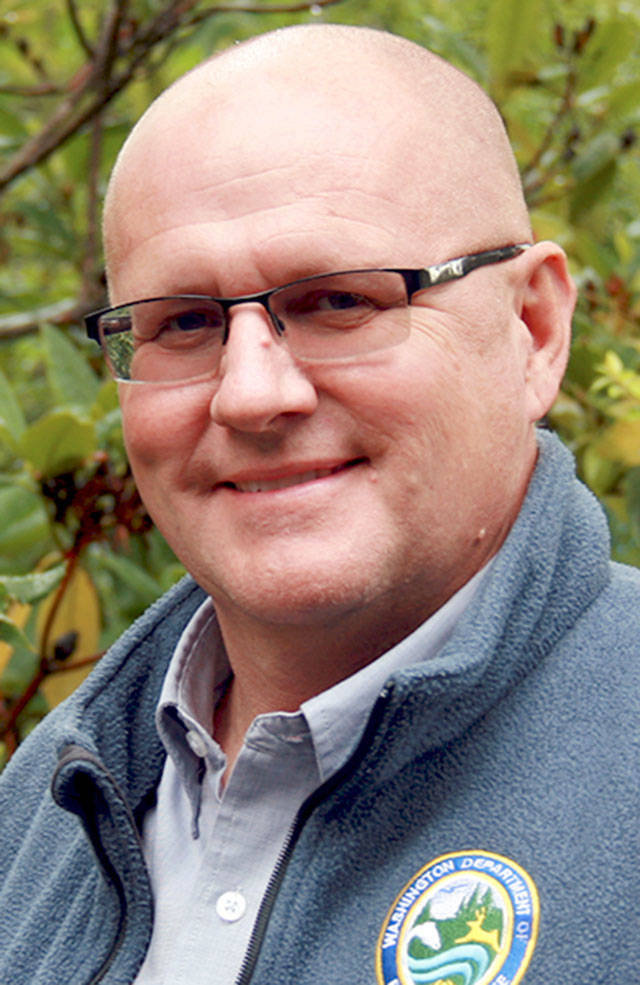
Larry Phillips is the Washington Department of Fish and Wildlife coastal region director. He oversees the counties of Clallam, Jefferson, Grays Harbor, Kitsap, Mason, Pacific, Pierce and Thurston.
