
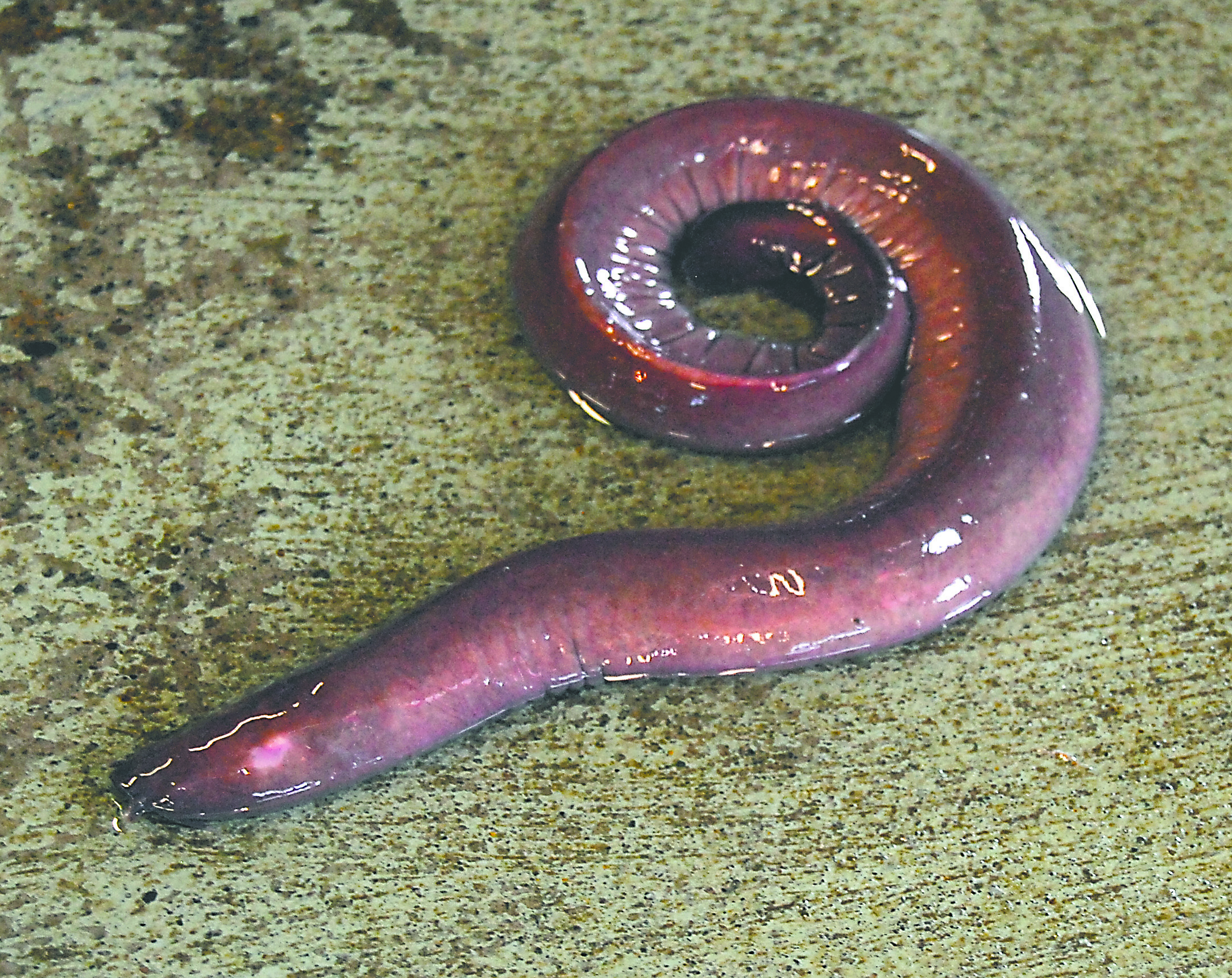
A new, relatively untapped fishery is growing on the North Olympic Peninsula, with at least two fish distributors planning to expand hagfish operations to supply Asian markets.
Hagfish, also known as “slime eels,” are not eaten in the U.S. but are a popular food in South Korea, Brandt Koo, general manager of Five Ocean Seafoods Inc., told Port of Port Angeles commissioners last week.
Koo chose to appear before commissioners during a public comment period to provide them with information about the industry — a new topic for the board, according to Commissioner John Calhoun.
Five Ocean Seafoods Inc. has applied to the port for the lease of a warehouse at the port’s industrial park in Port Angeles.
There, the live fish would be kept in seawater tanks until they are shipped by air to South Korea.
The fish, which are caught in traps similar to crab pots, are being kept in open tanks near Neah Bay, where new employees are being trained in hagfish care and local anglers are learning the tricks of hagfish fishing, Koo said.
Neighbors have complained about the noise of the fledgling fishery operation in Neah Bay, but there haven’t been any complaints about a fishy smell, Koo said.
“The slime just smells like seawater,” he said.
At the warehouse in Port Angeles, any dead fish and slime would be cleared from the tanks and disposed of in the county landfill, he said.
The port is looking for a similar upland hagfish operation to determine whether the smell of the fish is manageable in a business park setting and whether it would be a good neighbor for other businesses, said Jeff Robb, Port of Port Angeles executive director.
Olympic Coast Seafoods has been shipping live hagfish from Port Angeles to Korea for two years.
It also is planning to expand, said owner Rodney Kim, who plans to hire as many as 50 “on call” workers this summer for the operation, which now employs 19.
One boat is in transit from Astoria, Ore., and needs some modifications for hagfish before entering the fledgling fleet, and another will be moved to Washington state from Oregon later, Kim said.
The Port Angeles-based seafood distributor, which has handled salmon, halibut and other better-known fish since 2000, entered the hagfish fishery in 2011.
For the past two years, the fishing vessel Sunnfjord and a smaller vessel contracted to help supply the Asian delicacy have been plying the waters off the state’s Pacific coast for hagfish, which are then taken to Port Angeles, kept live in tanks in a warehouse at the end of a private dock north of The Landing mall on Railroad Avenue and then trucked to Seattle-Tacoma International Airport to be shipped to Korea.
Since the March 2011 tsunami and earthquake that caused a leak in the Fukushima Daiichi nuclear power plant on the eastern coast of Japan, Korean and Japanese consumers have been reluctant to purchase hagfish caught in that region, Kim said.
At the Olympic Coast Seafoods warehouse Wednesday, more than a dozen large tanks of salt water awaited the next boatload of hagfish.
One tank held hundreds of the fish, resting several layers deep at the bottom of a net.
There was little smell to indicate that hundreds of sea creatures were living in tanks just inside the doors at the end of the dock.
Hagfish can kill themselves in their own slime, so the tanks are constantly cleaned and the area kept quiet and dark to make sure the fish are calm and comfortable during their stay, said Andy Inscore, operations manager at the Olympic Coast Seafoods hagfish warehouse.
Several fish distributors have tried to enter the hagfish market in Port Angeles but haven’t lasted long after discovering that the fish can be difficult to get to the Asian markets in good condition, Kim said.
Over two years, Olympic Coast Seafoods has learned by trial and error how to keep the hagfish alive and healthy for the 5,000-mile trip to Korea, Inscore said.
“We’re always learning new things. There is always room for new ideas,” he said.
Employees offload the hagfish, clean off the slime, then put them in large holding tanks, where the fish live for about two weeks until they are transferred to smaller tanks for export.
The transfer has to be as nonstressful as possible for the fish, Inscore said.
“A single hagfish can fill a bucket with slime,” he said, noting that while the slime is meant to dissuade predators from eating them, it also can block the hagfish’s own gills.
Inscore said the need for employees is dependent on the weather and fishing success, but the fishery is year-round.
The fishing boats can offload 20,000 to 40,000 pounds of live hagfish per trip, and each employee cleans and moves as much as 1,500 pounds of fish during a 10-hour shift, he said.
Once the three boats are working together, the operation could see up to three loads of hagfish offloaded each week and ship fish twice a week, Inscore said.
________
Reporter Arwyn Rice can be reached at 360-452-2345, ext. 5070, or at arwyn.rice@peninsuladailynews.com.
