
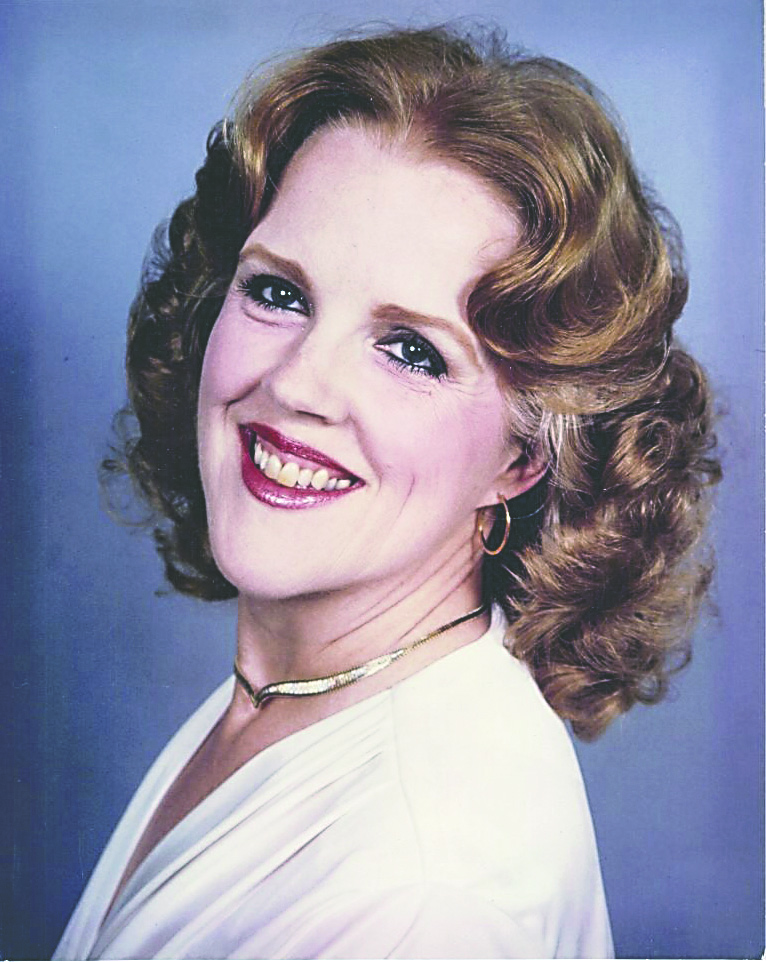
PORT TOWNSEND — The time has come for opera diva Nancy Beier’s swan song, and she has every intention of going out in grand style.
Beier, a singer, voice teacher and thespian well-known in Port Angeles, will have an illustrious group around her: the Port Townsend Community Orchestra, under the baton of Dewey Ehling.
The orchestra will present “A Night at the Opera” this Saturday starring three sopranos: Beier, Susan Roe and Sharon Annette Lancaster of Seattle. Admission, as ever with the Port Townsend orchestra, is free, and the venue is the Chimacum High School auditorium at 91 West Valley Road.
Beier made her European debut in “Tosca,” Puccini’s masterwork, at the opera house in Flensburg, Germany, in 1979. She has since had a long career in Europe and in the United States, and has found another love: teaching.
She vows to teach as long as she can breathe — but opera singing is another matter. Beier readily acknowledges that she is about to turn 75, and that is an age beyond singing an opera.
Yet “I’ve got two arias in me,” Beier declared. These are arias she adores, and so she will sing them Saturday: “Vissi d’arte” from “Tosca” and, with Lancaster and Roe beside her, the trio from “Der Rosenkavalier.”
Arias from “Carmen,” “Romeo & Juliet” and “Lakmé,” ballet music from “Faust” and a mazurka from the Delibes ballet “Coppelia” are also on the program, along with the fourth movement of Borodin’s Symphony No. 2 in B minor. The Port Townsend Community Orchestra has been playing this symphony, one movement at a time, since the beginning of its season; this is the last part. Next October, the orchestra will play the entire Borodin work.
As for Saturday’s “Night at the Opera,” the performance will start at 7:30 p.m., after a short talk by Ehling at 6:45 p.m.
“It’s going to be wonderfully fun,” Beier said, adding that the concert is a chance for Peninsula audiences to hear live music they would not otherwise have anywhere near home. And, Beier noted, patrons will get to hear Richard Strauss’ “Der Rosenkavalier” trio without having to sit through nearly four hours of opera waiting for it.
The arias in “A Night at the Opera” will be sung in French, German and Italian, Beier said; it will of course be up to the singers and the orchestra to convey all the drama within.
Ehling, for his part, says opera is so stimulating because it is so complex. It has all the elements of theater — costumes, makeup, dance and acting — all on top of the art of singing.
Beier has similar feelings. Where else but in opera, she asks, can one find betrayal, lust and murder — and call it culture?
