
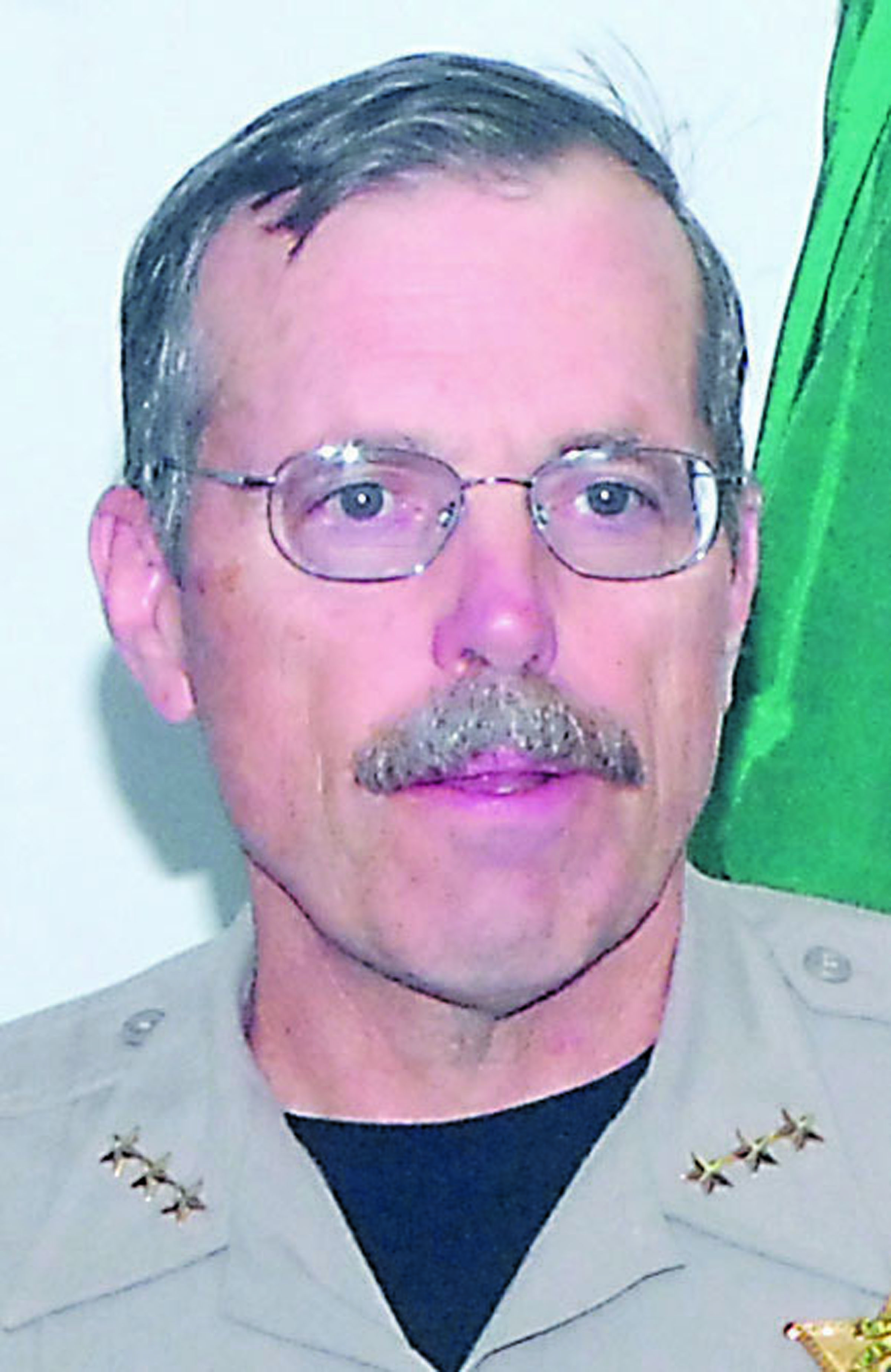
PORT ANGELES — The Clallam County Sheriff’s Office is moving a sergeant to the Olympic Peninsula Narcotics Enforcement Team to help fight the heroin epidemic on the North Olympic Peninsula.
Clallam County commissioners this week approved a patrol sergeant’s position to allow Sheriff Bill Benedict to reassign an existing sergeant to the multi-agency drug task force known as OPNET.
“I wanted to re-exert the leadership supervision in OPNET,” Benedict told commissioners in a Monday work session.
“It also comes at a time when it seems like every time I turn around, people are expressing their concern with the heroin and opiate problem that we have on the Peninsula.”
Commissioners gave Benedict the green light to restore a sergeant’s position that had been left vacant since the recession.
“It’s a long time coming,” board Chairman Mike Chapman said.
“If you need overtime money, if you’re going to make a sweep or you’re going to attack this more, just let us know what you need.”
OPNET targets mid- and upper-level drug dealers in Clallam and Jefferson counties. It consists of local, state and federal law enforcement officers.
Recent OPNET supervisors have come from the Port Angeles Police Department. The city can no longer support an OPNET sergeant because of retirements and transfers, Benedict said.
Interim Port Angeles Police Chief Brian Smith was not immediately available for comment Wednesday.
“We’re going on our fourth supervisor in a year with that unit,” Clallam County Chief Criminal Deputy Brian King said of OPNET.
“We’re looking to add stability out there to be able to be mission-driven and meet our mission requirements.”
Undersheriff Ron Cameron said the Port Angeles Police Department will provide a corporal for the drug task force.
“They’ll still have that participation level that they’ve always had,” Cameron said.
Benedict said he could support the new sergeant’s position within his current budget but wanted to apprise commissioners of the long-term need.
He said his command staff is “exceptionally lean” and that he underspends his annual budget by $300,000 to $500,000.
Clallam County has one of the highest opioid-related overdose death rates in the state, Benedict said.
Clallam County’s overdose death rate was 29.0 per 100,000 people in 2013, while the state rate was 14.8 per 100,000.
Jefferson County’s overdose death rate is lower than Clallam County’s but higher than the state average, Jean Baldwin, the former director of Jefferson County Public Health, said in February just before she retired.
“I’m the first to tell you you’re not going to arrest your way out of this problem,” Benedict said.
“But on the other hand, we’re having 1 or 2 pounds of opiates or form of heroin coming on the Peninsula a week that’s getting distributed, and a lot of that heroin goes to criminals that are committing property crimes.”
OPNET works with undercover informants to purchase drugs from suspected dealers.
Most dealers who encounter OPNET are investigated for selling heroin, opioid-based prescription pills or methamphetamine.
“We’ve been extremely successful picking the low-hanging fruit,” King said.
“We can go out and we can buy dope every single day — and a lot of it — but we’re not making the impact that we need.”
OPNET needs to shift its focus to be more effective in catching mid- and upper-level dealers, King told commissioners.
“You might only see one or two arrests, let’s say in a quarter, but I want those arrests to be impacting,” King said.
OPNET is sponsored by the Clallam County Sheriff’s Office and is overseen by a volunteer policy board.
“And at this point, I want to put a bigger footprint of the Sheriff’s Office on this and achieve some success, some better success, than we’ve had,” Benedict said.
Commissioner Mark Ozias requested a future briefing on OPNET’s plans to address the heroin epidemic.
“I think that the community probably would appreciate a better understanding since the opioid epidemic is such a concern to the public,” Ozias said.
Commissioner Bill Peach said he receives a “lot of calls” about the heroin problem from his West End constituents.
“I agree that it’s an epidemic and it’s not changing,” Peach told Benedict.
“If we do what we did yesterday and expect change, I just don’t see it. So I really wholeheartedly support what you’re doing.”
Said Chapman: “It is a big issue, an important issue for our community, and there is a lot of concern.”
________
Reporter Rob Ollikainen can be reached at 360-452-2345, ext. 56450, or at rollikainen@peninsuladailynews.com.
