
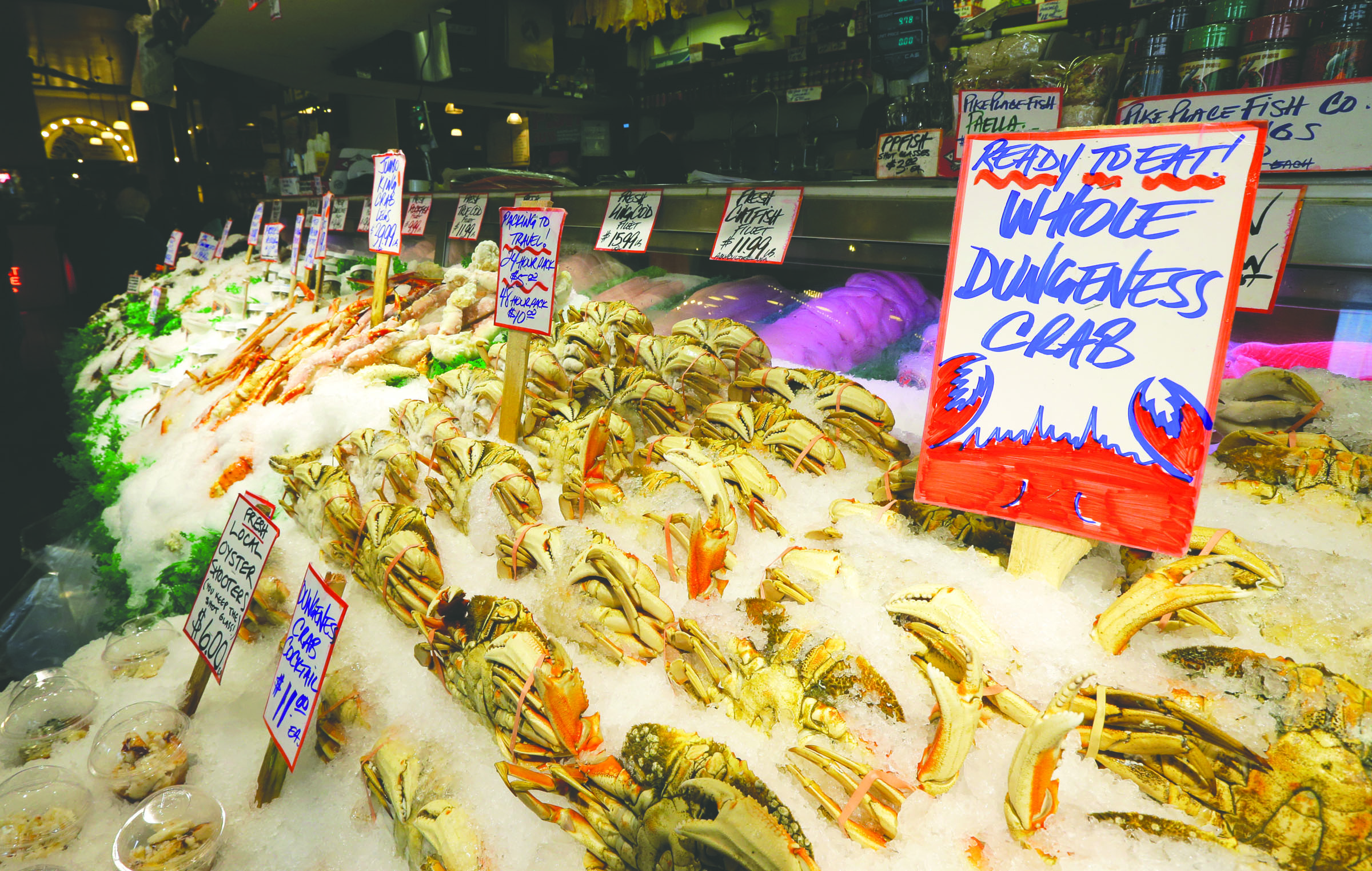
The Associated Press
Officials in Washington and Oregon are testing crab samples and will decide soon whether to open the coastal season by Dec. 1 as planned.
California delayed Sunday’s start of its commercial crab season after finding dangerous levels of a marine biotoxin in crabs.
Authorities in Oregon have shut down recreational crab harvesting on the southern Oregon coast after finding high toxin levels. It also closed commercial crabbing in bays in that area.
A massive bloom of microscopic algae — which produced a natural toxin called domoic acid that is harmful to wildlife and fish — in the Pacific Ocean is threatening the crab industry during a time when many fishing outfits make most of their money.
It’s also roiling coastal tourism and marine ecosystems.
A closure along the entire West Coast would be a blow to the industry, which harvested nearly $170 million worth of Dungeness crab in 2014.
“Everybody is counting on crab to make it, so this is pretty disappointing,” said Larry Collins, president of the San Francisco Crab Boat Owners Association.
“Whenever they test clean, we’ll go get them. I’m very hopeful that it’s sooner than later.”
Warming temperatures
Experts said the warm conditions that set up the toxic algae bloom — while not attributed to climate change — does offer a picture of what’s to come as ocean temperatures are projected to warm.
Already, warmer ocean temperatures off New England have shaken up fisheries there, contributing to the collapse of the region’s cod fishery and the shift northward in the lobster population, studies have found.
“I don’t have a crystal ball, but I think we’re being given a warning here,” said Vera Trainer, who manages the marine biotoxin program at the Northwest Fisheries Science Center in Seattle.
“We’re being shown what the future is going to look like. This is more of what we can expect.”
Razor clams
Razor clams, for now, have been taken off menus in Washington and Oregon.
Shellfish managers have closed recreational digs after finding dangerous levels of domoic acid in the bivalves.
Those closures have cost an estimated $22 million in tourism-related spending, said Dan Ayres, coastal shellfish manager for the Washington Department of Fish and Wildlife.
Crabbing was also closed along parts of the Washington coast over the summer, though crabbing continued in Puget Sound.
Matt Hunter, shellfish project leader with the Oregon Department of Fish and Wildlife, said crabbing is huge fishery in the state and any closure will have “trickle-down effect on the economy, not only on the coastal communities.”
The recreational closure in southern Oregon is from Heceta Head to the California border. It includes crab harvested in the bays and estuaries, and off docks, piers and jetties.
Oregon Department of Agriculture’s Judy Dowell said Sunday that no decision has been made yet on whether to open Oregon’s coastal crab season by Dec. 1 as planned.
Agriculture said recreational crab harvesting and commercial bay crabbing is still open along the northern Oregon Coast though officials recommend people remove and discard the crab guts before eating.
Crab in stores is safe
Crab can still be found in many restaurants and stores, and health officials said crabs sold in stores are safe to eat.
Some crab on the market now may have been harvested months ago and frozen for later; commercial crab fishing is currently open in some parts of Alaska, Oregon and Puget Sound.
In California, crab fisherman are bracing for a tough season.
“Needless to say, this is devastating,” said Steve Fitz, who owns Mr. Morgan Fisheries in Half Moon Bay. Crab represents the bulk of annual income for many in the fishing community, he said.
Still, he’s optimistic that toxin levels will go down and the season will open soon.
Short-term event
Scientists said the warm waters that fostered the massive toxic algae bloom off the West Coast this year is more likely a short-term climate event than one attributed to climate change.
“Whether this warming itself is a direct function of climate change or not, we can’t say,” said Mark Wells, an oceanography professor in the School of Marine Sciences at the University of Maine.
However, the climate change models project warming along the coastlines over the next several decades, so “this type of event probably is going to become much more frequent in the future.”
On the Northeast coast, scientists have documented shifts in species as the result of warmer waters and that’s meant some changes in what is caught and where.
“We see lots of shifting going on,” said Richard Merrick, NOAA Fisheries chief science adviser.
Significant fish stocks have been shifting northward and deeper into cooler waters along the Northwest Atlantic Ocean, he noted.
The New England cod fishery collapsed but haddock fishing has gone up as fishermen switched, he said.
Another study found that warming seas will likely send West Coast fish species northward by about 20 miles a decade, and some species probably will disappear from southern ranges off California and Oregon.
