
NOTE: “Today” and “tonight” refer to Friday, Aug. 28.
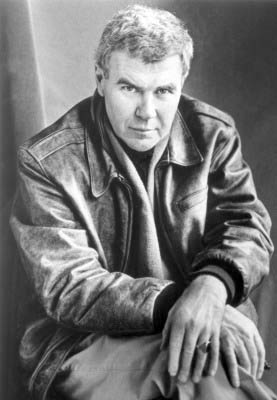
Thanks to “Birdman” and Jim Guthrie, Raymond Carver’s famed stories are taking wing this weekend.
Starting tonight, lovers of cinema and literature have a rare chance to hear the short works in new settings — at an intimate venue in the town where Carver spent his final decade.
First comes a screening of “Birdman,” the movie for which Alejandro Inarritu won the best picture, best screenplay and best director Academy Awards earlier this year.
The film will light the big screen at the Port Angeles Community Playhouse, 1235 E. Lauridsen Blvd., at 7:30 tonight; admission is by donation.
Inarritu used Carver’s poem “Late Fragment” to open “Birdman;” then he chose the story “What We Talk about When We Talk about Love” as a framing device.
It was the poet Tess Gallagher, Carver’s widow who lives in Port Angeles, who gave Inarritu permission to integrate those pieces. When he accepted the Oscar for the movie of the year, he thanked her first.
Gallagher plans to attend a couple of the dramatic readings to follow the “Birdman” screening. They’re to be staged by her friend Guthrie, both Saturday and Sunday at the community playhouse.
These readings are performances of five Carver originals.
There’s “Pie,” formerly known as “A Serious Talk;” “Why Don’t You Dance?,” “So Much Water So Close to Home,” and “One More Thing.” Completing the quintet is “Beginners” — Carver’s title for “What We Talk about When We Talk about Love.”
For this event, Guthrie has adapted the narratives into dialogues among Carver’s working-class men and women.
He’s taken out the “he said” and “she said” bits, to give the characters their own voices.
Guthrie also has recruited a diverse team of actors: theater veterans Kathleen Balducci, Mary-Alice Boulter and Karen Hogan are here, along with Fred Robinson, John Marrs — a local writer who knew Carver — and Janet Lucas, Kristin Ulsund and Jeff Tocher. Linda Cameron and her 16-year-old daughter Kennedy Cameron round out the cast.
Marrs spent an evening with Carver in 1986, while their wives — Marie Marrs and Gallagher — went to a class reunion. The women went through elementary, junior high and high school together in Port Angeles:
Marrs remembers Carver, who had gotten sober after years of drinking, as a peaceful man. He invited the Marrses fishing on his boat, but his affliction with cancer prevented that from happening.
These days, Marrs is full of admiration for Carver’s legacy.
The guy knew how to portray people in conflict; “his writing is real natural and terse,” Marrs said.
“He doesn’t fool around.”
Together, Guthrie and his actors will bring to life Carver’s stories in their initial form — before editor Gordon Lish worked on them.
For Guthrie and fellow Carver fans, now is an ideal time to celebrate these stories. A new edition of the works, titled Beginners, will be published next month. Vintage Books, an imprint of Knopf Doubleday, will release the paperback Sept. 15; local bookstores are taking orders for it now.
“It means a lot,” said Gallagher, who is just back home in Port Angeles after traveling to Ireland, where she did some readings of her own.
The Beginners collection has been available through a British publisher for some years, she noted, but this is its first American release.
“I think they’re richer,” Guthrie said of the original stories.
“You get a better idea of the characters, I think.
“Some people would say that Lish made Ray’s reputation. Others would say this is the way Ray wanted the stories,” added Guthrie.
Besides being a theater director, he’s a journalist who seeks to air varying opinions on a topic.
Guthrie was an editor covering the arts at the Peninsula Daily News during Carver’s time in Port Angeles. Whenever there was a story to cover about the writer, he assigned someone else to do it.
“I was too shy to talk to him,” Guthrie said.
But when Carver died, at just 50, in 1988, Guthrie was the writer who composed his obituary for the PDN.
Carver is buried at Port Angeles’ Ocean View Cemetery, where his black marble headstone is engraved with “Late Fragment”:
And did you get what
you wanted from this life, even so?
I did.
And what did you want?
To call myself beloved, to feel myself
beloved on the earth.
Revisiting these five Carver stories, Guthrie is steeped in their stark beauty.
“The writing is wonderful,” he said. “It captures the people. We were talking about that: They’re certainly not upper class people. They’re everyday people dealing with everyday, ordinary problems.”
One line in the story “Beginners” epitomizes this.
“We’re rank beginners,” Carver writes, “when it comes to love.”
