
By Martha Bellisle | Associated Press
SEATTLE — Workers who had been exposed to the coronavirus at Washington state’s largest psychiatric hospital were herded into a small building to be tested. Inside, few wore masks. They were given test kits by people without gloves and told to swirl a swab inside their noses.
The method was designed only for people showing symptoms, but the staffers said none of them did. Many told The Associated Press that the flawed testing process this month likely produced inaccurate results and exposed them to the virus again.
“I absolutely feel it was a misuse of the testing materials,” said Dr. Lauren Smith, a forensic psychologist at the hospital. “In addition to that, the manner in which they did it put us all at risk.”
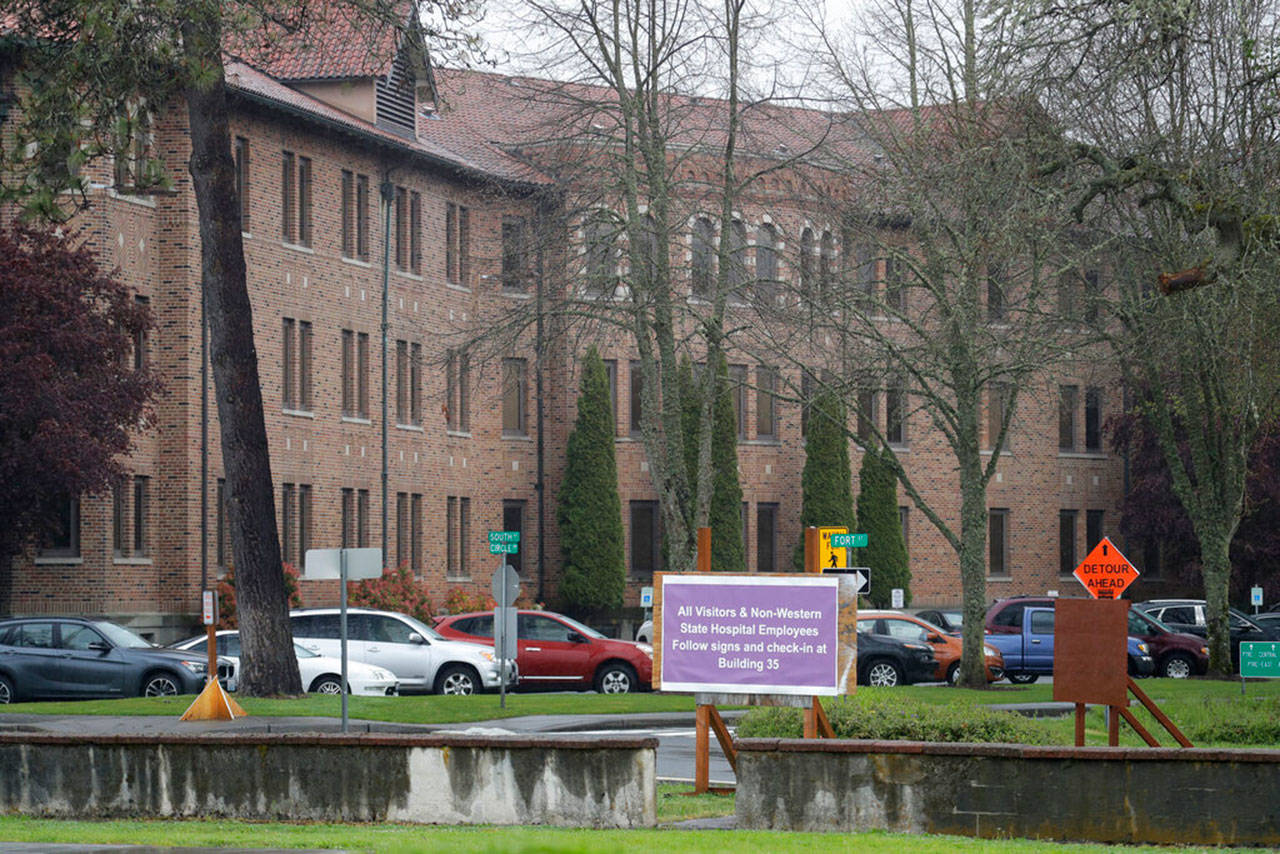
Employees say it’s another example of the state’s failure to protect staff and patients at Western State Hospital. The 850-bed facility south of Seattle has been the target of multiple state and federal investigations, including one launched when a man accused of torturing a woman to death escaped. There’s a pattern of violent attacks by patients and a failure to meet health and safety requirements.
The violations led the facility to lose its accreditation and federal funding, and staffers say mismanagement during the pandemic could cost lives. They fear a repeat of the Seattle-area nursing home that became the first U.S. cluster of COVID-19 deaths, with 43.
“I’m afraid this could become another tragedy similar to what happened at Life Care Center of Kirkland,” said Justin Lee, a spokesman for the hospital employee union.
A 400-member nurses union is calling for top administrators at the Department of Social and Health Services, which oversees the hospital, to be removed over their handling of the outbreak.
Department Secretary Cheryl Strange said she’s disappointed and has been working to address the union’s concerns.
“There is always much work to do in a hospital this large, and we will continue our efforts to restore the faith of the membership,” she said.
At least 29 workers at the psychiatric hospital have tested positive for the virus, while six patients have confirmed cases and one has died. Psychiatric hospitals in other states also have struggled with COVID-19, including a facility in Michigan where more than 100 patients and workers tested positive.
At the Washington hospital, most patients are severely mentally ill. They’re either a danger to themselves or others or have committed a crime and are being treated to restore their mental competency to face charges. Some are old and many have compromised immune systems because of their medications, putting them at greater risk if they catch the virus. But they aren’t inclined to wear masks or take other precautions.
“If you give patients Purell, they’ll drink it,” said Ben LaLiberte, a forensic evaluator. Masks could be used to choke so are distributed carefully and usually ignored.
Unlike nursing homes, which are particularly susceptible to COVID-19, psychiatric wards can be chaotic and sometimes violent, requiring staff to make physical contact with patients.
“The 6-foot rule isn’t possible,” LaLiberte said. “I easily come into close contact with 20 people every day.”
On April 6, staffers who had worked on the ward housing criminal offenders were told two infected employees had exposed them to the coronavirus and they needed tests. What they thought would be drive-thru testing that isolates people in their cars instead was held inside a small building, a half-dozen workers told the AP.
They jammed into a crowded hallway, and only a few had masks. They were called two at a time to a small office and given tests by two hospital staff members. Neither wore gloves and one took his mask off and on.
Smith, the forensic psychologist, said the person testing her was coughing and not wearing protective gear. She expected a typical test where a medical worker collects a sample from deep in the nasal canal and was concerned when she was told to swab just inside her nose.
State health officials began recommending the shallow self-test after a study by the Everett Clinic and the University of Washington said it 90% was accurate on people with COVID-19 symptoms. The study prompted the U.S. Food and Drug Administration to change its guidelines to allow the method for sick people.
Department of Social and Health Services spokeswoman Kelly Von Holtz defended the shallow swab, saying it’s “FDA approved” and has proven as accurate as a deep nasal test.
But the FDA doesn’t approve testing methods, just sets guidelines for how they should be done, a spokesperson said. And Dr. Yuan-Po Tu, who co-authored the study, said that because his research was done only on patients with symptoms, the FDA limits the shallow nasal test to those people.
The hospital staff didn’t have symptoms.
Workers also questioned why none of the patients on the ward where they were exposed had been tested.
State officials have reported conflicting numbers on patient testing throughout the facility. On April 14, Von Holtz said only two had been tested that month. The next day, she said 38 had been tested.
Staffers don’t believe official reports because infections in workers have more than doubled since March, while cases among patients haven’t changed this month.
“I have a lot of suspicion about the information we’re getting,” said LaLiberte, the forensic evaluator. “It ends up putting people at risk.”
