
By Phuong Le
The Associated Press
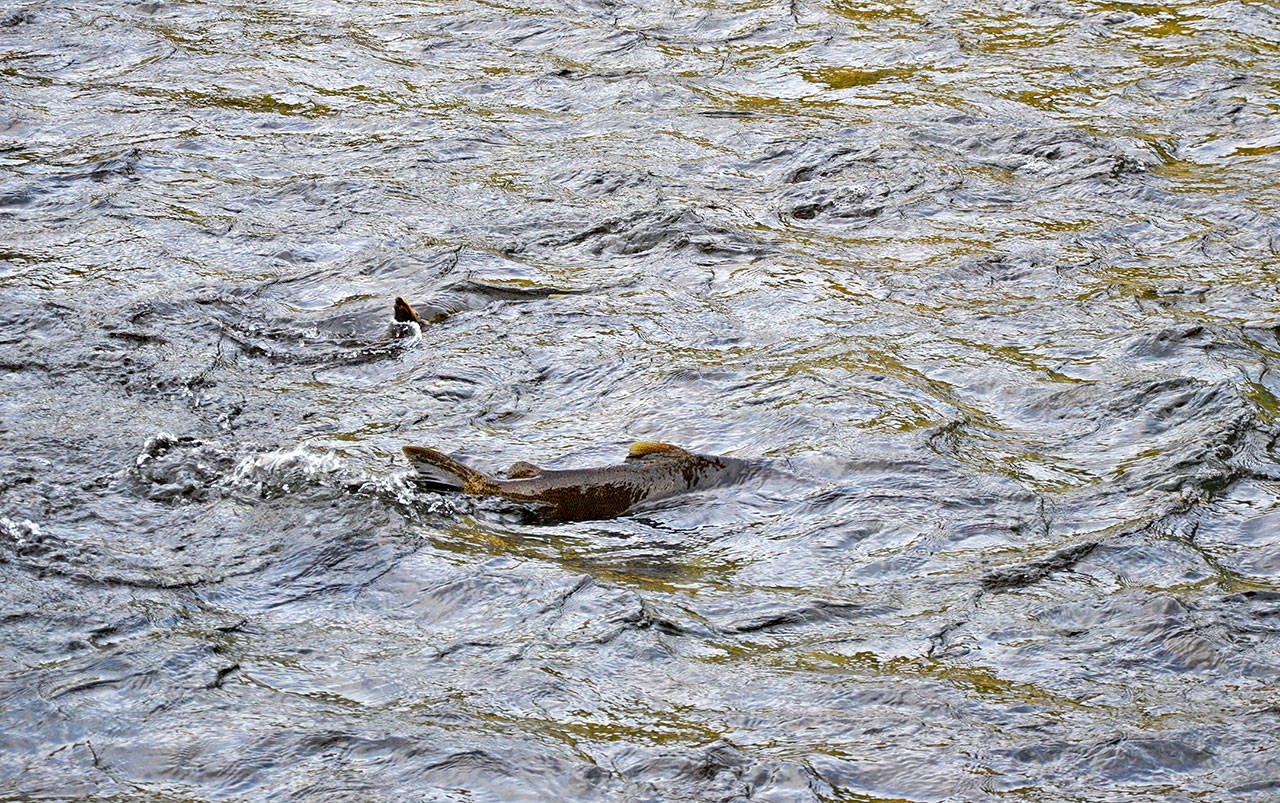
SEATTLE — The mass of warm water known as “the blob” that heated up the north Pacific Ocean has dissipated, but scientists are seeing lingering effects of those unusually warm sea surface temperatures on Pacific Northwest salmon and steelhead.
Federal research surveys this summer caught among the lowest numbers of juvenile coho and chinook salmon in 20 years, suggesting that many fish did not survive their first months at sea. Scientists warn that salmon fisheries might face hard times in the next few years.
Fisheries managers also worry about below-average runs of steelhead returning to the Columbia River now. Returns of adult steelhead that went to sea as juveniles a year ago so far rank among the lowest in 50 years.
Conditions may be to blame
Scientists believe poor ocean conditions are likely to blame: Cold-water salmon and steelhead are confronting an ocean ecosystem that has been shaken up in recent years.
“The blob’s fairly well-dissipated and gone. But all these indirect effects that it facilitated are still there,” said Brian Burke, a research fisheries biologist with the Northwest Fisheries Science Center.
Marine creatures found farther south and in warmer waters have turned up in abundance along the coasts of Washington and Oregon, some for the first time.
“That’s going to have a really big impact on the dynamics in the ecosystem,” Burke said. “They’re all these new players that are normally not part of the system.”
Mike Gross, state Fish and Wildlife fish biologist, said the blob of 2015 had a negligible effect on coho returns to West End rivers this year.
But given the coho’s life cycle, Gross said the warm-water mass that peaked two years ago could impact the number of fish returning to Clallam and Jefferson County rivers in 2018.
“We had some real low flows subsequently, so [the blob] could still have a lingering effect,” Gross said.
Returns of chinook and steelhead, which have more varied life histories than coho, are not expected to be significantly impacted by the 2015 phenomenon, at least on the Olympic Peninsula.
“They’re a lot more mixed up for what comes back in a year,” Gross said.
Researchers with NOAA Fisheries and Oregon State University Cooperative Institute for Marine Resources Studies have been surveying off the Pacific Northwest for 20 years to study juvenile salmon survival.
In June, they caught record numbers of warm-water fish such as Pacific pompano and jack mackerel, a potential salmon predator. But the catch of juvenile coho and chinook salmon during the June survey — which has been tied to adult returns — was among the three lowest in 20 years.
Burke and other scientists warned in a memo to National Oceanic and Atmospheric Administration fisheries administrators last month that poor ocean conditions might mean poor salmon returns to the Columbia River system over the next few years.
“There was hardly any salmon out there,” Burke said. “Something is eating them, and we don’t know what and we don’t know precisely where,” he added.
Seabirds such as common murres could be the culprits. Researchers caught fewer forage fish, such as herring, anchovy and smelt.
When forage fish are low, avian predators might be forced to eat more juvenile salmon. Seabirds near the mouth of the Columbia River might have feasted on more juvenile salmon as they entered the ocean.
The north Pacific Ocean had been unusually warm since the fall of 2013 with “the blob,” but sea surface temperatures have recently cooled to average or slightly warmer-than-average conditions. Changes in the marine ecosystem are likely to be seen for a while.
The research surveys also pulled up weird new creatures that had not been netted before. Researchers have caught tens of thousands of tube-shaped, jelly-like pyrosomes, which are generally found in tropical waters. Their impact on the marine food web isn’t yet clear.
Fisheries managers also are seeing lower runs of steelhead to the Columbia River system this year.
Joe DuPont, a regional fisheries manager with Idaho Fish and Game, blames poor feeding conditions when juvenile steelhead went out to the Pacific Ocean last year.
Warm waters brought less nutrient-rich copepods, tiny crustaceans at the base of the food chain. Meanwhile, northern copepods richer in lipids, which young steelhead eat, were less abundant.
It’s the second year of consecutive low steelhead runs, said Tucker Jones, ocean salmon and Columbia River program manager with the Oregon Department of Fish and Wildlife.
“There’s a lot of circumstantial evidence to point to an unhappy river experience and meeting ocean conditions that were far from hospitable,” Jones said. “The ‘blob’ especially changed the zooplankton food web structure that was out there.”
Fisheries managers have put some fishing restrictions in place due to a low forecast of steelhead expected back this season.
While the mechanisms for steelhead and salmon might be different, “large-scale changes to the ocean are driving all of it,” Burke said.
________
Peninsula Daily News reporter Rob Ollikainen contributed to this report.
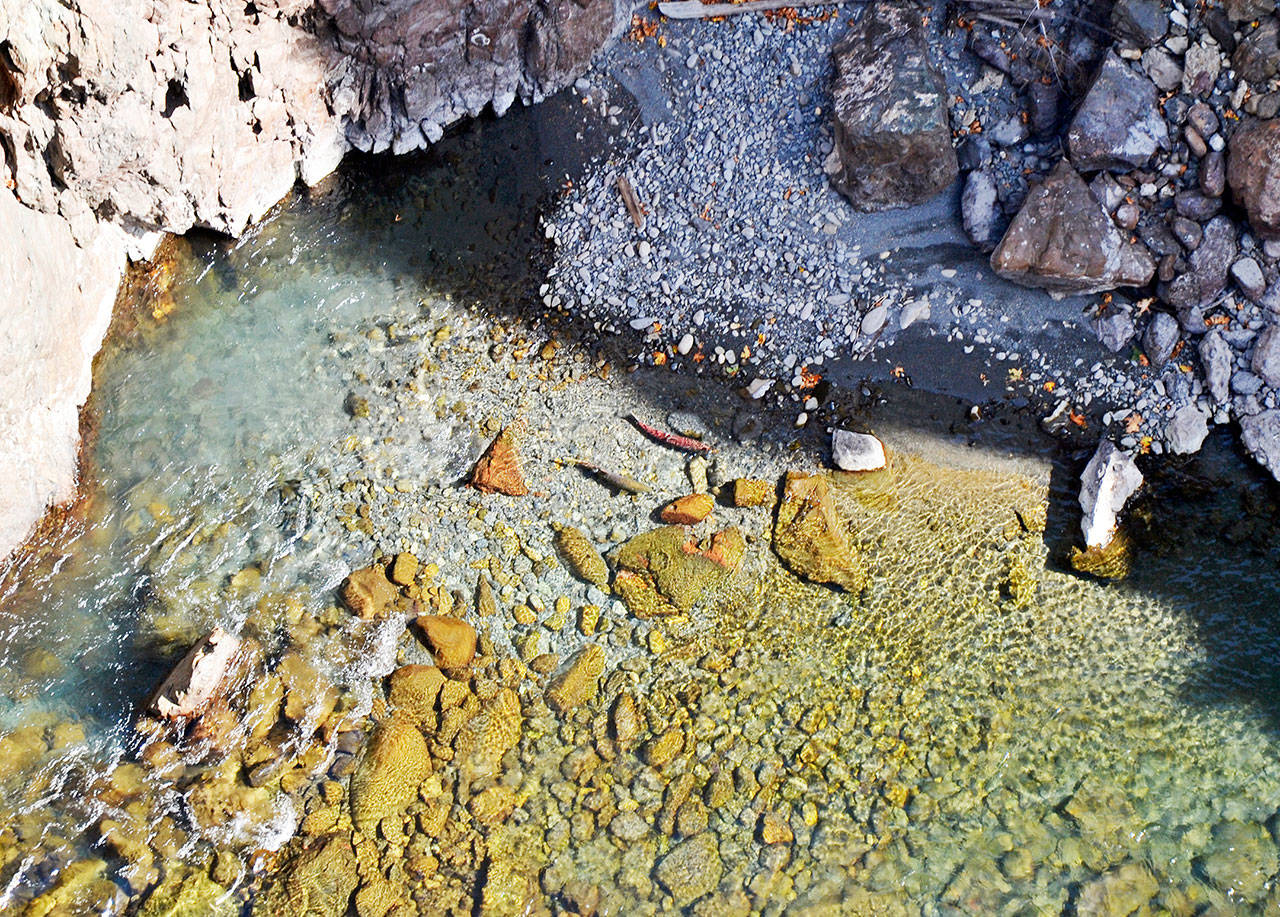
Two chinook salmon can be seen creating redds below the Glines Canyon Overlook on the Elwha River in Olympic National Park in September. (Laura Lofgren/Peninsula Daily News)
