
The Associated Press
EVERETT — A utility has pulled the plug on a project that would have tested generating electricity from tidal waters flowing in and out of Admiralty Inlet off the coast of East Jefferson County.
The Snohomish County Public Utility District said Tuesday that it can’t move forward with putting two turbines under water off the west shore of Whidbey Island because the U.S. Energy Department decided not to share in the rising costs.
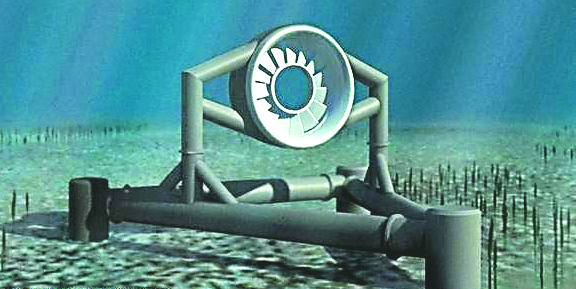
The project would have installed two 65-foot-tall turbines about 200 feet in Admiralty Inlet to test whether energy from underwater currents could be a viable long-term power source, The Daily Herald of Everett reported.
The initial project estimate in 2006 was about $20 million.
A lengthy permitting and licensing process and unexpected costs nearly doubled the price tag to about $38 million, said Steve Klein, the utility’s general manager.
The utility was preparing to get final construction bids when it learned that the federal government wouldn’t increase its share of expenses for the research project.
Initial preparation of the site was slated to start next year.
Officials with the Department of Energy’s Water Power Program declined comment Tuesday.
In a statement, the department said it awarded a maximum of $10 million for the Snohomish County project through a specific funding opportunity in 2010, with the understanding that the utility would cover at least half the expense.
The project was the first of its kind in the Northwest and one of the few in the world, so preliminary cost estimates were educated guesswork, Klein said.
“This is not something where we’ve done it and don’t have a handle on the cost,” he told The Herald.
The utility estimated that the project has cost less than $8 million so far, with $3.5 million coming from the Department of Energy.
That amount doesn’t include in-kind contributions such as laboratory studies or research by the University of Washington, Klein said.
The utility used several sources to pay for the project, including sales of renewable-energy credits from its wind-power projects.
The project faced some opposition from Native American tribes worried that the turbines would interfere with their fishing rights or harm fish.
The Tulalip tribe, Suquamish tribe and Point No Point Treaty Council, representing the Jamestown S’Klallam and Port Gamble S’Klallam tribes, submitted testimony against the project.
The North American Submarine Cable Association and a California-based company, Pacific Crossing, also fought the turbines, arguing that they could damage underwater fiber-optic cables.
The project has helped further marine research over the past several years of study, Klein said, noting that scientists at UW developed underwater monitoring devices that can be applied to other marine research.
Brian Polagye, a mechanical engineering assistant professor at UW, told The Seattle Times that the tidal energy project was going to be one of the best opportunities to study how turbines interact with the environment.
“But this is not the end of marine-energy study,” said Polagye, who is also co-director of UW’s Northwest National Marine Renewable Energy Center.
“What we’ve learned about how to characterize sites for this is now being applied nationally.”
