
By Nicholas K. Geranios | The Associated Press
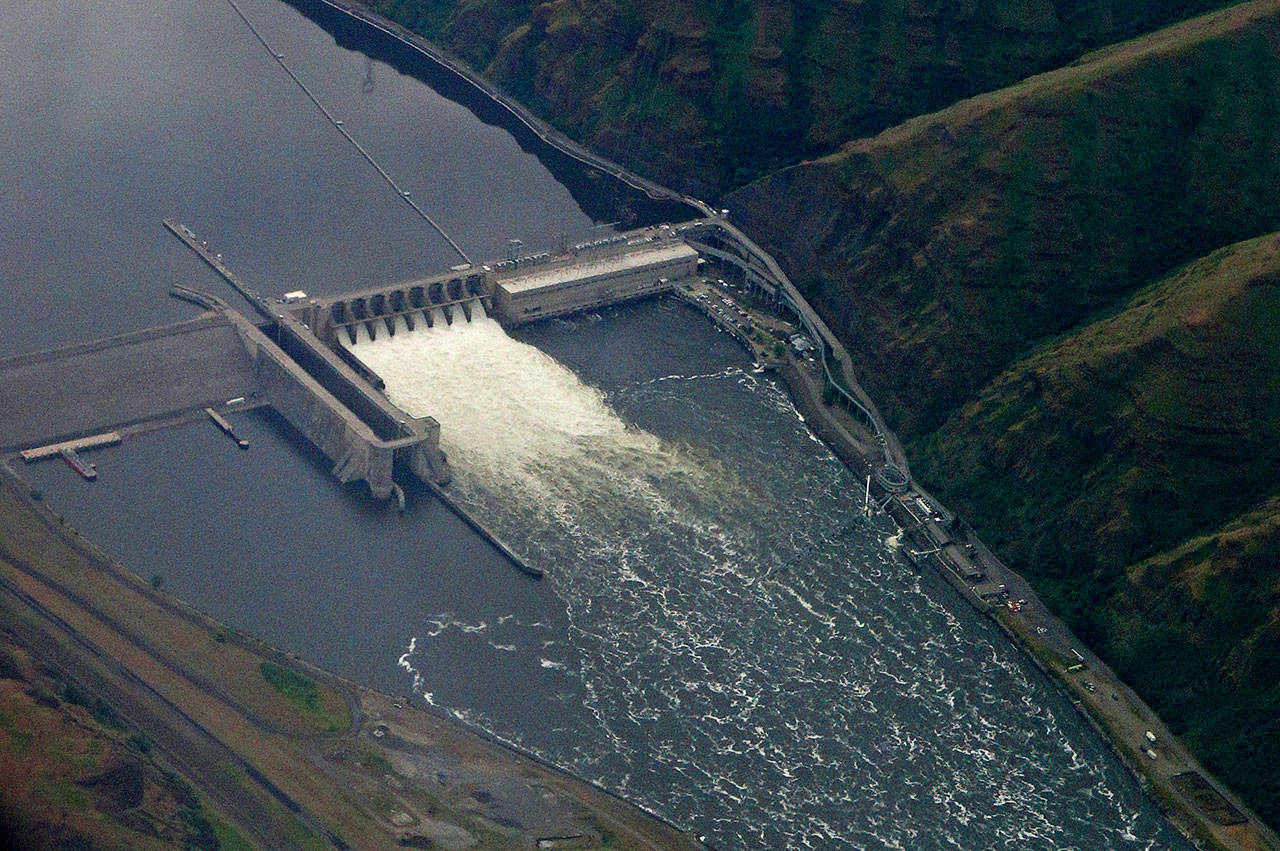
SPOKANE — The U.S. government has announced that four huge dams on the Snake River in Washington state will not be removed to help endangered salmon migrate to the ocean.
The decision reported Friday thwarts the desires of environmental groups that fought for two decades to breach the structures.
The Final Environmental Impact Statement was issued by the U.S. Army Corps of Engineers, Bureau of Reclamation and Bonneville Power Administration, and sought to balance the needs of salmon and other interests.
The plan calls for spilling more water over the dams at strategic times to help fish migrate faster to and from the ocean, a tactic that has already been in use.
Environmental groups panned the Trump administration plan as inadequate to save salmon, an iconic Northwest species. They contend the dams must go if salmon are to survive.
“This plan is not going to work,” said Joseph Bogaard, director of Save Our Wild Salmon.
“The federal failure to remove the dams despite clear supporting science is a disaster for our endangered salmon and orcas,” said Sophia Ressler of the Center for Biological Diversity.
Scientists warn that Southern Resident orcas are starving to death because of a dearth of chinook salmon that are their primary food source. The Pacific Northwest population of orcas was placed on the endangered species list in 2005.
Todd True of Earthjustice called the plan “a slap in the face to Native American Tribes, rural fishing communities and anyone in the Northwest who cares about the future of our salmon, orcas and the economic well-being of our river and ocean communities.”
The dams have many defenders, including Republican politicians from the region, barge operators and other river users, farmers and business leaders.
Three Republican members of Congress from Washington state hailed the decision.
“We have always said that our rivers and the benefits they provide are the lifeblood of our region,” Reps. Dan Newhouse, Cathy McMorris Rodgers and Jaime Herrera Beutler said in a joint statement.
“The benefits of the dams along the mighty Columbia and Snake rivers are far too precious for our region to go without,” they said. “We are proud to see a comprehensive, science-based process come to fruition.”
The four hydroelectric dams were built from the 1960s to the 1970s between Pasco and Pomeroy. Since then, salmon populations have plunged.
The dams have fish ladders that allow some salmon and other species to migrate to the ocean and then back to spawning grounds. But the vast majority of the fish die during the journey.
The 100-foot-tall dams generate electricity, provide irrigation and flood control and allow barges to operate all the way to Lewiston, Idaho, 400 miles from the Pacific Ocean.
The final report was similar to a draft plan issued in February, which concluded that removing the four dams would destabilize the power grid, increase overall greenhouse emissions and more than double the risk of regional power outages.
The four dams are part of a vast and complex hydroelectric power system operated by the federal government in Washington, Oregon, Idaho and Montana.
The 14 federal dams on the Columbia and Snake rivers together produce 40 percent of the region’s power — enough electricity for nearly 5 million homes.
But the dams have proven disastrous for salmon that hatch in freshwater streams, then make their way hundreds of miles to the ocean, where they spend years before finding their way back to mate, lay eggs and die.
Snake River sockeye were the first species in the Columbia River Basin listed under the Endangered Species Act in 1991. Now, 13 salmon runs are listed as federally endangered or threatened. Four of those runs return to the Snake River.
The Columbia River system dams cut off more than half of salmon spawning and rearing habitat, and many wild salmon runs in the region have 2 percent or less of their historic populations, according to the Center for Biological Diversity.
On the way to the ocean, juvenile salmon can get chewed up in the dams’ turbines.
In all, three federal judges have thrown out five plans for the system over the decades after finding they didn’t do enough to protect salmon.
A record of decision on the plan announced Friday will be released in September.
