
By JEFF BARNARD
The Associated Press
GRANTS PASS, Ore. — The U.S. Supreme Court will decide whether to switch gears on more than 30 years of regulating the muddy water running off logging roads into rivers.
At issue: Should the U.S. Environmental Protection Agency keep considering it the same as water running off a farm field or start looking at it like a pipe coming out of a factory?
The case that will be heard Monday in Washington, D.C., was originated by a small environmental group in Portland, Ore.: the Northwest Environmental Defense Center.
Suit in D.C.
It sued the Oregon Department of Forestry over roads on the Tillamook State Forest that drain into salmon streams.
The lawsuit argued that the Clean Water Act specifically says water running through the kinds of ditches and culverts built to handle stormwater runoff from logging roads is a point source of pollution when it flows directly into a river and requires the same sort of permit that a factory needs.
“We brought this out of a perceived sense of unfairness,” said Mark Riskedahl, director of the center.
“Every other industrial sector across the country had to get this sort of permit for stormwater discharge,” and the process has been very effective at reducing pollution.
Stirred up by trucks
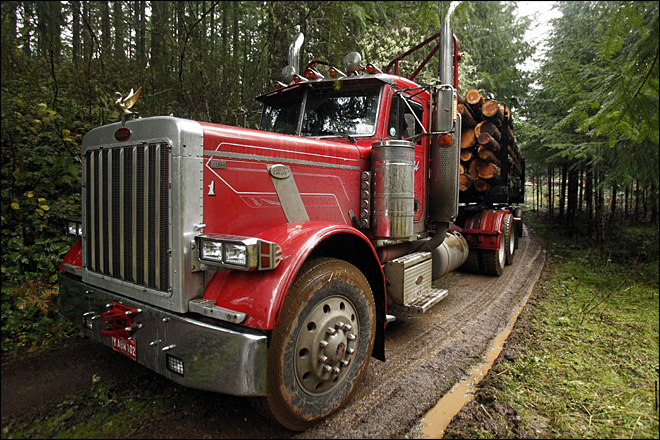
The pollution running off logging roads, most of them gravel or dirt, is primarily muddy water stirred up by trucks.
Experts have long identified sediment dumped in streams as harmful to salmon and other fish.
The center lost in U.S. District Court in Portland but won in the 9th U.S. Circuit Court of Appeals in San Francisco.
The Oregon Department of Forestry and Georgia Pacific-West appealed to the Supreme Court, and 31 states, including Washington, threw in with them.
The timber industry wants to keep things the way they are, with no permits for roads built under a system of best-management practices.
Job, money costs
They contend requiring permits would cost timberland owners and logging companies too much money and thousands of jobs.
“EPA has been absolutely clear since 1976 in its rules and briefs explaining those rules and what it has done,” said timber industry lawyer Timothy Bishop.
“Never once has it required a permit for discharges from forest service roads. It has been absolutely clear that is a bad idea.”
The National Alliance of Forest Owners commissioned studies that concluded new permits would cost landowners and logging operators nationwide upwards of $1.1 billion in administrative costs.
Riskedahl said the timber industry has grossly exaggerated the costs.
