
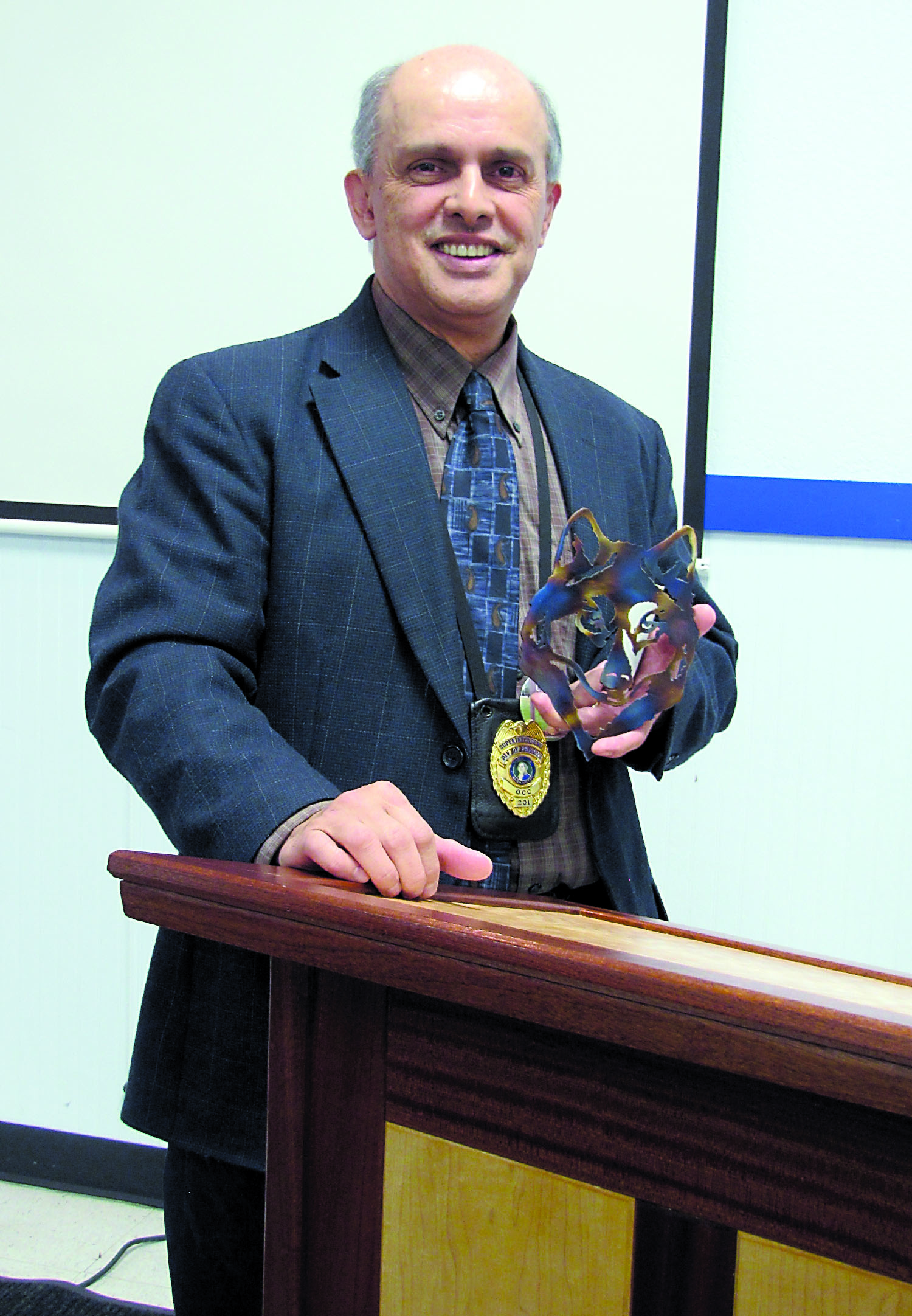
FORKS — Olympic Corrections Center provides an important service to the state and to the community where it exists, but that existence may be threatened, Superintendent John Aldana told about 40 members of the Forks Chamber of Commerce Wednesday.
State budget reductions and other bills are cutting deeply into corrections programs that reduce recidivism and improve former inmates’ chances of success in the real world after completing their sentences, Aldana said.
House Bill 2144 authorizes the Department of Corrections to credit low- and moderate-risk offenders with a 150-day reduction in his or her release date.
The bill completed a house Ways and Means committee review in January, and awaits further action.
The potential impact of the bill includes the early release of 500 offenders, which could provide the impetus to close a minimum security prison, Aldana said.
Olympic Correction Center, located at 11235 Hoh Mainline Rd., 27 miles south of Forks, is a minimum-security prison facility that can house as many as 381 prisoners while they are given vocational training and transition services during the last four years of their prison sentences.
Under HB 2144, “No more than the final six months of the offender’s term of confinement may be served in partial confinement designed to aid the offender in finding work and reestablishing himself or herself in the community.”
Aldana noted that the bill has not moved much since the Ways and Means hearing, and may never be voted into law.
“We haven’t seen a lot of political will to let offenders out early,” Aldana said.
However, Aldana was concerned enough to ask members of the chamber to write to their legislators in support of the correction center.
“The bill is not dead. We’re not out of the woods yet,” Aldana said.
Opened in 1968 as Clearwater Camp, the corrections center currently provides inmates with up to four years’ worth of training in woodworking, metalworking, and Department of Natural Resources wildland firefighting techniques.
The corrections center has taken on a number of projects that help the community, including donating inmate-created artwork to the Quillayute Valley School District Scholarship Auction, and growing gardens for the inmates’ own kitchen and to donate to Clallam County food banks.
In October 2011, a shortage of migrant farm workers in Eastern Washington resulted in a rapid deployment of much of the center’s inmate population to an orchard near
Inmates picked 1,000 tons of apples in subfreezing temperatures in a week, he said.
“We saved the crop this year,” Aldana said.
Much of the work is in teaching younger offenders a basic work ethic, he said.
Many of the younger generation are younger, more volatile, and are more willing to risk their futures by making poor decisions, he said.
Previous cuts have already affected the correction center, but in some cases the desire to do the right thing for inmates has trumped the financial cuts.
Sandra Kint, a transition counselor, was laid off during an earlier round of state budget cuts, but returned as a volunteer, Aldana said.
Transition services she supported included helping inmates get or renew drivers’ licenses, create resumes for job searches and set up child support payments, he said.
Kint was awarded the 2011 Volunteer of the Year award from the Washington State Department of Corrections for her efforts.
Reporter Arwyn Rice can be reached at 360-417-3535 or at arwyn.rice@peninsuladailynews.com.
