
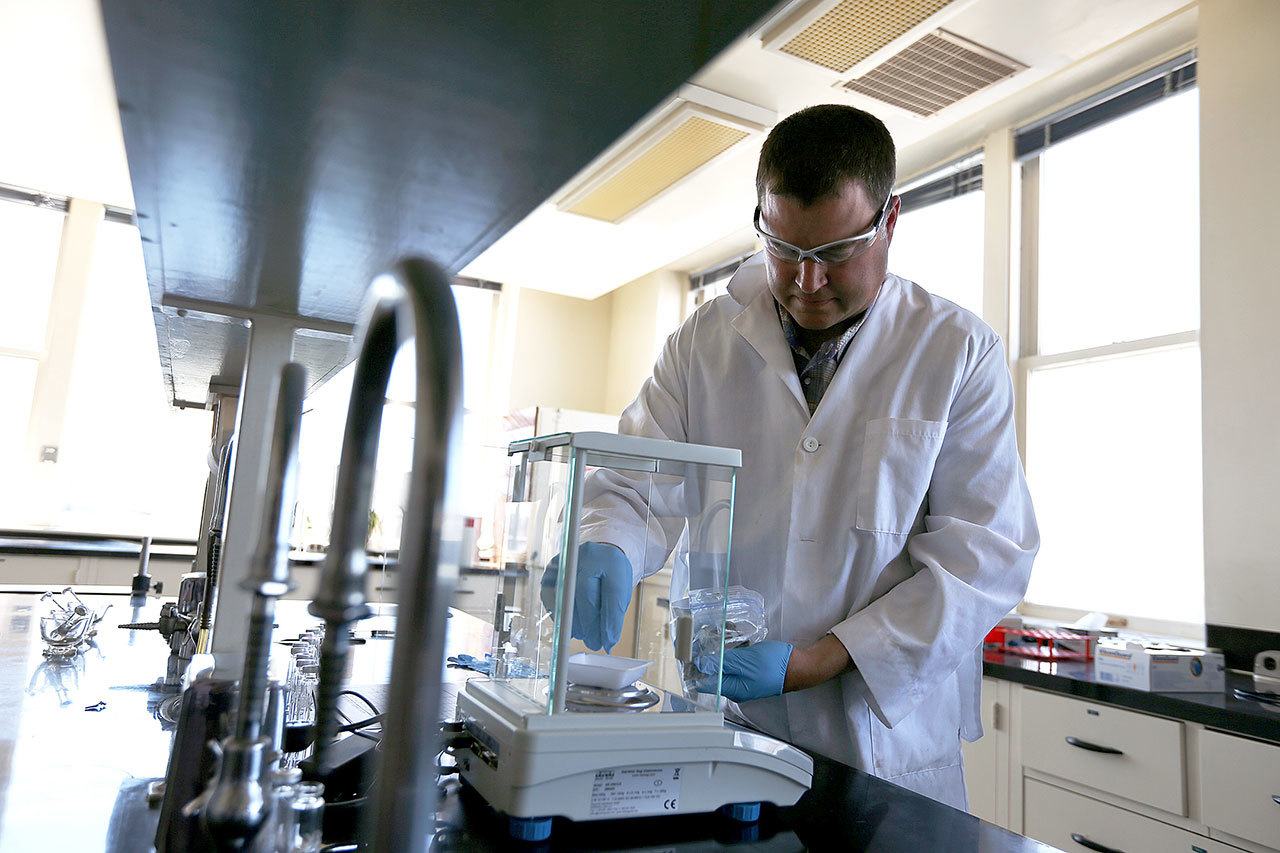
Randall Oliver, chief scientist for Analytical 360, scales out a sample of marijuana at the new cannabis analysis laboratory in Yakima. (Mason Trinca/Yakima Herald-Republic via AP)

Randall Oliver, chief scientist for Analytical 360, scales out a sample of marijuana at the new cannabis analysis laboratory in Yakima. (Mason Trinca/Yakima Herald-Republic via AP)

State to increase testing of pot for pesticides

The state’s Liquor and Cannabis Board said Thursday it’s paying more than $1 million to buy new equipment and hire two full-time workers to conduct the tests.

By Gene Johnson

The Associated Press

SEATTLE — More than two years after Washington state launched legal marijuana sales, it’s planning to test pot for banned pesticides more regularly.

The state’s Liquor and Cannabis Board said Thursday it’s paying the state Department of Agriculture more than $1 million to buy new equipment and hire two full-time workers to conduct the tests.

The increased screening is expected to begin early next year and will examine marijuana where regulators have reason to suspect illegal pesticides have been used.

“Testing for pesticides is a complex and costly process,” Rick Garza, the board’s director, said in a statement.

“Labs need specialized equipment and highly trained staff to carry out the tests. This agreement will satisfy those obstacles.

“It will send a strong message to any producer applying illegal pesticides that they will be caught and face significant penalties, including possible cancellation of the license.”

Washington has required testing for mold and other impurities since it began allowing recreational pot sales in 2014. But like Colorado and Oregon, the other two states with recreational marijuana sales, it has struggled to figure out the best ways to regulate and test for pesticides.

The federal government, which normally regulates pesticide use, has no guidelines about using pesticides on marijuana because the plant remains illegal under federal law.

The three states have lists of pesticides that are OK to use on marijuana, but so far, none is conducting regular tests for banned pesticides, which has raised public health worries even though there’s little or no indication of people becoming ill because of pesticides in legal marijuana products.

In Oregon and Colorado, certified laboratories will test for pesticides along with other impurities, but the labs are still being accredited to handle those tests.

Agriculture officials do investigate pesticide misuse at licensed marijuana growers when they receive complaints. Colorado’s opened more than 100 investigations this year, with around 40 percent to 45 percent of them finding unapproved practices, said John Scott, pesticides program section chief, at that state’s Department of Agriculture.

In Washington, private, certified labs conduct tests for mold, bacteria, insects and potency — but not pesticides. Instead, state regulators have conducted tests when they’ve received complaints about possible pesticide misuse.

Pressure has built on the state to require more testing as Washington merges its medical and recreational marijuana markets this year.

Since the first legal, recreational marijuana grows were licensed in early 2014, the state has conducted 45 investigations of pesticide misuse, said Justin Nordhorn, chief of enforcement with the Liquor and Cannabis Board.

By contrast, the new equipment will allow the state to screen 75 samples per month for more than 100 unapproved pesticides, with results coming back in 15 to 30 days.

“This should be a real game-changer for the industry in terms of public safety,” said Agriculture Department spokesman Hector Castro. “They’re on notice that we’re going to be on the lookout for this.”
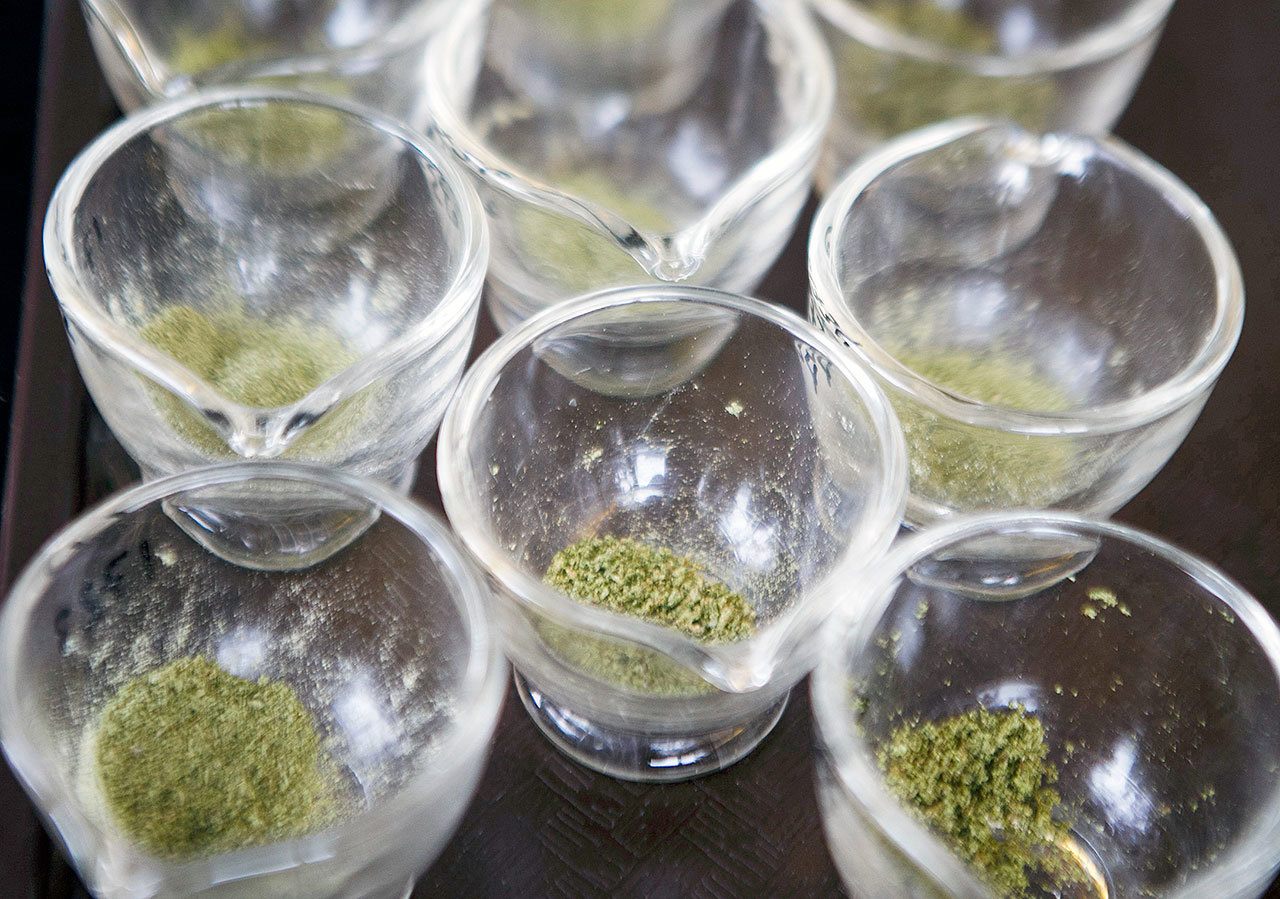
Ground-up marijuana flowers sit before potency testing at Analytical 360 in Yakima in January. (Kaitlyn Bernauer/Yakima Herald-Republic via AP)                                 Ground-up marijuana flowers sit before potency testing at Analytical 360 in Yakima in January. (Kaitlyn Bernauer/Yakima Herald-Republic via AP)

Ground-up marijuana flowers sit before potency testing at Analytical 360 in Yakima in January. (Kaitlyn Bernauer/Yakima Herald-Republic via AP) Ground-up marijuana flowers sit before potency testing at Analytical 360 in Yakima in January. (Kaitlyn Bernauer/Yakima Herald-Republic via AP)

More in News

Sue Long, left, Vicki Bennett and Frank Handler, all from Port Townsend, volunteer at the Martin Luther King Day of Service beach restoration on Monday at Fort Worden State Park. The activity took place on Knapp Circle near the Point Wilson Lighthouse. Sixty-four volunteers participated in the removal of non-native beach grasses. (Steve Mullensky/for Peninsula Daily News)
Work party

Sue Long, left, Vicki Bennett and Frank Handler, all from Port Townsend,… Continue reading

Portion of bridge to be replaced

Tribe: Wooden truss at railroad park deteriorating

Kingsya Omega, left, and Ben Wilson settle into a hand-holding exercise. (Aliko Weste)
Process undermines ‘Black brute’ narrative

Port Townsend company’s second film shot in Hawaii

Jefferson PUD to replace water main in Coyle

Jefferson PUD commissioners awarded a $1.3 million construction contract… Continue reading

Scott Mauk.
Chimacum superintendent receives national award

Chimacum School District Superintendent Scott Mauk has received the National… Continue reading

Hood Canal Coordinating Council meeting canceled

The annual meeting of the Hood Canal Coordinating Council, scheduled… Continue reading

Bruce Murray, left, and Ralph Parsons hang a cloth exhibition in the rotunda of the old Clallam County Courthouse on Friday in Port Angeles. The North Olympic History Center exhibit tells the story of the post office past and present across Clallam County. The display will be open until early February, when it will be relocated to the Sequim City Hall followed by stops on the West End. The project was made possible due to a grant from the Clallam County Heritage Advisory Board. (Dave Logan/for Peninsula Daily News)
Post office past and present

Bruce Murray, left, and Ralph Parsons hang a cloth exhibition in the… Continue reading

This agave grew from the size of a baseball in the 1990s to the height of Isobel Johnston’s roof in 2020. She saw it bloom in 2023. Following her death last year, Clallam County Fire District 3 commissioners, who purchased the property on Fifth Avenue in 2015, agreed to sell it to support the building of a new Carlsborg fire station. (Matthew Nash/Olympic Peninsula News Group file)
Fire district to sell property known for its Sequim agave plant

Sale proceeds may support new Carlsborg station project

As part of Olympic Theatre Arts’ energy renovation upgrade project, new lighting has been installed, including on the Elaine and Robert Caldwell Main Stage that allows for new and improved effects. (Olympic Theatre Arts)
Olympic Theatre Arts remodels its building

New roof, LED lights, HVAC throughout

Weekly flight operations scheduled

Field carrier landing practice operations will be conducted for aircraft… Continue reading

Workers from Van Ness Construction in Port Hadlock, one holding a grade rod with a laser pointer, left, and another driving the backhoe, scrape dirt for a new sidewalk of civic improvements at Walker and Washington streets in Port Townsend on Thursday. The sidewalks will be poured in early February and extend down the hill on Washington Street and along Walker Street next to the pickle ball courts. (Steve Mullensky/for Peninsula Daily News)
Sidewalk setup

Workers from Van Ness Construction in Port Hadlock, one holding a grade… Continue reading