
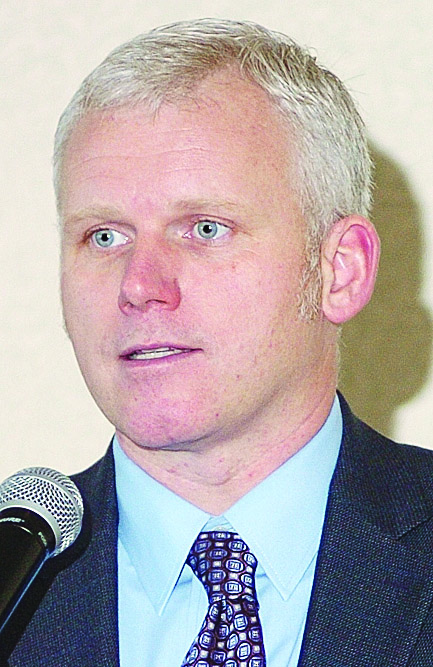
OLYMPIA — When a fire broke out in Asotin County last summer, Noel Hardin said a delay in state resources led to a bigger, more costly blaze.
The fire chief for District 1 in the county said that by the time the fire was contained, it cost $2 million to fight. That could have been much cheaper with faster support from the state, he said.
“The helicopter bill at that time would’ve been somewhere between $3,000 and $4,000,” Hardin said.
One state lawmaker wants to make it easier for local fire districts, like Fire District 1 in Asotin County, to access resources in emergencies.
House Bill 2596 would create the Local Wildland Fire Suppression Account managed by the state Department of Natural Resources to provide local entities with immediate assistance in responding to wildfires.
The bill earned a public hearing before the House Agriculture and Natural Resources Committee on Tuesday.
Under the proposed legislation, DNR would have a half-hour to respond to a local fire district’s request for funds, either through direct assistance from the account or by reimbursing the entity for use of its own resources.
DNR could also release assets such as aviation services to the entity for immediate response to the fire.
Rep. Kevin Van De Wege, D-Sequim, was concerned the 30-minute window would be too little time to assess if the fire is bad enough to request state resources and that the requests would prove costly.
“The state is going to have a big obligation under this bill,” said Van De Wege, who represents the 24th District, which covers Clallam and Jefferson counties and part of Grays Harbor County.
Wildfires
Rep. Mary Dye, R-Pomeroy, proposed the bill after consulting with Hardin, who reached out to her about issues related to last year’s wildfire season, the worst fire season on record in state history.
“We had a lot of fires that could’ve been contained but were not because of lack of access or certainty of funding,” Dye said at a hearing on the bill Tuesday.
She said the legislation is aimed to help fire districts, specifically in small, rural areas that don’t have access to the assets and resources DNR has.
She’s hopeful a fast response would help prevent fires from turning into the type of catastrophic events that occurred last summer in the state.
“It’s not necessarily to fight every fire,” Dye said, “but rather to fight those fires deemed to be critical enough to have larger assets brought in.”
DNR concerns
DNR supports the intent of the legislation but has some concerns.
Mary Verner, deputy of wildfire administration for the department, said one concern is the availability of resources the department can provide.
Verner said aviation services would be the most helpful for the small rural locations the bill aims to help, but those services are often in high demand during the fire season.
The department wants the bill to recognize that providing such services could be a hard task.
“We just want to make sure we have a common understanding, logistically, of the expectations with regard to delivering those assets,” Verner said.
Dye said the account would prevent the state from paying so much for wildfire assistance, in comparison to last season, when the state paid $150 million more than budgeted for wildfires.
She said the bill would provide fire districts with the ability to stop fires before they become bigger and more expensive.
“That’s our goal. This bill will reduce the number of large, catastrophic fires in our state,” she said.
Hardin agreed that creating an account would help save the state money in the long run.
“It has the potential to be win-win for the state and local districts,” he said.
“If we keep doing things the way we’ve been doing, then we’re going to get the same costly results.”
Any local suppression entity that receives funding from the account would be required to satisfy a 10 percent cost match for the amount of money provided, the committee staff summary revealed.
However, that cost match requirement would not be applicable if the local suppression entity is able to contain the fire within the first six hours.
The cost match requirement could be satisfied through a monetary payment back into the account or through the provision of in-kind services.
All cost match payments would be required to be provided within a year of receiving funds from the account.
The Local Wildland Fire Liaison could serve as a mediator in any disputes between the DNR and a local suppression entity regarding cost match payments, under terms in the legislative proposal.
________
This story is part of a series of news reports from the state Legislature provided through a reporting internship sponsored by the Washington Newspaper Publishers Association Foundation. Reach reporter LaVendrick Smith at lavendricksmith@gmail.com.
