
By Gene Johnson
The Associated Press
(First of a three-part series)
A year into the nation’s experiment with legal, taxed marijuana sales, Washington and Colorado find themselves wrestling not with the federal interference many feared but with competition from medical marijuana or even outright black market sales.
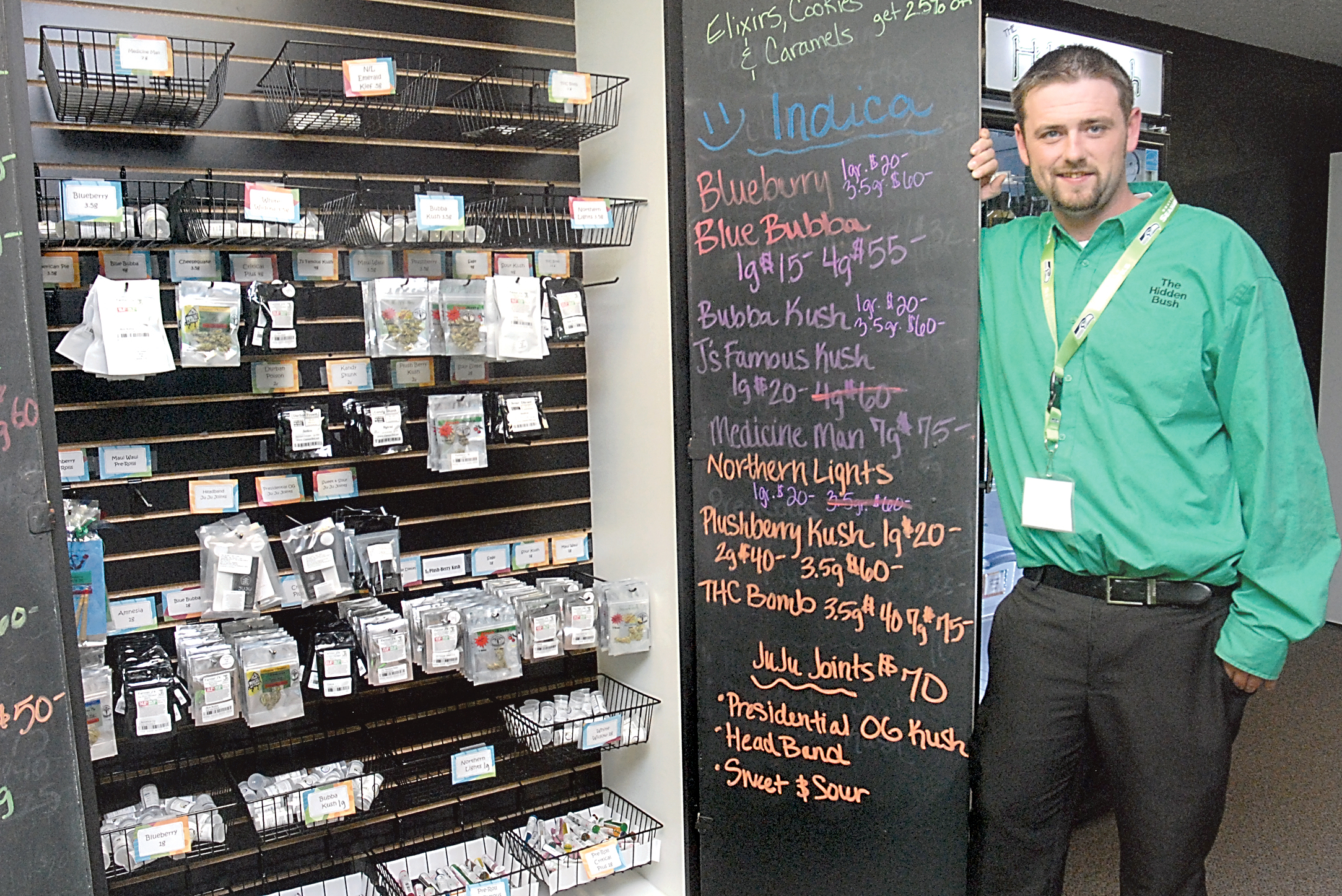
In Washington, the black market has exploded since voters legalized marijuana in 2012, with scores of legally dubious medical dispensaries opening and some pot delivery services brazenly advertising that they sell outside the legal system.
Licensed shops say taxes are so onerous that they can’t compete.
Colorado, which launched legal pot sales New Year’s Day 2014, is facing a lawsuit from Nebraska and Oklahoma alleging that they’re being overrun with pot from the state.
And the number of patients on Colorado’s medical marijuana registry went up, not down, since 2012, meaning more marijuana users there can avoid paying the higher taxes that recreational pot carries.
Officials in both states say they must do more to drive customers into the recreational stores.
They’re looking at reining in their medical systems and fixing the big tax differential between medical and recreational weed without harming patients.
And in some cases, they are considering cracking down on the proliferating black market.
“How can you have two parallel systems, one that’s regulated, paying taxes, playing by the rules, and the other that’s not doing any of those things?” said Rick Garza of the Washington Liquor Control Board, which oversees recreational pot.
The difficulty of reconciling medical marijuana with taxed recreational pot offers a cautionary tale for states that might join Washington and Colorado in regulating the adult use of the drug.
While legalization campaigns have focused on the myriad ills of prohibition, including racial discrepancies in who gets busted for weed, the promise of additional tax revenues in tight budget times was no small part of the appeal.
Weed sales have so far brought in some revenue, though less than officials might have hoped.
Colorado brought in more than $60 million in taxes, licenses and fees for recreational and medical marijuana combined through October, and more than half of pot sold was of the lesser-taxed medical variety.
In Washington, where supply problems and slow licensing hampered the industry after sales began in July, the state collected about $15 million in taxes in 2014.
The latest states to legalize marijuana — Oregon and Alaska — have different concerns, but officials there are nevertheless paying attention to Colorado and Washington as they work on rules for their own industry.
Alaska doesn’t have commercial medical dispensaries, so licensed stores there won’t face direct competition.
And in Oregon, taxes on recreational pot are set at just $35 an ounce, which officials hope will minimize competition from the medical side.
In Seattle, however, six licensed recreational stores face competition from medical pot shops that are believed to number in the hundreds.
“Am I afraid about medical marijuana dispensaries taking my business? They have all the business. They are the industry,” said James Lathrop, the owner of Seattle’s first licensed pot shop, Cannabis City.
He said the dominance of medical marijuana and the black market is obvious in his clientele: It’s mostly tourists and professionals who use pot occasionally and don’t mind spending a little extra at a legal store.
Regular pot users have stuck with their old dealers or continue masquerading as patients, he said.
Reining in medical marijuana will be a top priority when the legislative session begins in Olympia later this month.
The question, lawmakers say, is how to direct people into the regulated system — maximizing state revenues — without hurting legitimately sick people who use marijuana.
Ideas under discussion include reducing pot taxes to make recreational stores more competitive and eliminating medical dispensaries, which have been largely tolerated by law enforcement even though they aren’t allowed under state law.
The state could lift its cap on the number of recreational stores and license dispensaries to sell pot for any purpose.
Seattle officials have signaled that they intend to start busting delivery services that flout the law and recently sent letters to 330 marijuana businesses warning them that they’ll eventually need to obtain state licenses or be shut down.
Tacoma has also announced plans to close dozens of unregulated pot shops.
Officials have less leeway to alter the medical marijuana system in Colorado, where it was enshrined in the state constitution in 2000.
But lawmakers are nevertheless set to review how it is regulated next year because the state’s 2010 scheme is expiring.
Taxes will be a large part of the discussion. Medical pot is now subject only to the statewide 2.9 percent sales tax, one-tenth of the taxes levied on recreational pot.
Colorado’s medical marijuana registry has grown from 107,000 people in late 2012 to about 116,000 this year, though marijuana patient advocates dispute that the growth is tax-driven.
State health officials, who oversee the registry, are planning to better scrutinize doctors who recommend large numbers of medical pot patients or who recommend more than the baseline of six plants for a patient.
The challenge for lawmakers will be countering perceptions that they’re trying to squeeze sick people for cash.
“I don’t want to wind up cracking down on people abusing the system in a way that negatively impacts the patients and the people who help them,” said Teri Robnett, founder of the Cannabis Patients Alliance.
On Tuesday: Tax implications.
