
By Phuong Le
The Associated Press
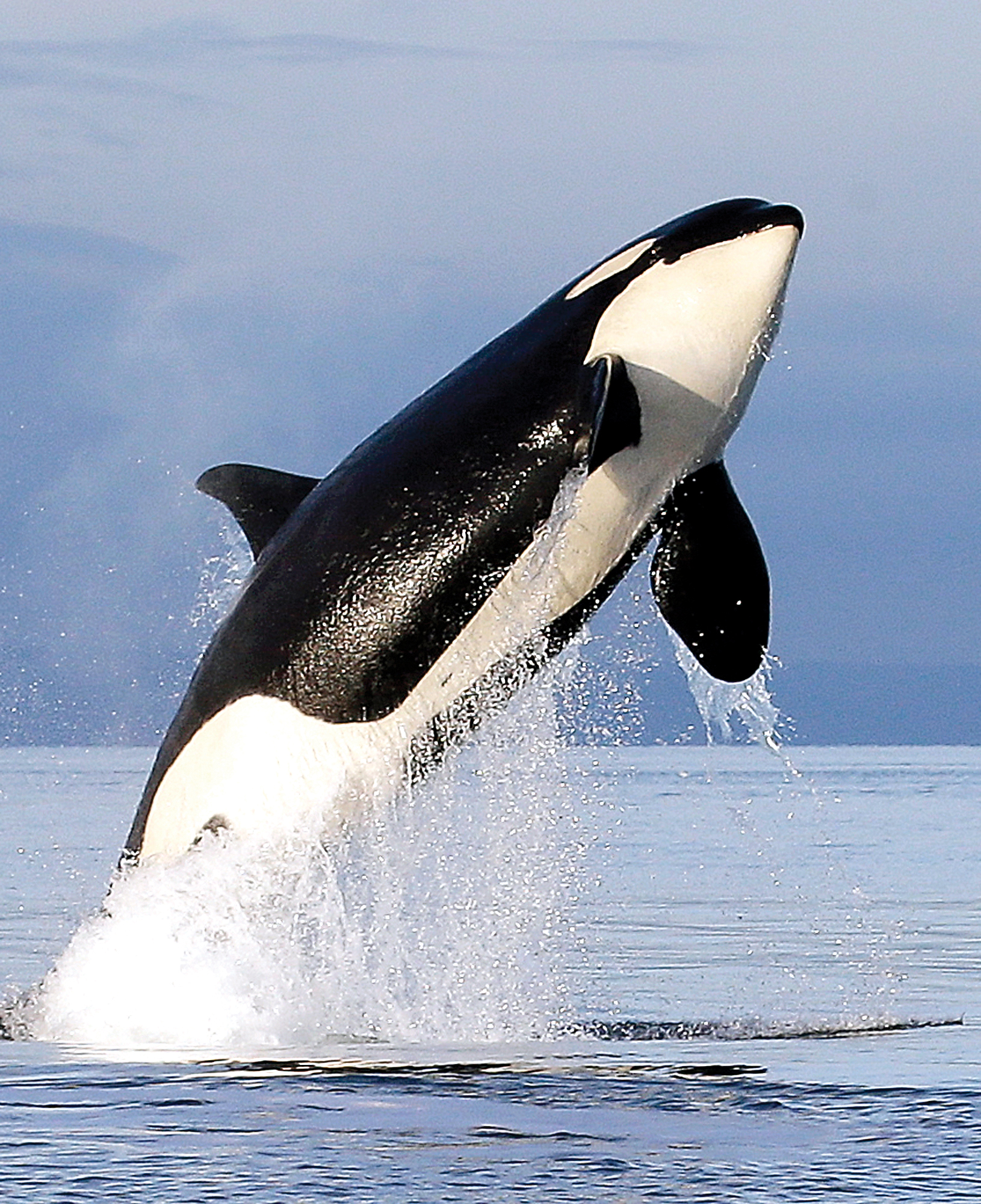
SEATTLE — The southern resident orcas that spend time in the inland waters of Washington state, including near Port Townsend, already are tagged and tracked, photographed and measured.
Researchers follow them by drone and by sea, analyzing their waste and their exhaled breath.
Now, experts want to add another layer to the exhaustive studies: individual health records for each endangered whale.
The records would take existing research on the creatures and combine it in one place.
The idea is to use them to monitor the orcas’ health trends individually and as a population. It’s similar to people having one medical record as they move from one doctor to the next or between specialists.
Eighty-four orcas typically appear in Puget Sound from spring to fall.
“The goal is to really start getting a lot of data and pull them together in a way that permits easier analysis,” said Joe Gaydos, a wildlife veterinarian at the University of California, Davis, and chief scientist with the SeaDoc Society, which is part of the university’s School of Veterinary Medicine.
“Ultimately, the real benefit of any health record is to help make [management] decisions,” Gaydos added.
For example, if an orca appears emaciated or is in bad shape during certain times of the year, wildlife managers can access the animal’s health history to see what’s going on and what they could do about it, he said.
Understanding the factors that affect an orca’s health will ultimately help pinpoint the key threats and how to reduce them, experts say.
“It will be really powerful to rule out things that aren’t important and focus in on what’s really important,” said Lynne Barre with NOAA Fisheries.
She said that will help inform research and management decisions in the long run.
The project aims to pull together data on behavior, reproductive success, skin diseases and other study areas to allow for integrated analysis, she said.
Scientists have enough data that they can now connect the dots to get meaningful answers, said Brad Hanson, a NOAA Fisheries wildlife biologist.
More than two dozen wildlife experts met in Seattle on Tuesday to develop plans for health records for the orcas.
The meeting was sponsored by SeaDoc Society, the National Oceanic and Atmospheric Administration Fisheries and the National Marine Mammal Foundation.
Many details are still being worked out, including who will maintain the data and how people will access it.
But an initial database would be launched this summer using readily available information, such as sex, age, gender and other details, Gaydos said. Other information would be added next year.
Elsewhere, scientists have studied individual animals to monitor their health, including North Atlantic right whales.
Using a database of hundreds of thousands of photographs taken over decades, researchers at the New England Aquarium and others have studied the body and skin conditions of about 400 individual right whales to assess their health.
Individual Puget Sound orcas are identified by unique black-and-white markings or variations in their fin shapes, and each whale is given a number and a name.
The Center for Whale Research on San Juan Island keeps the federal government’s annual census on the population.
The three families — the J, K, and L pods — are genetically and behaviorally distinct from other killer whales.
They use unique calls to communicate with one another and eat salmon rather than marine mammals.
Their numbers have fluctuated in recent decades as they have faced threats from pollution, lack of prey and disturbance from boats. They were listed as endangered in 2005.
