
Peninsula Daily News news sources
PORT ANGELES — An FBI agent identified as the person who forwarded emails that led to CIA Director David Petraeus’ investigation cut his teeth as a terrorism specialist following the 1999 arrest of an al-Qaida terrorist in Port Angeles.
Special Agent Frederick W. Humphries II, now 47, was assigned to the Seattle FBI office the night of Dec. 14, 1999, and used his classroom French to interrogate Ahmed Ressam, who had just brought a rental car loaded with explosives off the MV Coho ferry from Victoria.
At the time, Humphries’ time —three years — with the FBI was considered short, but his fluency in French was vital in interrogating Ressam, a French-speaking Algerian.
In fact, it was Humphries who determined that the man who then insisted he was a Canadian named Benni Noris was speaking an Algerian dialect of French, not Quebecois.
Flash forward to 2012.
Humphries was identified by law enforcement colleagues as the FBI agent who took the initial complaint from Jill Kelley.
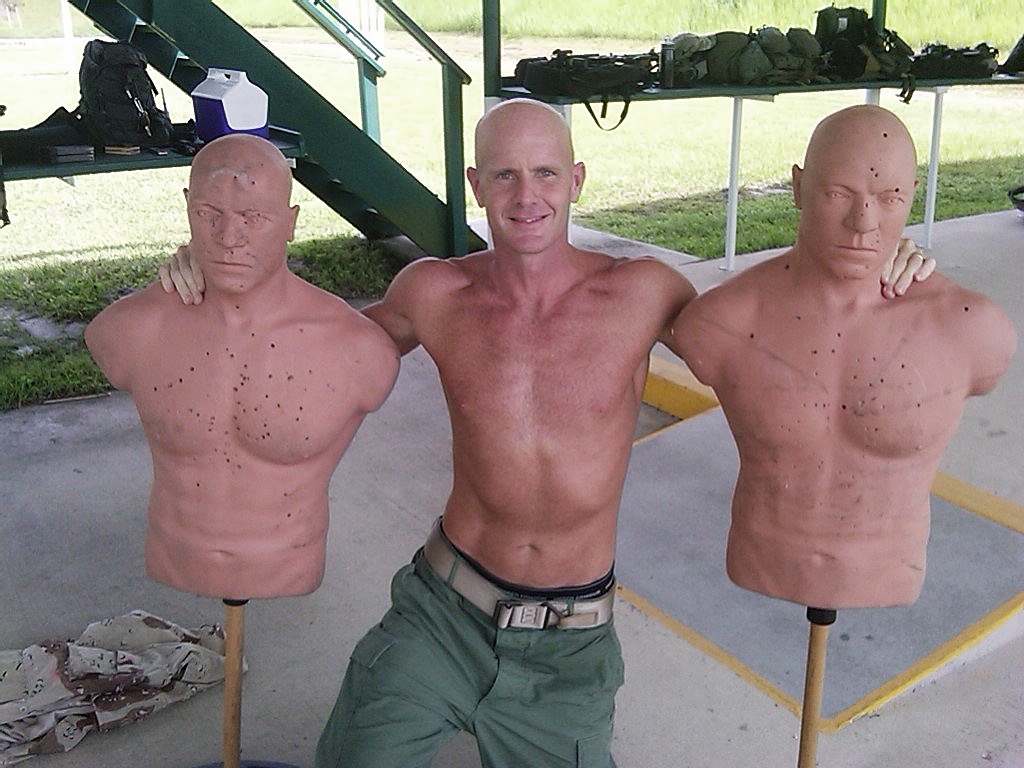
She is a Tampa woman active in Florida military circles and a personal friend — Humphries included her in a joke email to friends in 2010 showing him shirtless next to two shirtless target dummies — who received emails that accused her of inappropriately flirtatious behavior toward Petraeus, who resigned as CIA director.
The subsequent cyberstalking investigation uncovered an extramarital affair between Petraeus and Paula Broadwell, his biographer, who agents determined had sent the anonymous emails.
The scandal also ensnared Gen. John R. Allen, commander of NATO forces in Afghanistan, after FBI agents discovered what a law enforcement official described as sexually explicit email exchanges between him and Kelley.
But more than a decade ago, Humphries, a former Army paratrooper from Steilacoom near Tacoma, helped set up a command center at William R. Fairchild International Airport in Port Angeles following the Ressam arrest.
The next day, he accompanied the Algerian in a Clallam County sheriff’s car to Seattle, where interrogation continued for months.
He obtained a wealth of intelligence from Ressam that triggered investigations of alleged al-Qaida operatives from Paris to Guantanamo Bay.
When Ressam stopped talking to Humphries and other interrogators after a couple of years, Humphries agreed to testify for the defense about Ressam’s harsh treatment by the agent’s colleagues after the 9/11 attacks, The Seattle Times reported Thursday.
That trial was held in Los Angeles and also included testimony from customs inspectors who collared Ressam for bringing the explosives in a rented Chrysler 300M off the Coho and then leading them on a foot chase through downtown Port Angeles.
Ressam finally was tackled by customs inspector Mike Chapman.
Chapman left the customs service shortly afterward and recently was re-elected to his fourth four-year term as a Clallam County commissioner.
After years of quashed sentencings and legal maneuvers that went all the way to the U.S. Supreme Court, Ressam, now 45, finally was sentenced Oct. 23 to 37 years in federal prison, including time served, for plotting to blow up the international terminal at Los Angeles International Airport around the turn of the millennium.
Earlier in the investigation, Humphries was outspoken in opposing the FBI’s decision to turn Ressam over to senior agents from New York after the 9/11 attacks and warned that their tough tactics would stop the cooperation that Humphries had coaxed out of him.
Eventually, Ressam ceased cooperating, as Humphries predicted.
After his defense testimony, Humphries found himself sharply criticized within the FBI.
He insisted he had done right and owed it to Ressam, the man with whom he spoke just four hours after Ressam drove off the Coho ferry and into the clutches of the customs inspectors in Port Angeles.
According to investigation documents relating to the Ressam case, Humphries was phoned the night of Dec. 14, 1999, by fellow FBI Agent Patrick Gahan, who was in Port Angeles.
The suspect only identified himself as Benni Noris, a Canadian, and only spoke French.
Humphries, an American-born who learned French as a high school student in Canada, was needed.
Humphries obtained a copy of the standard arrest-rights card in French.
He phoned the customs staff in their trailer on Railroad Avenue in Port Angeles and spoke directly to the suspect on a speakerphone.
He quickly returned to a private conversation with Gahan after realizing Benni Noris’ French accent was Algerian, not Quebecois.
Humphries, Gahan and customs officials decided to hold Noris/Ressam in Clallam County jail for investigation of using false identification.
It bought them time to sort this out.
The next day, at a command post at the Port Angeles airport, the federal agents received a faxed photograph from an FBI agent based in Ottawa that had been given to him by the Canadian Security Intelligence Service.
It appeared that Benni Noris wasn’t who he said he was, based on the Canadian agencies’ tracking and tracing of Ahmed Ressam and “other guys” suspected of being in a terrorist cell.
Seattle FBI Agent Humphries’ first terrorism case turned out to be a big one, made even bigger by the events of Sept. 11, 2001.
Humphries and another FBI agent were in Algeria on 9/11 gathering evidence for Ressam’s pending trial.
Altogether, Humphries traveled nearly 300,000 miles — to France, Algeria, Germany and England — establishing Ressam’s links to Islamic terrorists.
That evidence led to Ressam’s numerous court hearings and eventual conviction last month.
By then, Humphries was assigned to the Tampa field office.
He had moved on to forwarded emails about the CIA director.
Notes from The Seattle Times, The New York Times and The Associated Press were compiled for this report.
