
By Dan Joling and Jonathan Fahey
The Associated Press
ANCHORAGE, Alaska — Royal Dutch Shell is giving up on its expensive and controversial push to produce oil in Alaska’s Arctic waters, a decision that darkens the long-term oil prospects of the U.S. and brings relief to environmental groups that had tried desperately to block the project.
Shell is abandoning the region “for the foreseeable future” because it failed to find enough oil to make further drilling worthwhile.
The company has spent more than $7 billion to explore for oil in Alaska’s Arctic, slogging through a years-long regulatory gauntlet and attracting spite from environmental groups who feared a spill in the Arctic’s harsh climate would be extremely difficult to clean up and devastating to polar bears, walruses, seals and other wildlife.
Shell pushed forward in hopes of finding a big new source of future revenue and establishing expertise and a presence in the Arctic, which geologists estimate holds a quarter or the world’s undiscovered conventional oil and gas.
The company also held the hopes of the state of Alaska, which has seen oil production and revenues decline sharply in recent years, and the U.S. oil industry, which looked to Alaska’s offshore Arctic as the next source of oil big enough to keep the country among the top three oil producers in the world along with Saudi Arabia and Russia.
An Energy Department advisory council called for an immediate expansion in oil exploration in the Alaskan Arctic to avoid an increased reliance on imported oil in the future, in part because it would take more than a decade for oil in the Arctic to be discovered, developed, and brought to market.
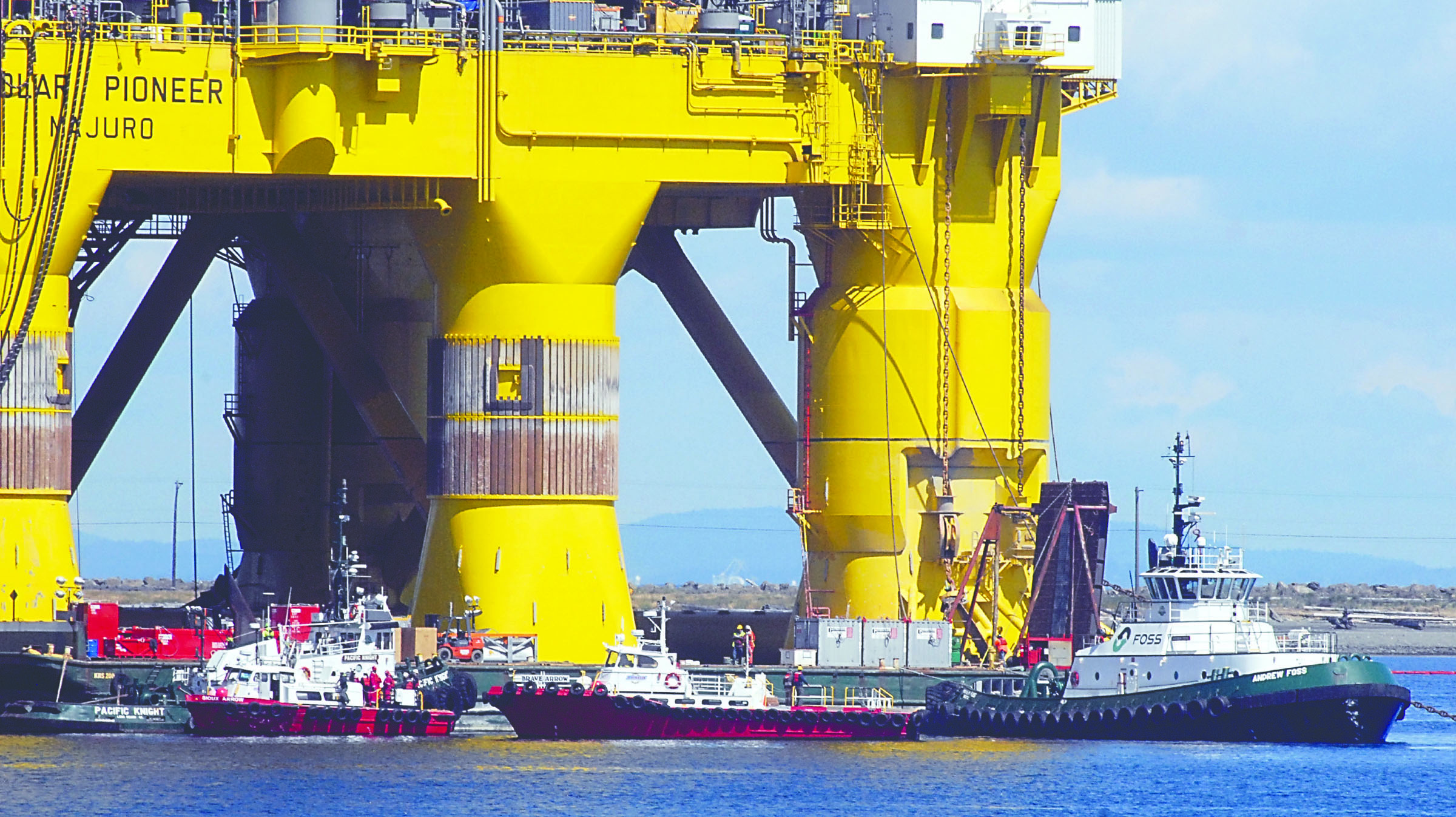
But Shell, drilling to 6,800 feet about 80 miles offshore in the Chukchi Sea off Alaska’s northwest coast and supported by a 28-vessel flotilla, just didn’t find much.
“Shell continues to see important exploration potential in the basin, and the area is likely to ultimately be of strategic importance to Alaska and the U.S.,” Marvin Odum, director of Shell’s operations in the Americas, said in a statement.
“However, this is a clearly disappointing exploration outcome for this part of the basin.”
Drilling exploratory wells that find little or no oil, known as “dry holes” in the industry, is common, especially in formations that have not been explored much in the past.
But Shell’s Chukchi failure is notable because it could have signaled the beginning of a push to unlock billions of barrels of oil from underneath the sea floor in the Artic at a time when scientists say the world needs to drastically reduce emissions of carbon dioxide from fossil fuel consumption in order to prevent catastrophic changes to the earth’s climate.
Environmental groups, who had staged media campaigns aimed at tarnishing Shell’s reputations and tried unsuccessfully to block Arctic-bound vessels with a string of kayaks, delighted in Shell’s disappointment.
“Big oil has sustained an unmitigated defeat,” Greenpeace UK executive director John Sauven said.
Shell, which is based in The Hague, Netherlands warned investors yesterday that the disappointing well results would lead to a charge against its earnings for the third quarter.
It didn’t disclose the size of the charge, but it said the accounting value of the project is $3 billion, with another $1.1 billion in commitments to contractors.
The company took charges of $2.1 billion in 2013 and $1.9 billion in 2014 also as a result of disappointing drilling results in the U.S.
In afternoon trading in London, Shell’s share price was down 2.7 percent at 1,515 pence in a weak overall market.
Shell’s share price has fallen by around a third over the past year as oil prices have fallen by half, to about $45 a barrel.
Those weak oil prices are forcing oil companies around the world to cancel or delay new exploration projects, especially those in risky or high-cost areas.
It was likely a factor in Shell’s decision to abandon offshore Alaska, analysts say.
“This Alaskan decision is a reaction to the lower oil price — an example of not going forward with a project because there is just not enough oil and gas to make it economic,” said Louise Cooper, an independent analyst at CooperCity.
“If the oil price rises again and the well becomes economic, then it can try again.”
The U.S. Geological Survey estimates U.S. Arctic waters in the Chukchi and Beaufort seas contain 26 billion barrels or more of recoverable oil in total.
Shell officials had called the Chukchi basin “a potential game-changer,” a vast untapped reservoir that could add to America’s energy supply for 50 years.
Charles Ebinger, senior fellow for the Brookings Institution Energy Security and Climate Initiative, said in an interview that a successful well by Shell would have been “a terribly big deal,” opening an area that U.S. officials say contains 15 billion barrels of oil.
Though countries are pushing for cleaner energy sources, analysts predict that the world will need another 10 million barrels a day between 2030 and 2040 to meet growing demand, especially in developing countries, Ebinger said.
“Areas like the Arctic are one of the areas that, if we’re going to be able to do this, we need to examine,” he said.
But Miyoko Sakashita, oceans program director for the Center for Biological Diversity, urged Shell not to try again.
“Polar bears, Alaska’s Arctic and our climate just caught a huge break,” Sakashita said. “Here’s hoping Shell leaves the Arctic forever.”
