
SEQUIM — Sequim School District officials estimate that about 77 percent of the proposed 20-year, $145.95 million construction bond would pay to replace Helen Haller Elementary and renovate and rebuild most of Sequim High School.
The other 23 percent would go to other identified district needs, such as building the first cafeteria at Greywolf Elementary School and improving its bus loop and heating, ventilation and air condition (HVAC) systems.
District officials also identified a need to improve the transportation center, upgrade the district’s athletic stadium and fields, add more security features to each school and build a new bus loop through the center of the main campus.
In addition to the bond on Feb. 11, voters will consider a four-year, $36.2 million EP&O levy renewal, with district leaders saying it contributes about 17 percent of the district’s funding for teacher and staffing levels, athletics and arts programs, special education, technology updates and more.
Greywolf Elementary
Opened in 1991, Greywolf Elementary, at 171 Carlsborg Road, was planned and built without a dedicated cafeteria in its blueprints, district staff said.
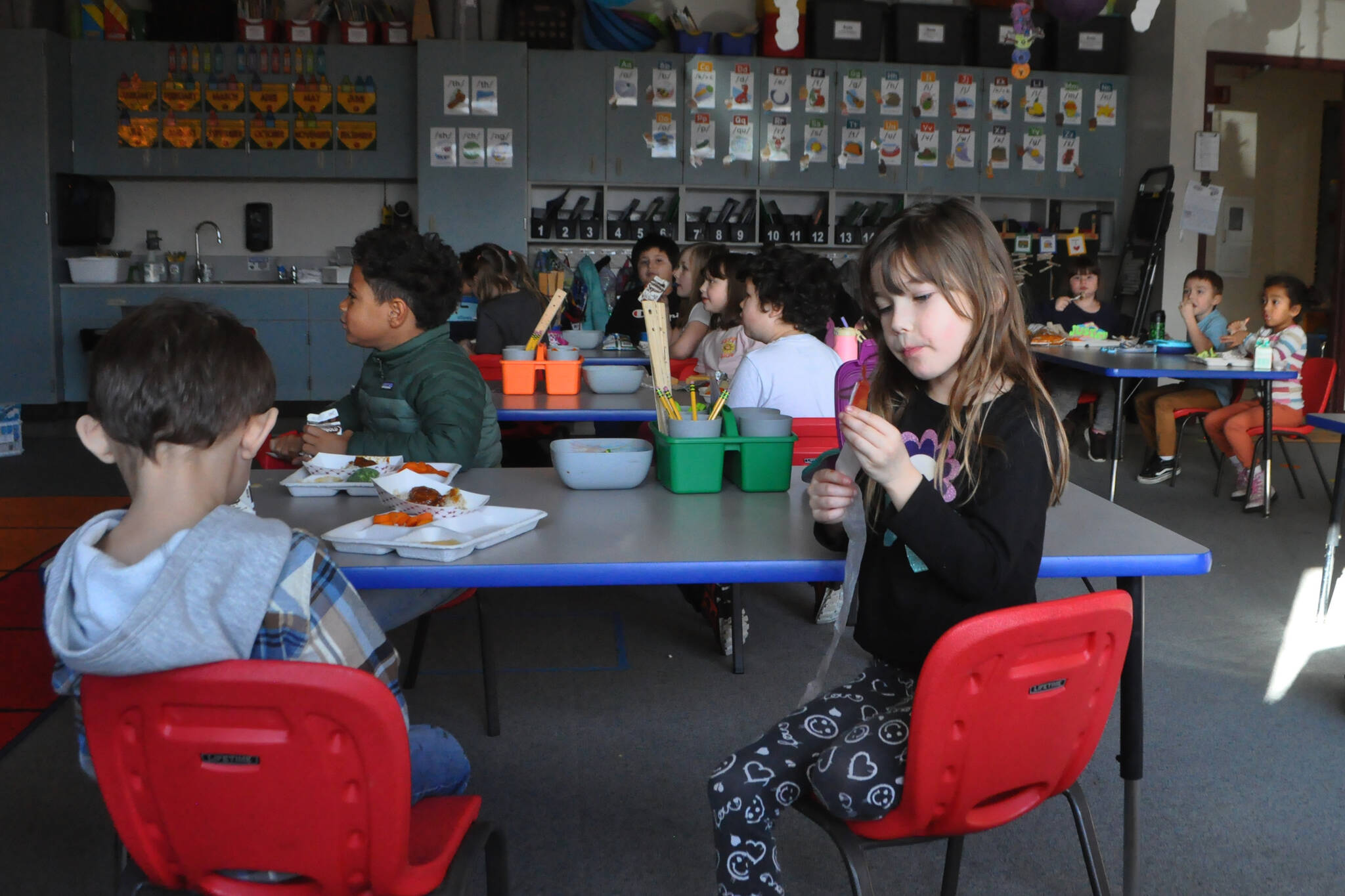
Since its opening, students who eat school lunches largely have had to receive their hot lunches from a serving kitchen and then walk down school halls to eat in their classrooms.
The school hosts about 550 pre-kindergarten through second grade students.
For a short time in its history, students ate in the gymnasium, but the timing did not work out between physical education classes and lunch cleanup, principal Jennifer Lopez said.
“Due to the setup of cafeteria tables, the last P.E. class before lunch has to do an activity outside for part of their P.E. time to allow custodial staff to set up tables,” she said.
While the physical education teacher has his lunch and planning time during most of the school’s lunch time, Lopez said the next class after lunch has about half its time disrupted due to cleanup, and the P.E. teacher must reset the gymnasium space for the afternoon.
“We’ve eaten in our classrooms for a majority of the school’s history,” she said.
Each classroom has wipes, spray bottles and other cleaning supplies to clean desks for learning in the afternoon.
Lopez said either paraeducators or lunch supervisors are cleaning up or assigning students who finish eating early to clean up their spaces.
Due to staffing cuts last year, the nighttime custodial staff was reduced in half, Lopez said, leading to rooms being vacuumed four of the five school nights, with duties split by two staffers.
Some teachers report they share vacuums to clean up as well.
Specifics for a new cafeteria’s design will be determined later on, Superintendent Regan Nickels said, as the district does not have funding for design and engineering for any of the bond proposals.
If the bond passes, the school district would hire architect/engineering firm(s) and hold stakeholder meetings about the logistics for all of the projects.
District administrators said safety and security will be improved at Greywolf in a similar fashion to the other schools by adding a vestibule that would allow for only one way into a school. Visitors would go into a lobby through unlocked doors and be met by staff and asked to show ID and sign in before they could go through a second set of locked doors.
Bus loop
Traveling along Carlsborg Road by the school before and after school days can be a slog for travelers.
District staff said it’s due to the school’s parking and drop-off and pick-up situation for buses and parents.
Mike Santos, the district’s director of facilities, operations and security, said the lot is split by a curb and island, so “there’s literally only one way in and one way out on both sides of the property.”
“(That) impedes traffic and complicates the exit and entrance of cars, so there’s some (work) there that would significantly help the flow of traffic in and out of the parking lot,” he said.
Santos said the current layout isn’t sufficient for buses, and that’s why they go to the back of the building, which he also said isn’t ideal.
Lopez said the entrances and exits create logjams on Carlsborg Road, and at the beginning of the 2023-24 school year, staff introduced no left-hand turns into the school lot from Carlsborg Road.
They’ve also worked with the state Department of Transportation to extend the U.S. Highway 101/Carlsborg Road traffic light that turns east to be extended in the mornings and afternoons to keep cars moving, Lopez said.
Nickels said they’ll work with stakeholders and staff, including bus drivers, to find the optimal layout for the lot.
HVAC
Another element of the bond proposal includes replacing the school’s cabinet heaters and air handlers, original to the school’s opening, Santos said.
They’d also clean the duct work and install a system that could be controlled remotely to ensure it’s energy efficient, he said.
Air conditioning likely will not be included in the project due to the small number of days it would be needed, and due to requirements under Washington’s Clean Building Act of 2016, Santos said.
Connecting to Clallam County’s Carlsborg sewer project is not part of the bond proposal as district staff anticipate Greywolf’s septic system continuing to operate for a number of years.
“It’s on our radar, but currently it’s not in the scope of this,” Santos said.
He said it would be cost prohibitive to build the necessary infrastructure to connect to the system, and it would have a significant cost each month in sewer fees year-round despite no students during the summer months.
Transportation Center
A portion of the transportation center’s garage at 911 S. Third Ave. dates back to the 1960s, staff report. The site, a former lumberyard, houses all of the district’s buses, a fueling station and a repair shop that was formerly a showroom.
Staff estimate more than 1,300 children ride a bus on weekdays, not including field trips and athletic events.
Santos said the site, which he describes as a “big bowl,” has a multitude of problems, including drainage.
“The way that the stormwater drains off of and onto the property actually goes under the building,” he said.
Rich Fulmer, interim transportation director, said rainwater drains from the flat roof of the main building and into a pipe that’s supposed to come out the other side, but it hardly trickles out after a rainstorm. Staff said they believe water is going under the building instead, possibly creating a sinkhole.
As a precaution in the repair shop, heavier equipment and buses are kept and parked in certain areas, staff said.
The repair shop’s northern wall also has separated from the foundation, and staff have seen its gap continue to grow. Bricks also have cracks throughout the wall, and sunlight can be seen through it.
Fulmer said they put a plywood plate cover over a portion of the wall a few years ago, but the wall continues to deteriorate.
“You can see the concrete move when buses come in for repairs,” he said.
Santos said he hired a roofer to replace two steel panels on a bus barn to the east of the main building but was told it was unsafe to be on.
“So we can’t repair that roof, and it’s not much of a garage when there’s leaks in the roof,” he said.
Santos said a structural engineer assessed the transportation center and deemed it more cost effective to replace rather than try to repair it.
He said water infiltration is impacting buildings at Helen Haller Elementary and Sequim High School, but it’s most evident at the center.
If the bond is approved, Santos said they would assess what’s best for the transportation fleet’s facility.
“We don’t know what the cost tradeoff is between regrading that property, creating proper stormwater control and rebuilding on that site would be versus finding another piece of property to relocate the transportation center and just sell that property,” he said. “That’s the (to-be-determined) part.”
For more information on the bond and levy proposals, visit sequimschools.org.
________
Matthew Nash is a reporter with the Olympic Peninsula News Group, which is composed of Sound Publishing newspapers Peninsula Daily News, Sequim Gazette and Forks Forum. He can be reached by email at matthew.nash@sequimgazette.com. He has family employed and enrolled in Sequim School District.
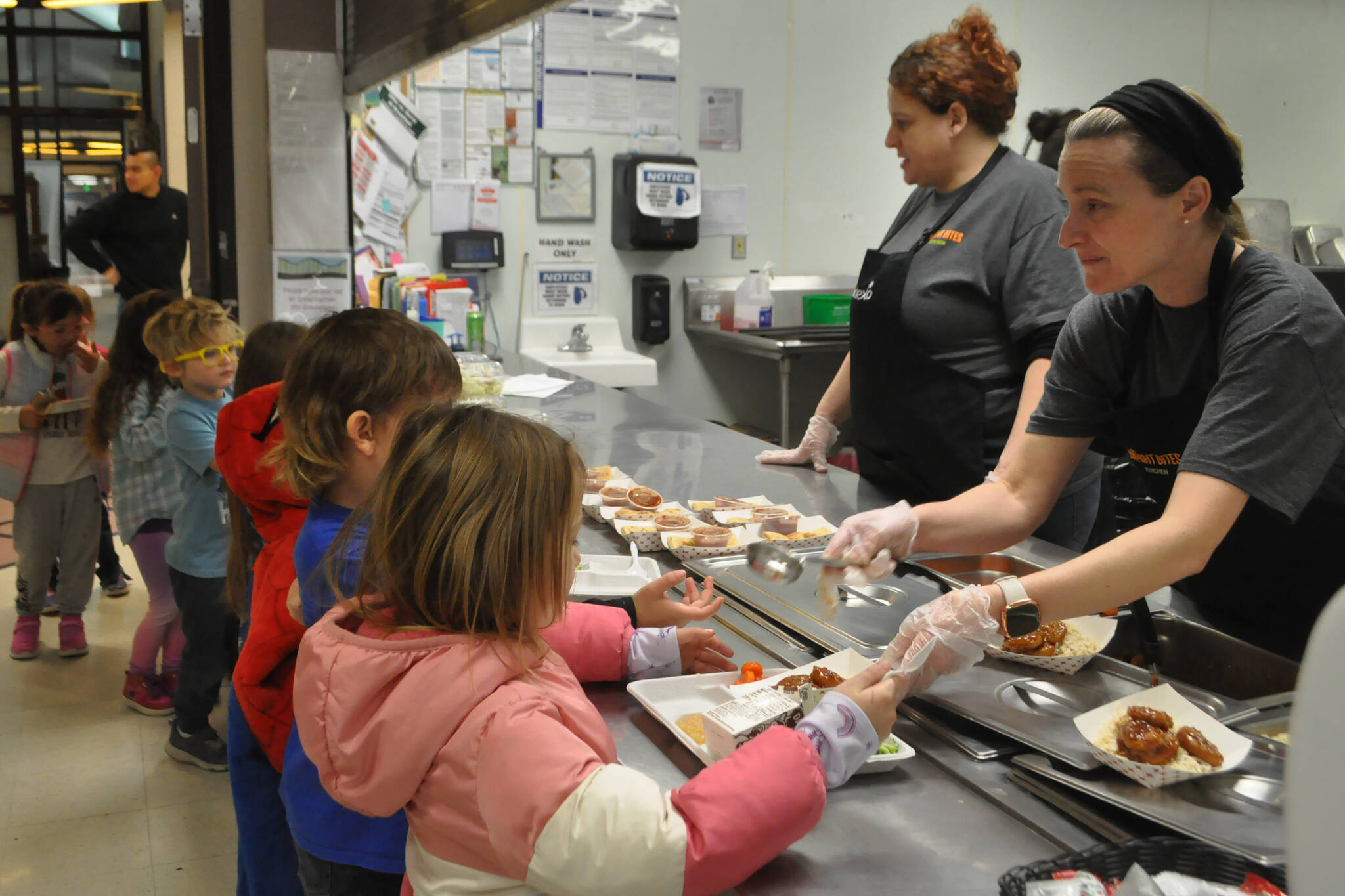
Matthew Nash/Olympic Peninsula News Group Greywolf Elementary food service workers Christine McBride, left, and Adrienne Christian, serve lunches to kindergartners. The bond proposal includes constructing a cafeteria so instructional space can be separate from breakfast and lunches.
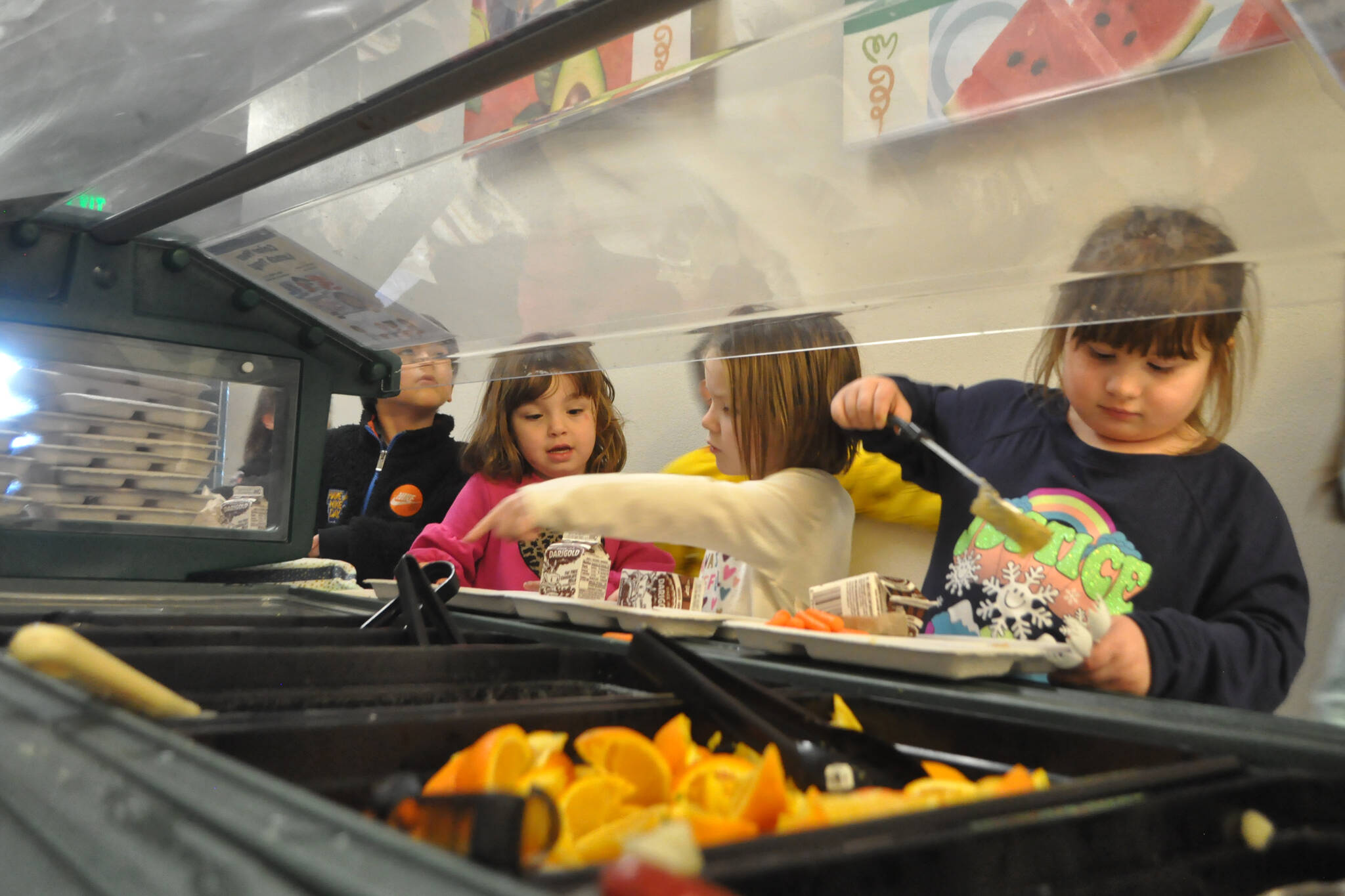
Kindergarteners Pria Barr, Kiara Englebright and Lilly Aslin gather their lunches before heading back to class, where all Greywolf Elementary students eat because they do not have a dedicated cafeteria. (Matthew Nash/Olympic Peninsula News Group)
