
PORT ANGELES — City Council members said this week they will consider increasing Port Angeles Fire Department personnel by adding a second, as-yet-undetermined Medic 1 fee increase to ratepayers’ utility bills in 2017.
Monthly Medic 1 utility fees that are now $6.90 per residential ratepayer will increase 4 percent, or 28 cents — $3.36 a year — in January 2017.
Businesses pay about $7.20 per ratepayer and will increase by about 29 cents per month.
No date has been set for the council to consider a second fee increase.
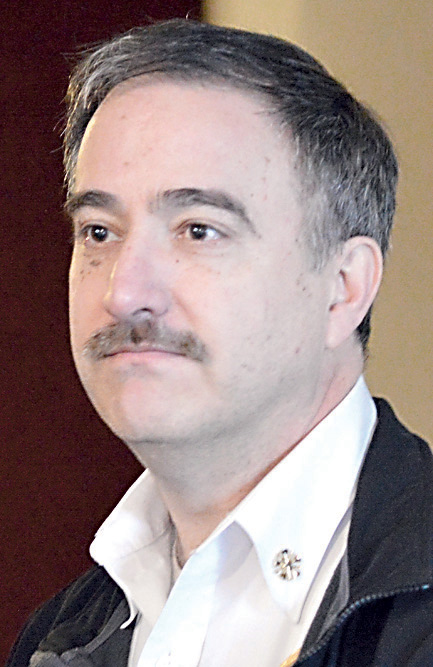
Fire Chief Ken Dubuc said Wednesday that without a second Medic 1 increase, fire insurance rates for homeowners and business owners will go up or the department budget — and staff — will continue to be burdened by overtime costs.
The second increase would have to pass muster with the city Utility Advisory Committee before being considered by the City Council, Dubuc said.
Increased calls
Dubuc told the City Council at its work session Tuesday that the fee hike was needed to cut overtime for a department staff that has remained at the same level since 1991 but is handling 240 percent more emergency calls since then.
“Last year was the highest in history,” Dubuc said.
“It’s 7 percent higher this year than the same time last year.”
Dubuc said Wednesday the additional fee hike will be determined when firmer revenue projections for 2017 are in place later this year.
“We really don’t know how much to ask for until we know how much we need,” Dubuc said.
Dubuc said the fee increase would help stave off projected citywide increases in fire insurance rates driven by the Washington Surveying and Rating Bureau, an insurance underwriter.
The WSRB said the fire department’s emergency calls have increased from 2,956 in 2001 — the last time the not-for-profit group rated the city — to 4,464 in 2015.
The department has been at a staffing level of 4.5 emergency personnel on duty per 24-hour shift since 1991.
The WSRB underwrites property for the 90 percent of property and casualty insurance companies that do business in Port Angeles.
It assigns protection-class grades of 1 through 10 to communities’ fire protection-suppression capabilities based on fire departments, water supplies and 9-1-1 services.
In late 2015, the WSRB assigned Port Angeles a preliminary rating of 5 — a downgrade from 4 in 2001 — primarily because the department’s increased workload resulted in decreased training hours and prevention work, Dubuc said.
The rating of 5 will go into effect unless the department can staff five positions on duty per 24-hour shift beginning in January 2017, which can be done now only with overtime.
The department also must meet other requirements such as adding a quick-attack pumper truck and reclassifying a training officer to assistant chief, both of which Dubuc said can be done within the department’s budget.
The rating will be kept at 4 if the city meets all the requirements — and insurance rates will not go up.
Whatever increase that’s required in the Medic 1 rate “will be significantly less than the increase that would come with the insurance change,” Dubuc said.
Insurance
If the requirements are not met, Dubuc said, insurance increases would average 10 percent in the fire insurance portion of commercial policies and 5 percent for fire insurance portions of residential policies.
For example, Dubuc said, the increase would be $35 more a year for a $600 residential policy and $178 more a year for small retail businesses of about 1,500 square feet.
Overtime would cost an estimated $125,000 to meet the WSRB’s staffing requirement.
“If we address the long-term staffing issue, then we’ll save all of that $125,000 of overtime,” Dubuc said.
“We can do it in the short term with overtime, but in the long term, that’s not the right solution because it just burns our people out.”
Each additional firefighter-paramedic would cost the department about $110,000 a year in salary and benefits, Dubuc estimated.
“The bottom line is, we would all pay more, but at least you would get an increase in service,” he said in a Wednesday interview.
“We don’t want people paying more money and getting nothing in return.”
Continued use of overtime is not the answer, city Finance Director Byron Olson said at Tuesday’s work session.
“It just will wear the folks out and will not be a long-term solution,” he said.
City Councilman Brad Collins saw the Medic 1 increase in a positive light.
“This is a positive way to move forward and save money,” he said.
“I don’t see why we can’t make this work.”
Fire department overtime “has been an issue that’s been growing and growing every year,” Councilwoman Cherie Kidd said.
“We need to move forward in this direction.”
Councilman Michael Merideth said current overtime levels were not sustainable by fire department staff.
“They have lives also,” he said.
Dubuc pledged to sell the as-yet-unspecified Medic 1 increase to “every single stakeholder,” from apartment building owners to nursing home operators, before the City Council considers approving it.
________
Senior Staff Writer Paul Gottlieb can be reached at 360-452-2345, ext. 55650, or at pgottlieb@peninsuladailynews.com.
