
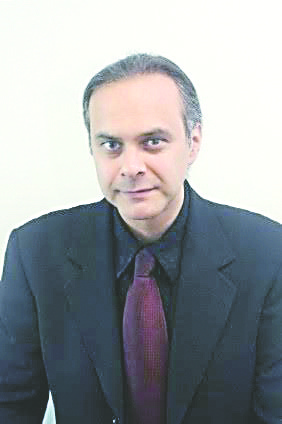
NEAH BAY — Facing the ocean that provides sustenance physical and spiritual, the author of The Sea Is My Country: The Maritime World of the Makahs will give a presentation, reading and signing Thursday afternoon.
Joshua L. Reid, the Yale University scholar who spent childhood days walking to Cape Alava and many more days as a student at the Makah Cultural and Research Center, will give the public program from 1 p.m. to 3 p.m. at the Makah Tribal Marina, 1321 Bayview Ave.
Admission is free while copies of The Sea Is My Country will be available for $40.
After his 416-page saga was published in May by Yale University Press, Reid promised to come back to Neah Bay for a reading.
That became a little easier when the Yale graduate, who had been teaching at the University of Massachusetts in Boston, landed a new job as professor of American Indian studies and history at the University of Washington in Seattle.
“We are very excited to host this,” Janine Ledford, executive director of the research center popularly known as the Makah Museum, said of Thursday’s event.
She added that she and her staff chose the marina for it because the conference room there holds more people than the museum’s classroom.
Decade in the making
Reid’s voyage toward publication of The Sea spanned a decade.
In its pages he takes readers through more than two centuries, starting in 1788 when Tatoosh, the Makah chief, beheld the Felice Adventurer, captained by British Royal Navy veteran John Meares, entering Makah waters.
“In order to show his stout, courageous heart,” Reid writes, “Tatoosh painted his face black and added glittering sand.”
“So surly and forbidding a character we had not yet seen,” Meares wrote in his log after sighting the chief.
Thus Reid, a member of the Snohomish tribe who grew up in Olympia, takes us deep into the past, present and future of the Makah, a nation living life in concert with the Pacific Ocean.
“Makah leaders recognized the foundation of their power and identity,” he wrote. The chief Caqawix (tsuh-kah-wihtl) expressed this clearly during the negotiations for the 1855 Treaty of Neah Bay.
“I want the sea. That is my country,” he declared.
Whaling rights
The book also delves into the modern struggle for whaling rights, painting a vivid picture of the day in May 1999 when Makah hunters killed a gray whale at Neah Bay.
In The Sea, Reid hopes to illuminate “a sense of the challenges Makahs have faced and continue to face . . . Perhaps this will help readers better understand why Makahs continue to whale today.”
Through hunting the leviathans off Cape Flattery, Reid wrote, “today’s Makahs are articulating a traditional future instead of grasping at a long-lost static past.”
Reid also quoted Ledford: Whaling is part of building a healthy population for the future, she has said; the preparations the whalers make, with support from their families, strengthen the whole community.
“[Reid] has approached this project with unequivocal scholarship,” the Makah Tribal Council and Makah Cultural and Research Center wrote in the foreword for The Sea.
“He has provided for the Makah voice to be heard within his work, something that is often missing in publications.
“As a modern tribe we continually work to protect our treaty rights and way of life . . . all the while immersing our children in cultural traditions,” the foreword continues.
“We have been working through the federal government’s procedures to resume our treaty-secured right to hunt whales for more than twenty years.
“This battle continues while another generation of whalers comes of age.”
“So much misleading or inaccurate information is available to the public,” yet The Sea Is My Country “enlightens readers, disabling stereotypes with valid facts, figures and an extensive bibliography . . . We expect this book will quickly become a treasured resource.”
________
Features Editor Diane Urbani de la Paz can be reached at 360-452-2345, ext. 5062, or at diane.urbani@peninsuladailynews.com.
