
By Tiffany Royal Northwest Indian Fisheries Commission
PORT ANGELES — Habitat restoration is planned on a 1,200-foot stretch of Ediz Hook this summer.
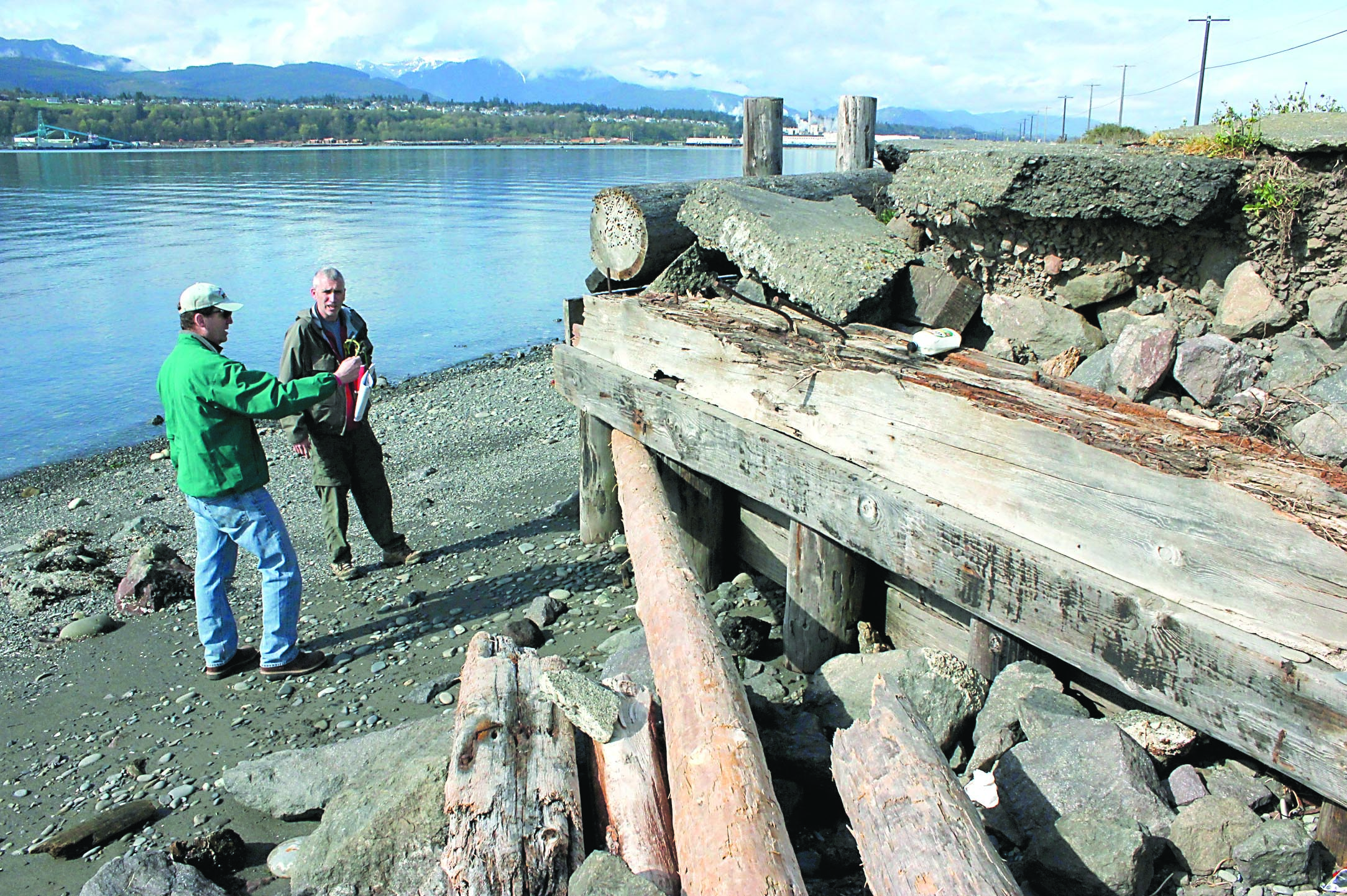
The Lower Elwha Klallam tribe and state Department of Natural Resources will restore the “A-frame” site on the spit, a former log dump area that was used until the 1970s.
It will be cleared of fill and existing structures during an eight-week period starting June 16.
The first step — breaking up the concrete — may begin earlier, according to Mike McHenry, the tribe’s habitat program manager.
“The goal is to improve the shoreline for forage fish spawning, including smelt and sand lance, the critters that salmon like to eat,” McHenry said.
“It will also benefit people because it will be much more accessible for recreation.
“It’s kind of a dangerous place now because of the fill and the junk that’s there.”
This project is the third of three phases of restoration of central Ediz Hook.
The first phase restored 1,800 linear feet of shoreline to the west of the site and included grading and placement of 22,000 cubic feet of sand, installation of large woody debris and revegetation with native dune grass and wildflowers.
In the second phase, DNR removed the over-water dock portion of the A-frame, constructed mostly of creosote-treated pilings, in 2008.
However, other portions of the structure were left behind, such as shoreline armoring, concrete chunks, metal scraps and other debris.
The tribe’s habitat restoration crew also will remove 5,000 yards of fill, some of which has been determined as lightly contaminated by hydrocarbons, such as petroleum and wood waste.
This material will be replaced with clean sand and gravel to reshape the beach.
The crew will add woody debris to stabilize the area, then finish it off by planting native dune grasses.
The work will cost about $500,000, McHenry said.
Funding comes from an Environmental Protection Agency Puget Sound Tribal Implementation Assistance grant.
“The costs are high because of the contaminated fill” and trucking, McHenry said.
“Some will be trucked as far as Bremerton.”
One benefit of the project is that the restored beach will naturally protect Ediz Hook Road, which has been subjected to erosive forces for years, McHenry said.
During restoration, the portion of the Port Angeles Waterfront Trail adjacent to the A-frame site will stay open, but the construction area will be fenced, preventing public access.
DNR and the tribe each contributed funds in 2009 to develop a feasibility study and design for the project.
“The Ediz Hook project is already a great success story and illustrates the effectiveness of partnerships in restoring our shorelines,” said Peter Goldmark, state commissioner of public lands.
“DNR is proud to be a part of this restoration effort with the Lower Elwha tribe and the city of Port Angeles.”
The city of Port Angeles has been intimately involved with the planning, McHenry said; it has permitted the project and has been “just generally supportive” of the improvement.
Said Nathan West, director of city community and economic development:
“The city of Port Angeles is excited about the improvements that this project will make to this very visible and highly utilized portion of Ediz Hook.
“Ediz Hook is a priority recreation area as established by our Shoreline Master Program public visioning process.
“The city is very grateful to the tribe and DNR for their effort in ensuring this public vision is fulfilled.”
________
Tiffany Royal is the information officer for the Hood Canal/Strait of Juan de Fuca Northwest Indian Fisheries Commission.
PDN Managing Editor/News Leah Leach contributed to this report.
