
By Gene Johnson
The Associated Press
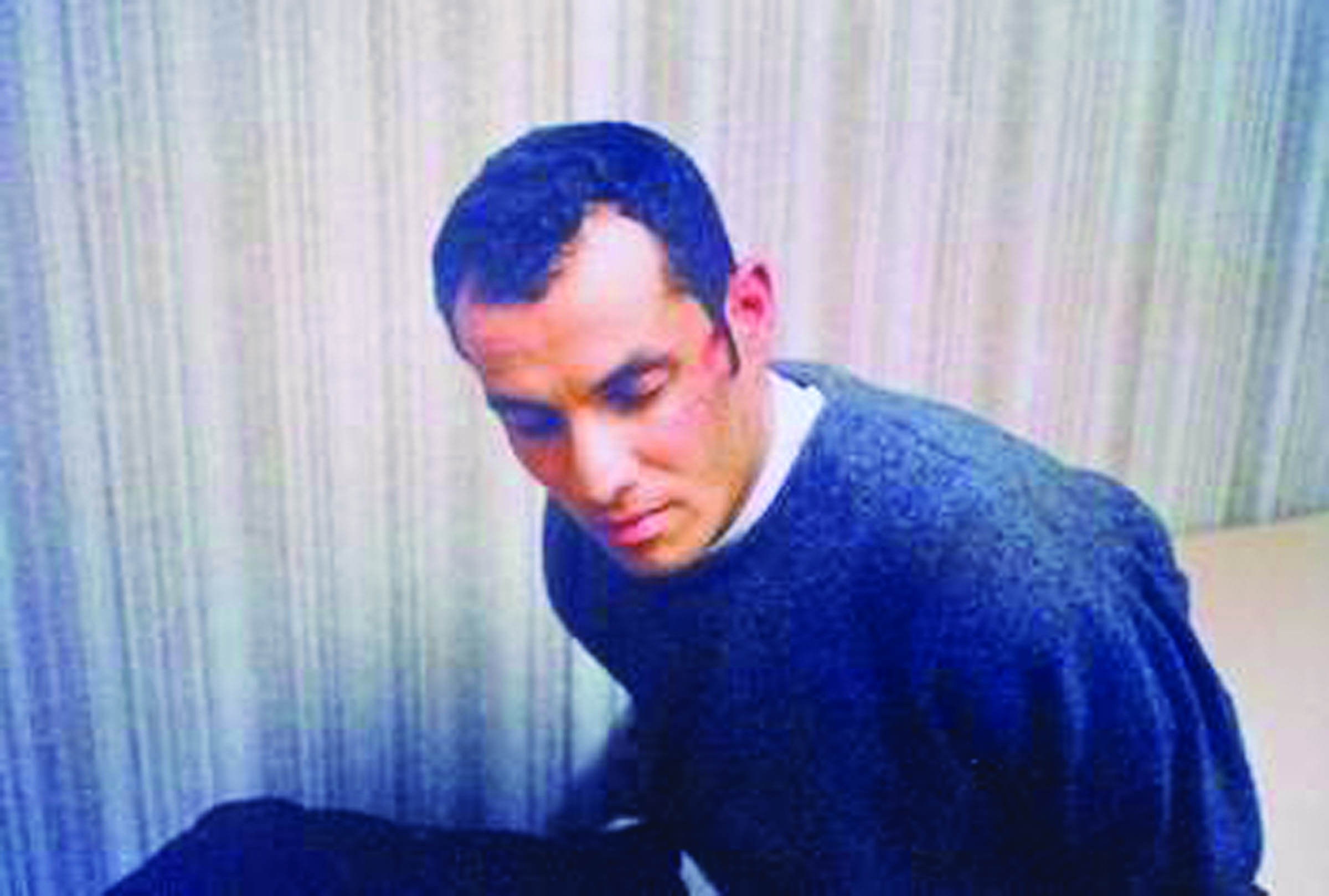
SEATTLE — Ahmed Ressam, the al-Qaida-trained terrorist arrested in Port Angeles in 1999 after driving a rental car packed with explosives off the MV Coho from Victoria, has been sentenced twice before by a federal judge.
Each time, U.S. District Judge John C. Coughenour in Seattle ordered him to serve 22-year terms for his plan to bomb Los Angeles International Airport.
Ressam, an Algerian national, is scheduled to be sentenced for a third time next month.
The difference this time? He’s expected to get more than 22 years.
Each of Coughenour’s previous sentences was struck down after prosecutors appealed to as high as the U.S. Supreme Court.
Most recently, the 9th U.S. Circuit Court of Appeals held that 22 years was simply too low for the mass murder Ressam tried to commit by blowing up the international terminal at the Los Angeles airport, and the sentence would have led to his release at age 51 — young enough to still pose a danger to American citizens.
Ressam’s attorneys, who previously recommended that he face as little as 12 years in prison, have conceded that he should face at least three decades to satisfy the appeals courts.
But no more than 34 years.
They suggest that he poses little future danger to the public because his former confederates know that he cooperated with investigators for a time.
“Mr. Ressam turned on his brutal confederates, those confederates know that he is a traitor, and they know he is responsible for the imprisonment of many of their cohorts,” Seattle Federal Public Defender Tom Hillier wrote in a sentencing memo.
“Mr. Ressam’s life is forever in danger.”
The Justice Department is seeking a sentence of life in prison.
In a document filed with the court, Assistant U.S. attorney Helen Brunner noted that in the 11-plus years since Ressam was convicted, “the United States has experienced the extreme misfortune of learning first-hand precisely what horrors Ressam’s plans would have unleashed if astute law enforcement and good fortune had not intervened.”
An alert customs inspector in Port Angeles noticed that Ressam appeared suspicious when he drove the rented Chrysler 300M sedan off the ferry from British Columbia on Dec. 16, 1999, and signaled him get out of the car for further inspection.
His arrest, after a brief foot chase, prompted fears of a terrorist attack and the cancellation of Seattle’s Y2K fireworks public gathering at the Space Needle.
Four Customs inspectors involved in the discovery and capture of Ressam received commendation medals from the Department of the Treasury, under which the then-U.S. Customs Service fell before the Sept. 11, 2001, terrorist attacks.
One of the inspectors who made the initial discovery of Ressam in the car, Diana Dean, has been further honored by U.S. Customs and Border Patrol in the Department of Homeland Security by having an anti-terrorism medal co-named after her.
Ressam’s case has been vexing because he started cooperating after he was convicted, and was interviewed more than 70 times by terror investigators from the U.S., Canada, Great Britain, Spain, Italy, Germany and France.
Information he provided helped convict several terror suspects; prompted the famous August 2001 FBI memo titled “Bin Laden determined to strike in U.S.,” and contributed to the arrest of suspected Osama bin Laden lieutenant Abu Zubaydah, who remains in custody without charges at Guantanamo Bay, Cuba.
However, Ressam subsequently recanted all of his cooperation when it became clear that the prosecutors weren’t going to recommend that he serve less than 27 years in prison.
The recanting forced the Justice Department to drop charges against two suspected co-conspirators, Samir Ait Mohamed and Abu Doha.
In previously sentencing Ressam, Coughenour noted that before he went to trial, the government offered him a 25-year sentence if he would plead guilty — no cooperation necessary.
Ressam refused, but Coughenour said that any discount for Ressam’s cooperation, while it lasted, should start from that 25-year offer. Hence, the 22-year sentence.
The appeals court rejected that rationale.
Ressam has spent the past seven years in solitary confinement at the U.S. Penitentiary at Florence, Colo., where the bed, desk, sink, toilet and shower in his 87-square-foot cell are all made of poured concrete.
His sentencing is set for Oct. 24.
________
The Peninsula Daily News contributed to this report.
