
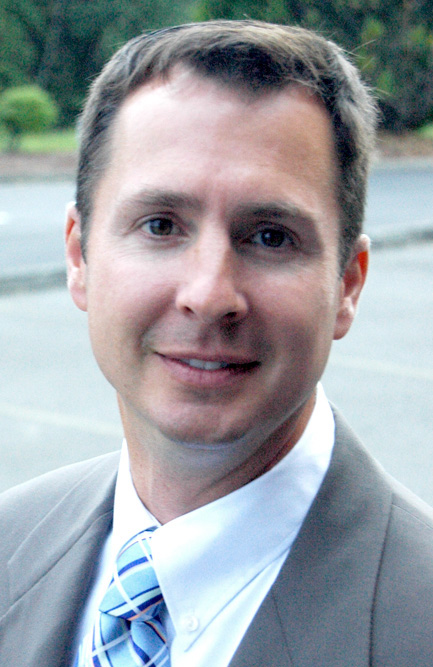
PORT ANGELES — A failure to produce requested public land-use documents in 2013 has resulted in a proposed settlement that would cost Clallam County $550,000, according to county Prosecuting Attorney Mark Nichols.
Nichols issued a three-page memorandum Thursday that sheds light on a 2014 Public Records Act lawsuit and subsequent effort to settle out of court.
Thousands of pages of documents that were sought in a 2013 public records request were discovered in a labeled box in a locked storage room in the basement of the Clallam County Courthouse and on a secured electronic file folder in 2016.
“These are later-discovered records that were in our possession that were not discovered at a point in time when they should have been,” Nichols said in a Friday interview.
Commissioner Mark Ozias, who along with Commissioner Bill Peach approved the $300,000 purchase of the first parcel in Clallam Bay last Tuesday, said the case represents a “systemic failure” in county government but will result in an agreement settlement.
Commissioner Mike Chapman voted against the settlement because of public process concerns.
County commissioners will conduct a public hearing Tuesday on a $550,000 debatable budget emergency to fund the negotiated settlement, which would result in a 1-acre park with waterfront access in Clallam Bay.
The hearing will begin at 10:30 a.m. in the commissioners’ meeting room (160) at the county courthouse, 223 E. Fourth St.
Scott and Elizabeth Lange filed the 2014 lawsuit in Kitsap County Superior Court, naming Clallam County, the Department of Community Development and Prosecuting Attorney’s Office.
The lawsuit is centered on two main issues connected to the county’s processing of public records requests filed between 2009 and 2013, Nichols said in his memo.
The first issue was whether the county properly redacted or withheld an email thread pursuant to attorney-client privilege, Nichols said.
“While the county has arguments that support these actions because this communication was an exchange between the Prosecutor’s Office and one of its clients that sought legal advice, and that any objection to these actions should be barred by the applicable statute of limitations, the plaintiff in the lawsuit has counterarguments as to why these actions were improper and the applicable statue of limitations should not apply,” Nichols wrote.
County Treasurer Selinda Barkhuis has stated publicly that she wrote the emails when she was a senior planner with the Department of Community Development (DCD).
Barkhuis, a licensed attorney, told commissioners Tuesday that Nichols “knowingly, repeatedly and wrongfully” redacted her emails from the public record.
The second and “more complicated” issue was whether Clallam County performed a reasonable search for records sought in 2013 that were connected to 2007 code amendments for land-use regulation, Nichols said.
A reasonable search means looking for records in locked file cabinets in county offices, Nichols said.
Clallam County received a similar public records request for documents relating to the 2007 code amendments in February 2016. Both requests were filed by the Langes.
Given that the Langes were in active litigation with the county, the Prosecuting Attorney’s Office took a “more active role” in helping departments process the 2016 request, Nichols said.
A representative of the Prosecuting Attorney’s Office accompanied a DCD official to a storage room in the courthouse basement.
The prosecutor’s representative noticed a large box in the storage room.
“Recognizing that the box, by virtue of its label, might contain records responsive to the 2013 request, the prosecutor’s representative immediately reviewed its contents,” Nichols said in his memo.
“The box contained approximately 2,500 pages of records, many of which were determined to be responsive to the 2013 request but which had never before been produced.”
In addition, the DCD provided access to an electronic file folder of one of its former employees. The files were on a computer drive only accessible to the DCD.
“The relevant folder contained 1,219 pages of records, many of which were deemed to be responsive to the 2013 request but that had never before been produced,” Nichols wrote.
“The prosecutor’s office immediately produced the responsive records found in the box and electronic folder to the plaintiff.”
Nichols could not confirm the identify of the former employee who had the electronic folder when reached by cellphone Friday night.
The Board of County Commissioners then discovered additional records that might have been responsive to the Langes’ request in its locked basement archives, Nichols said.
“These later discovered records totaled 139 pages, some of which were deemed to be responsive to the 2013 request but that had never before been produced,” Nichols said.
“Again, the prosecutor’s office immediately produced to the plaintiff the records found in the commissioners’ basement archives.”
The newly discovered records “fundamentally altered” the county’s ability to defend itself in Lange, et al. v Clallam County, the 2014 lawsuit, Nichols said.
Trial judges have the discretion to penalize local governments for inadvertent violations of the Public Records Act on a per-page, per-day basis, Nichols said.
Given that liability, county officials sought mediation and reached a draft settlement agreement with the Langes on May 16.
“The county will be required to pay a significant amount of money regardless of whether it resolves the lawsuit consistent with the mediated settlement agreement or pushes the matter to trial,” Nichols explained.
Nichols said the settlement is the best option because it will resolve nearly 17 years’ worth of contentious land-use disputes and offer a “tangible benefit” to citizens by expanding an existing park in Clallam Bay.
Public access to marine shorelines is a top priority in the county parks master plan.
The terms of the draft settlement agreement, which include the sale of three waterfront properties, are posted on the county’s website, www.clallam.net, under “Board of Commissioners.”
Clallam County elected officials and department heads met Thursday to discuss public records management.
“It’s something that we need to make sure that we get right as an organization, as departments and as individuals,” said Ozias, who chaired the meeting.
Some county departments handle their own public records requests. Others send their requests to Trish Holden, clerk of the Board of County Commissioners and public records officer.
Each department was asked to designate a public records specialist who will undergo additional training in the state’s Public Records Act.
“This is a watershed moment for Clallam County and one that I trust will sensitize county government to the harsh realities of the state’s Public Records Act,” Nichols concluded in his memo.
“I look forward to working with the county to learn the appropriate lessons from this difficult case, helping the county and my own office to improve our practices under the state’s Public Records Act.”
_________
Reporter Rob Ollikainen can be reached at 360-452-2345, ext. 56450, or at rollikainen@peninsuladailynews.com.
