
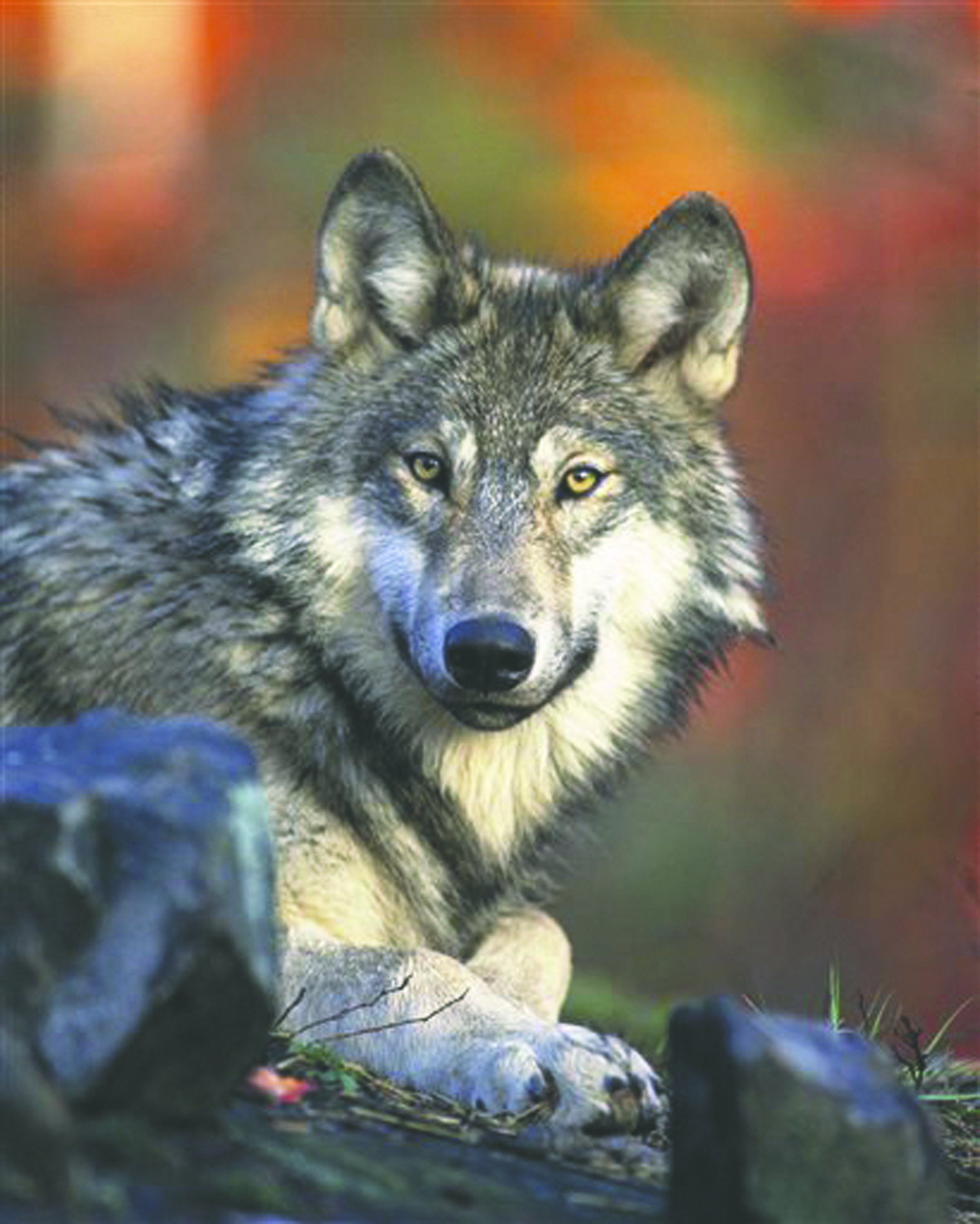
The Associated Press
BILLINGS, Mont. — The Obama administration today proposed lifting most remaining federal protections for gray wolves across the Lower 48 states, a move that would end four decades of recovery efforts but that some scientists said was premature.
State and federal agencies have spent more than $117 million restoring the predators since they were added to the endangered-species list in 1974.
More than 6,100 wolves now roam portions of the Northern Rockies and western Great Lakes.
With Friday’s announcement, the administration signaled that it’s ready to move on: The wolf has rebounded from near-extermination, balance has been restored to parts of the ecosystem, and hunters in some states already are free to shoot the animals under state oversight.
But prominent scientists and dozens of lawmakers in Congress want more wolves in more places.
They say protections need to remain in force so the animals can expand beyond the portions of 10 states they now occupy.
Lawsuits challenging the administration’s plan are almost certain.
The gray wolf’s historical range stretched across most of North America, including the Olympic Peninsula.
By the 1930s, government-sponsored trapping and poisoning left just one small pocket of the animals, in northern Minnesota.
In the past several years, after the Great Lakes population swelled and wolves were reintroduced to the Northern Rockies, protections were lifted in states where the vast majority of the animals now live: Montana, Wyoming, Idaho, Michigan, Wisconsin, Minnesota and portions of Oregon, Eastern Washington and Utah.
Under the administration’s plan, protections would remain only for a fledgling population of Mexican gray wolves in the desert Southwest. The proposal will be subject to a public comment period and a final decision made within a year.
While the wolf’s recent resurgence is likely to continue at some level elsewhere — multiple packs roam portions of Washington and Oregon, and individual wolves have been spotted in Colorado, California, Utah, the Dakotas and the Northeast — U.S. Fish and Wildlife Service Director Dan Ashe indicated it’s unrealistic to think the clock can be turned back entirely.
“Science is an important part of this decision, but really the key is the policy question of when is a species recovered,” he said.
“Does the wolf have to occupy all the habitat that is available to it in order for it to be recovered? Our answer to that question is no.”
Hunting and agriculture groups wary of the toll wolves have taken on livestock and big game herds welcomed the announcement.
Jack Field, executive vice president of the Washington Cattlemen’s Association and a rancher from Yakima, said he was “ecstatic” over the agency’s announcement and believed it would make his colleagues more willing to accept the presence of wolves on the landscape.
“Folks have to understand that in order to recover wolves, we’re going to have to kill problem wolves,” Field said
Over the past several years, hunters and trappers killed some 1,600 wolves in Montana, Wyoming, Idaho, Minnesota and Wisconsin.
Thousands more have been killed over the past two decades by government wildlife agents responding to livestock attacks.
That’s been a relief for ranchers who suffer regular wolf attacks that can kill dozens of livestock in a single night.
Supporters say lifting protections elsewhere will help avoid the animosity seen among many ranchers in the West, who long complained that their hands were tied by rules restricting when wolves could be killed.
Vast additional territory that researchers say is suitable for wolves remains unoccupied.
That includes parts of the Pacific Northwest [including the North Olympic Peninsula], California, the southern Rocky Mountains and northern New England.
Whether the species’ expansion will continue without a federal shield remains subject to contentious debate.
The former director of the Fish and Wildlife Service under President Bill Clinton said the agency’s proposal “is a far cry from what we envisioned for gray wolf recovery when we embarked on this almost 20 years ago.”
“The service is giving up when the job’s only half-done,” said Jamie Rappaport Clark, who was with the agency when wolves were reintroduced in Idaho and Wyoming in the mid-1990s.
She now heads the group Defenders of Wildlife.
Colorado alone has enough space to support up to 1,000 wolves, according to Carlos Carroll of California’s Klamath Center for Conservation Research.
He said wildlife officials had “cherry-picked” the available science to suit their goal, and were bowing to political pressure from elected officials across the West who pushed to limit the wolf’s range.
The Center for Biological Diversity on Friday vowed to challenge the government in court if it takes the animals off the endangered species list as planned.
Ashe said Friday’s proposal had been reviewed by top administration officials, including new Interior Secretary Sally Jewell.
But he dismissed any claims of interference and said the work that went into the plan was exclusively that of the Fish and Wildlife Service.
