
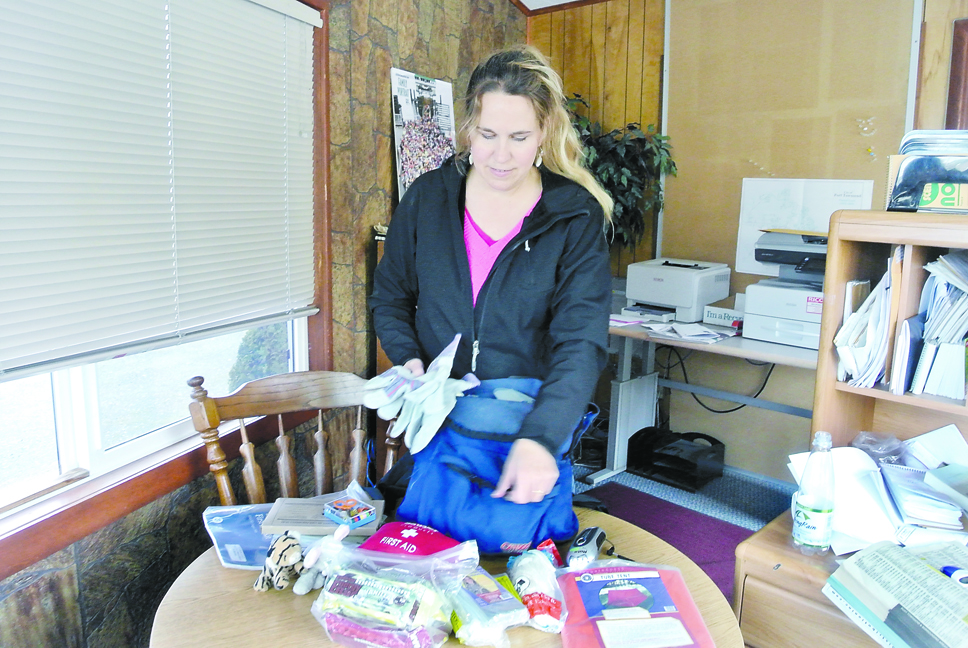
PORT TOWNSEND — The key to effective emergency preparedness is a partnership with neighbors in acquiring the resources needed to survive, according to a Port Townsend Web developer who has posted a wide-ranging curriculum on the Internet.
“One of the most important things [after a disaster] is to get together with your neighbors and develop a plan about what to do once this happens,” said Heather Taracka, who sponsors the website www.getemergencyprepared.com.
Taracka has earned the respect of Jefferson County emergency management personnel.
“She’s got an energetic program and has helped a lot of people,” said Bob Hamlin, Jefferson County Department of Emergency Management director.
“I really support what she is doing.”
Taracka worked in disaster relief during several hurricanes in Florida and served as a captain in the Civil Air Patrol, during which time she participated in search-and-rescue operations.
She assembled the course and the website based on her own experiences and what she characterizes as “countless hours” of additional research.
She was interviewed by USA Weekend, she said, adding that the website will be mentioned in an upcoming article this spring.
When Taracka moved to Port Townsend in 2006 from Florida, she determined that the area was underprepared for any disaster and began teaching a course, once a month, to educate people about preparedness.
She no longer teaches the class but the website has a global reach, she said.
She characterizes many of her suggestions as common sense, including practicing paying attention to surroundings, keeping cellphones charged and keeping fuel in automobile tanks at all times.
Some tips are less obvious.
“You should [put] copies of all your important paperwork like birth certificates, insurance forms and house deeds into an envelope and mail it to someone out of the area that you trust with your life,” she said.
“After [the 2005 Hurricane] Katrina, it took some people months to replace their paperwork, and that prevented them from rebuilding,” she added.
She said it is possible to store documents online as a backup, but it’s likely that power failures will limit computer access.
While some advice is universal, there are some specifics to the area of which people should be aware, Taracka said.
“We live on a little spit of land that is separated from any major metro area, so we can’t rely on getting help quickly,” she said.
“We are going to have to take care of ourselves. We can’t rely on others.”
These aspects can be positive.
“Any small community where people look out for each other will be better than a large city,” Taracka said.
“And since we are in a water-based community, we can go down to the pond and get whatever water we need.”
This leads to another obvious tip: Before drinking collected water, purify it.
Also obvious: A stockpile of food and water will make the difference between survival and the alternative.
“You want to store food with a high caloric content so you can build up your energy. This is no time to be on a diet,” she said.
“Things like being a vegetarian probably won’t work. I don’t eat red meat, but if I was hungry, I wouldn’t hesitate.”
Taracka recommends that each neighborhood form an emergency group but concedes that not everyone wants to participate or cannot do so because of medical conditions.
For this reason, it’s important to be aware of people who may need extra help, perhaps putting away an extra can of food during each purchase so there is some to share.
Another reason to prepare the neighborhood is to make sure everyone is prepared so people don’t have to protect their own supplies.
For information from the county Department of Emergency Management, visit www.jeffcoeoc.org.
Jefferson County Editor Charlie Bermant can be reached at 360-385-2335 or at charlie.bermant@peninsuladailynews.com.
