
By Phuong Le
The Associated Press
SEATTLE — Boaters and vessel operators would not be able to release sewage, treated or untreated, into waters near Sequim to south Puget Sound to the Canadian border, under a proposal by state regulators.
The state Department of Ecology said Thursday it and other state agencies petitioned the U.S. Environmental Protection Agency to designate the waters of Puget Sound — which includes the Strait of Juan de Fuca — a “no-discharge zone” to improve water quality and protect shellfish beds and swimming beaches from harmful bacteria.
The zone would include Lake Washington and Lake Union.
There are dozens of no-discharge zones in the country, but this would be the first in the Pacific Northwest.
Critics: Too broad
Critics say the proposal is too broad and will be costly for many who would have to retrofit their vessels to accommodate holding tanks.
They say many vessel operators currently use marine sanitation devices to treat sewage before it’s pumped overboard.
“This designation is an important piece of our strategy, and is a necessary step forward for one of our state’s most prized ecological treasures,” Maia Bellon, Department of Ecology director, said in a statement Thursday.
The agency said in its petition that “vessel sewage discharges are small in volume, but have high potential impact due to proximity, often directly over or near shellfish and other protected resources, such as swimming beaches.”
It also leaves shellfish beds vulnerable and threatens an important shellfish food supply in Washington, officials said.
The department says it sought the petition after four years of evaluation, outreach and public feedback.
Ninety days
The EPA has 90 days to review the petition and make a decision.
If approved, the zone would immediately apply to all vessels, with the exception of tugboats, commercial fishing vessels and some boats that would have five years to retrofit their vessels.
There are more than 150,000 recreational and commercial vessels in the area that would be included in the no discharge zone.
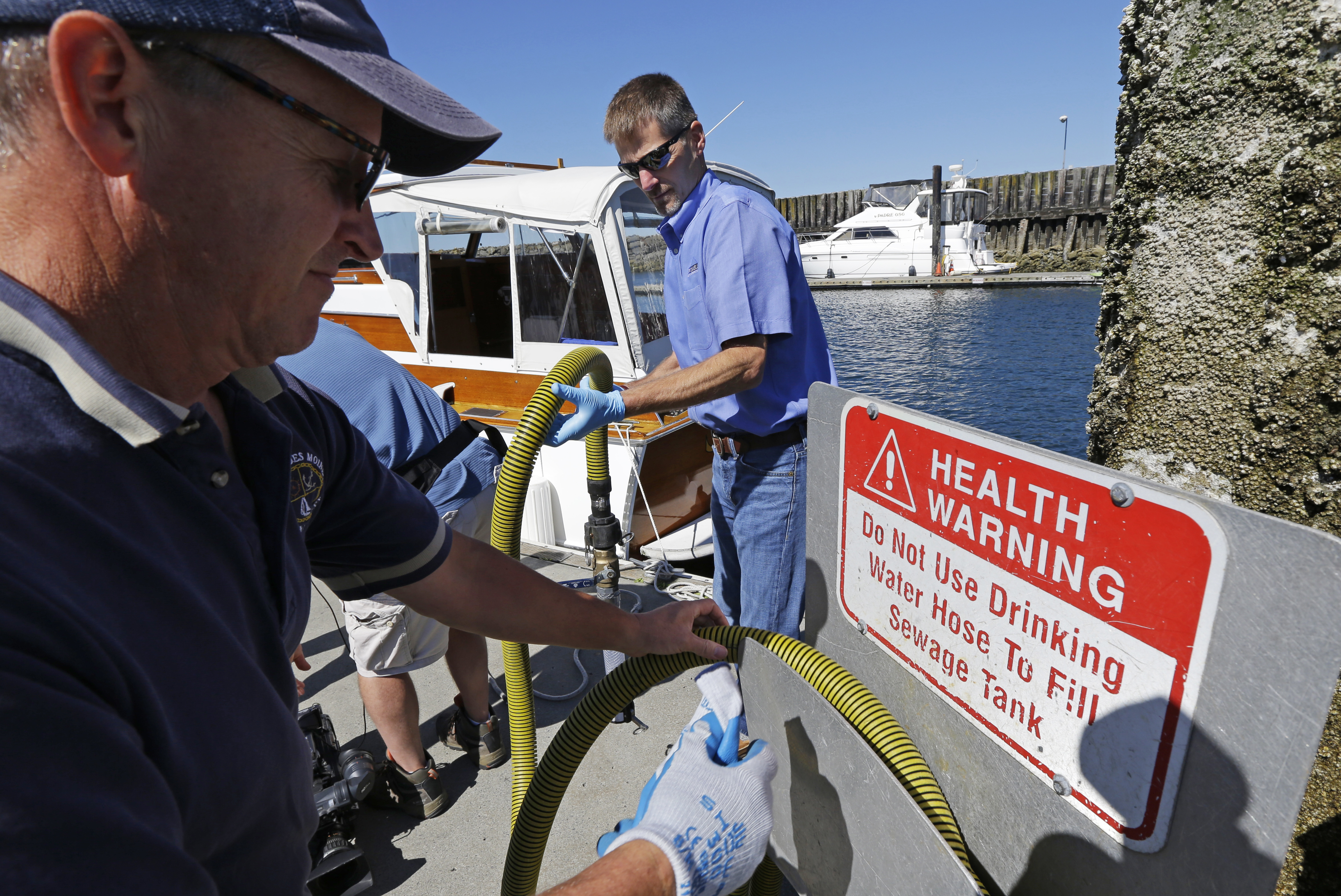
Many boaters currently pump out toilet waste at stationary facilities, hold waste in tanks, or treat the waste before pumping it out.
Currently, boaters are allowed to pump out treated sewage anywhere in the area. Federal law allows vessels to dump raw sewage only in waters more than 3 miles from the coast.
In its petition, state regulators say treated sewage discharges contain fecal bacteria concentrations that are many times higher than the state water quality standards.
A group representing numerous vessel operators, ports and shipyards say they’re concerned that Ecology is moving ahead “without due regard for either the economic or scientific arguments against a Sound-wide NDZ,” the Puget Sound NDZ Marine Alliance wrote to department officials in May.
Praise for move
Chris Wilke with the Puget Soundkeeper Alliance praised the move.
“It’s time we looked at all pollution and stop treating Puget Sound like our toilet,” he said.
Ecology department officials say most recreational and commercial vessels in Puget Sound with on-board toilets have holding tanks or use pump-out stations, or wait to release sewage more than three miles from shore.
They estimate about 215 commercial boats and 2,000 recreational boats would need to add holding tanks.
Retrofits for tug boats and commercial vessels could range from negligible to $161,000, according to a consultant for the department.
The cost of adding a holding tank on a recreational boat is estimated to be about $1,500.
The agency said it determined there are sufficient pump-out stations for recreational boaters and commercial vessel operators.
