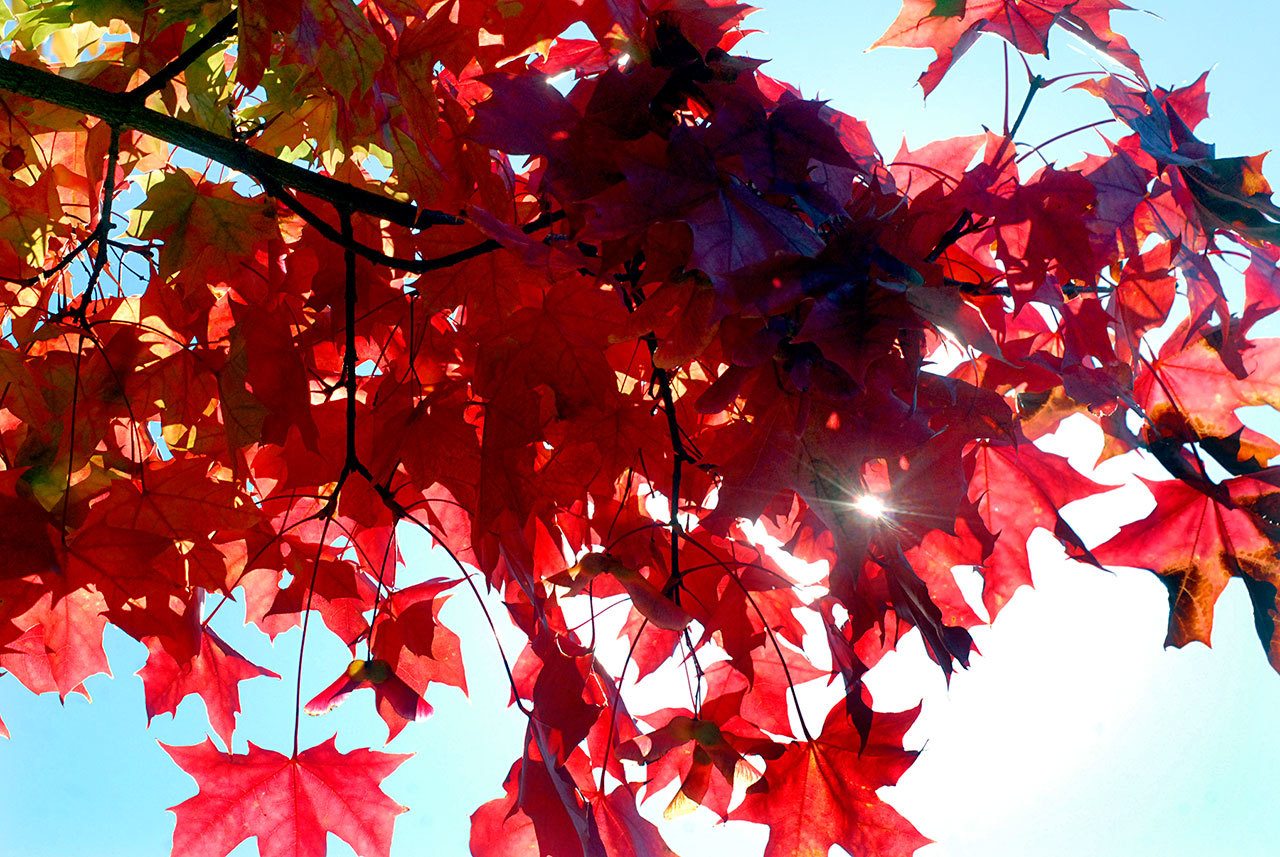
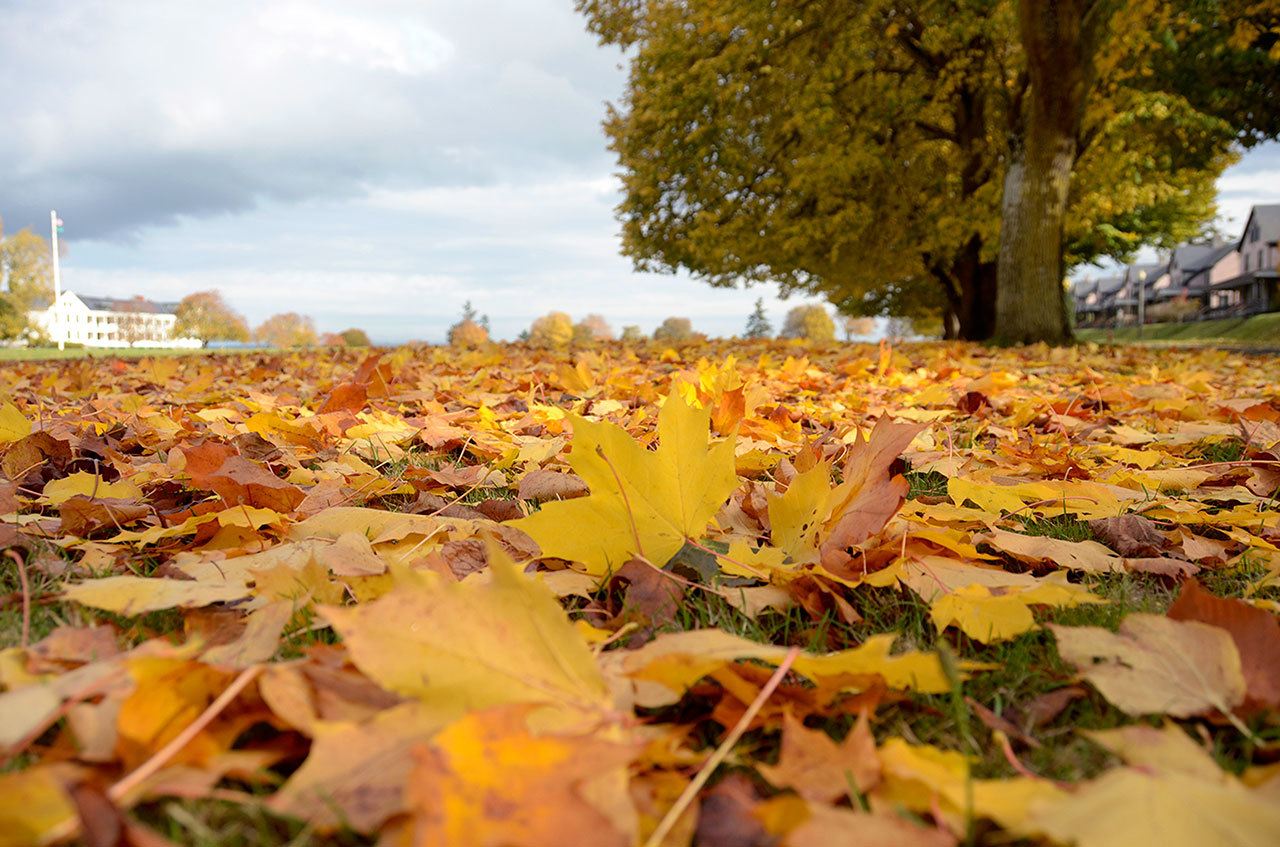
The Olympic Peninsula isn’t looking much like the Evergreen State these days as leaves turn various shades of amber, red and brown and fall to the earth during the steady march of autumn.
Now is the time to take a hike on the plethora of local trails or take a drive through Olympic National Park to take in the glorious color palette offered by Mother Nature, as the entire process has been sped up this year due to environmental impacts, said Jeanette Stehr-Green, a Clallam County Master Gardener.
“The drought over the summer seems to have caused leaves to turn brown and drop earlier than usual,” she said.
“The high winds from [the Oct. 14-15] storm also have hastened leaf loss. There is still some spectacular viewing around the Peninsula, although it is a bit difficult to predict exactly where because of the various micro-climates that abound.”
The changing of the seasons on the Peninsula is so renowned that in 2015, it was voted the fifth Best Scenic Autumn Drive as part of USA Today’s Reader’s Choice contest. Michigan’s M-22 along Lake Michigan took first place.
The Olympic Peninsula drive encompasses over 320 miles of Olympic National Park and takes a full eight hours if driven straight through, according to the contest entry, so it’s best to take a few days to take in all the diversions along the way.
There are plenty of places to view the changing foliage, Stehr-Green said.
“ONP ranks among the best national parks for viewing fall color. Although evergreens predominate, splashes of fall color from native plants, especially vine maples and big-leaf maples, can make for an interesting fall landscape.”
Maple locations
Good viewing sites for maples — as recommended by Janis Burger, a longtime park ranger — include Sol Duc Road, Hall of Mosses in the Hoh and Maple Glades at Quinault.
Such trees “also can be seen in abundance on east-side roads into the park including Dosewallips, Duckabush and Hamma Hamma,” Stehr-Green said.
While beautiful to behold, the process of leaf color change is an interesting annual scientific transformation that prepares trees for the coming onslaught of winter, Stehr-Green said.
“Three types of pigment contribute largely to leaf color: chlorophyll, carotenoids and anthocyanins,” she said.
“Chlorophyll is present in most plants and causes the green color we see. Chlorophyll allows plants to absorb energy from light and convert it into a form that can be stored and used by plants. Chlorophyll is important to plants and is continually made and broken down.”
Carotenoids — responsible for the yellows, oranges and browns — and anthocyanins — responsible for the reds and deep purples — are present in the leaves of some plants but usually are masked by the green from the chlorophyll, Stehr-Green said.
As such, “we don’t usually see them during the growing season,” she said.
Loss of leaves
In the fall, as days shorten and nights lengthen, “chlorophyll breaks down and is not replaced as the plant prepares for the loss of its leaves,” Stehr-Green said.
In the end, “it is an energy-saving move. Why make more chlorophyll if the leaf is going to fall off the tree when it freezes?”
The disappearance of the chlorophyll allows the color from the other pigments, if present, to shine through, Stehr-Green said.
Additionally, anthocyanins — which bind sugars in leaves and transport them to the woody overwintering parts of the plant — are produced in higher concentrations “to save energy for the plant by scavenging sugars in the leaves that will be lost,” Stehr-Green said.
“Warm sunny days and cool crisp nights, without a freeze, cause more anthocyanins to be produced [in order] to scavenge the sugars that are made and [produce] more spectacular color.”
Not all trees, including evergreens, go through this process, while others fall to the ground but do not offer a spectacular change in colors.
“Not all plants have carotenoids and anthocyanins,” Stehr-Green said.
“Only particular species and particular varieties of those species have these pigments. When chlorophyll starts to break down in the fall, the leaves of plants without those other pigments just shrivel up and fall, maybe turning a drab brown along the way.”
Regardless of color change, the entire process is an important cycle, Stehr-Green said.
“The leaves that fall are not wasted,” she said.
“They decompose and enrich the soil with nutrients and organic material. The organic material, which makes up the spongy humus layer of the forest floor, absorbs and holds rainfall. Fallen leaves also become food for numerous soil organisms vital to the forest ecosystem.”
Prime plant viewing
This season also is a great time to view other outdoor spectacles.
“Many plants display colorful fruits, stems and bark, which become more obvious as the leaves fall,” Stehr-Green said.
“It is breeding season for some animals such as deer and elk, and others are fattening up for the winter, such as bear. Fall bird migration allows for regular sightings of less commonly observed birds. Fall is also spawning season for most salmon. So many things to see, so little time.”
________
Features Editor Chris McDaniel can be reached at 360-452-2345, ext. 56650, or at cmcdaniel@peninsuladailynews.com.
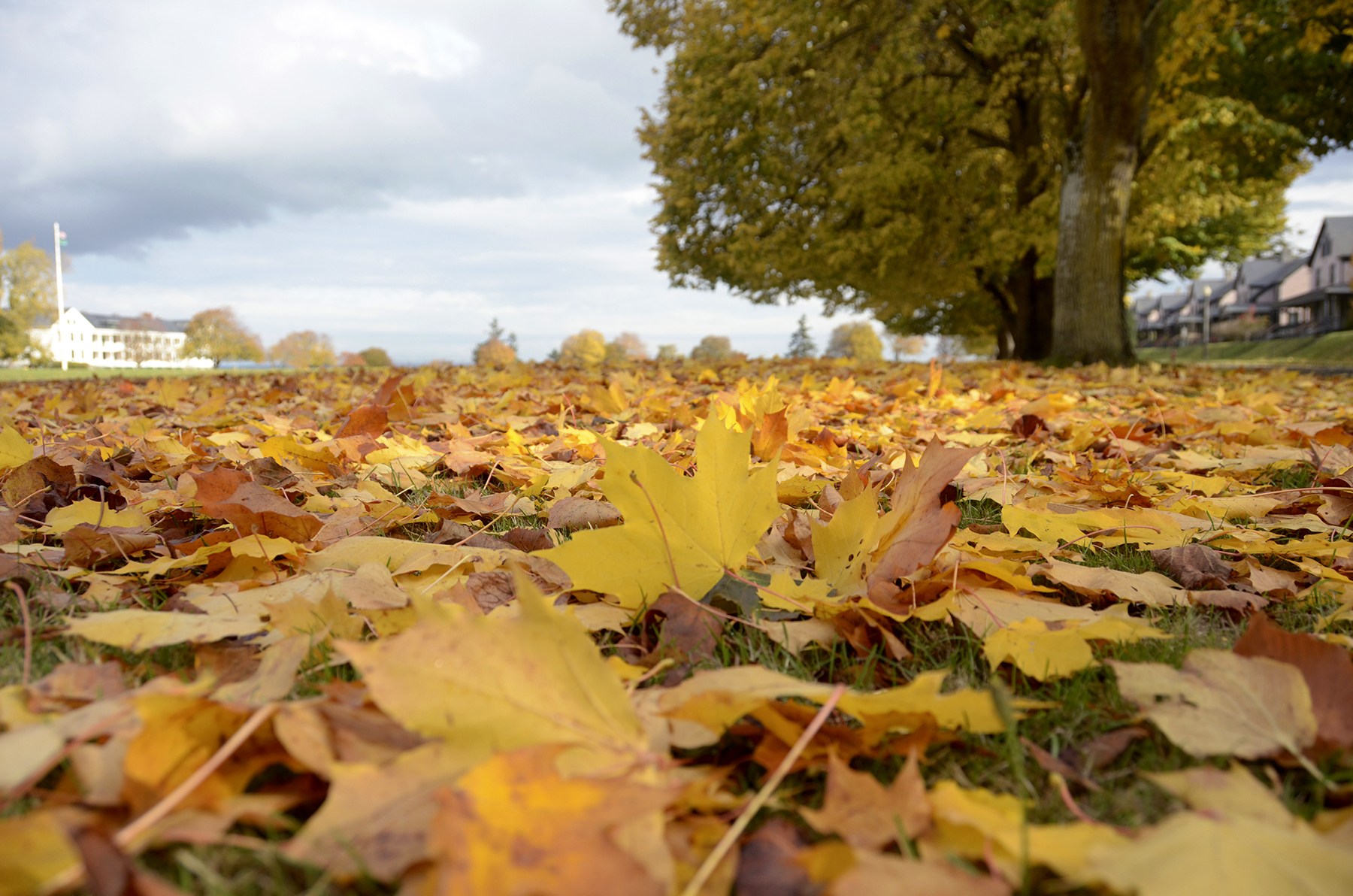
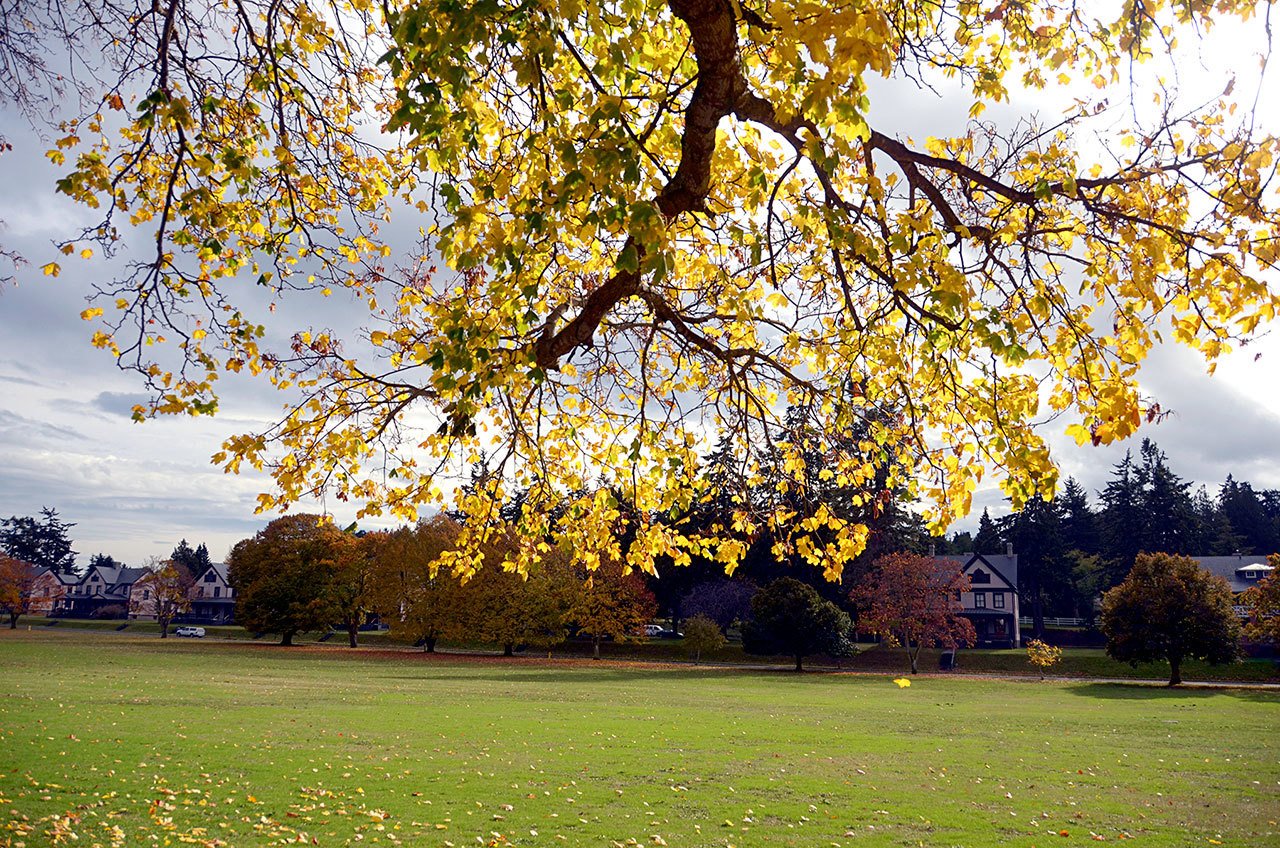
Fall has arrived at Fort Worden in Port Townsend. (Cydney McFarland/Peninsula Daily News)
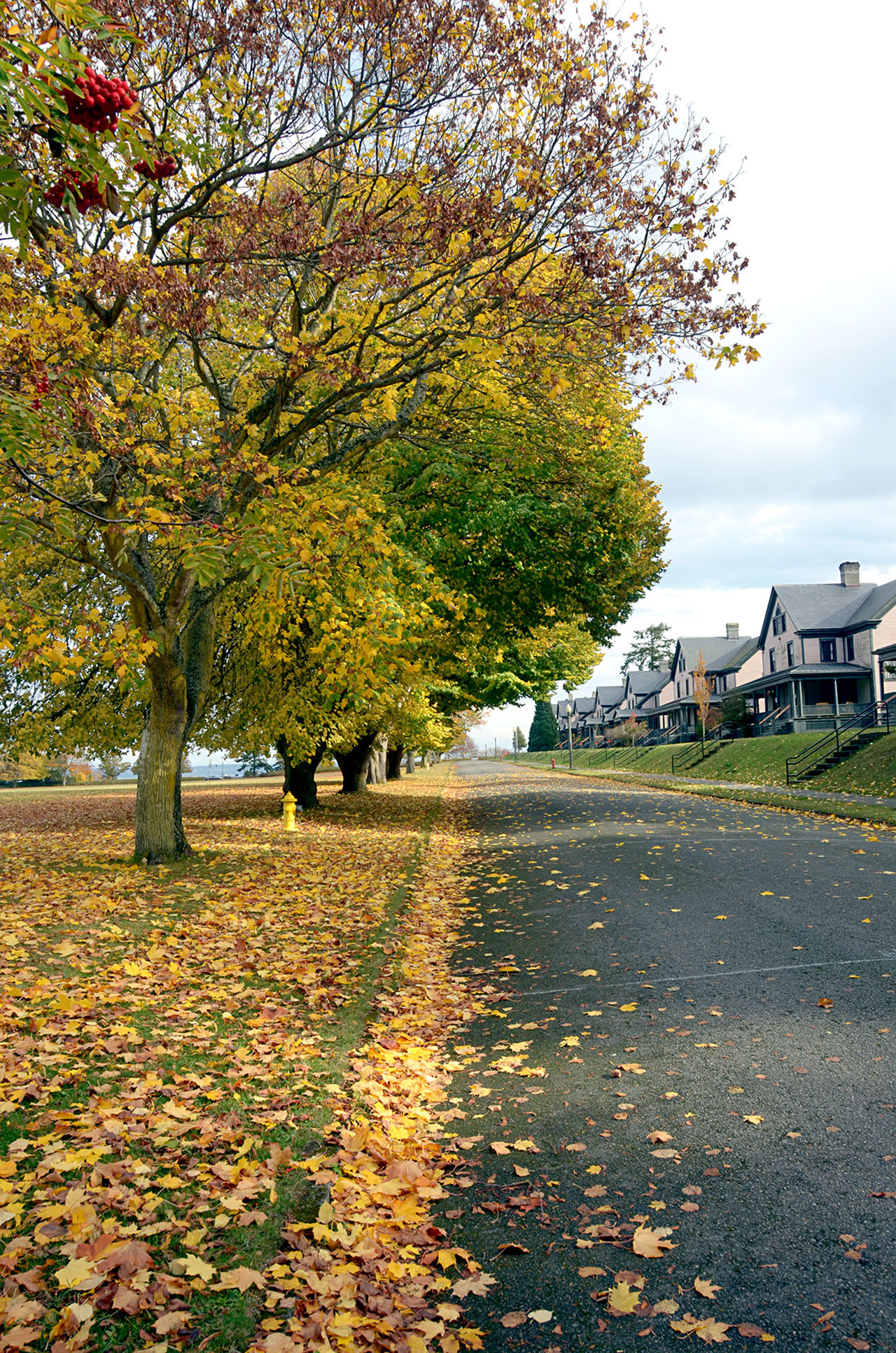
Fall has arrived at Fort Worden in Port Townsend. (Cydney McFarland/Peninsula Daily News)
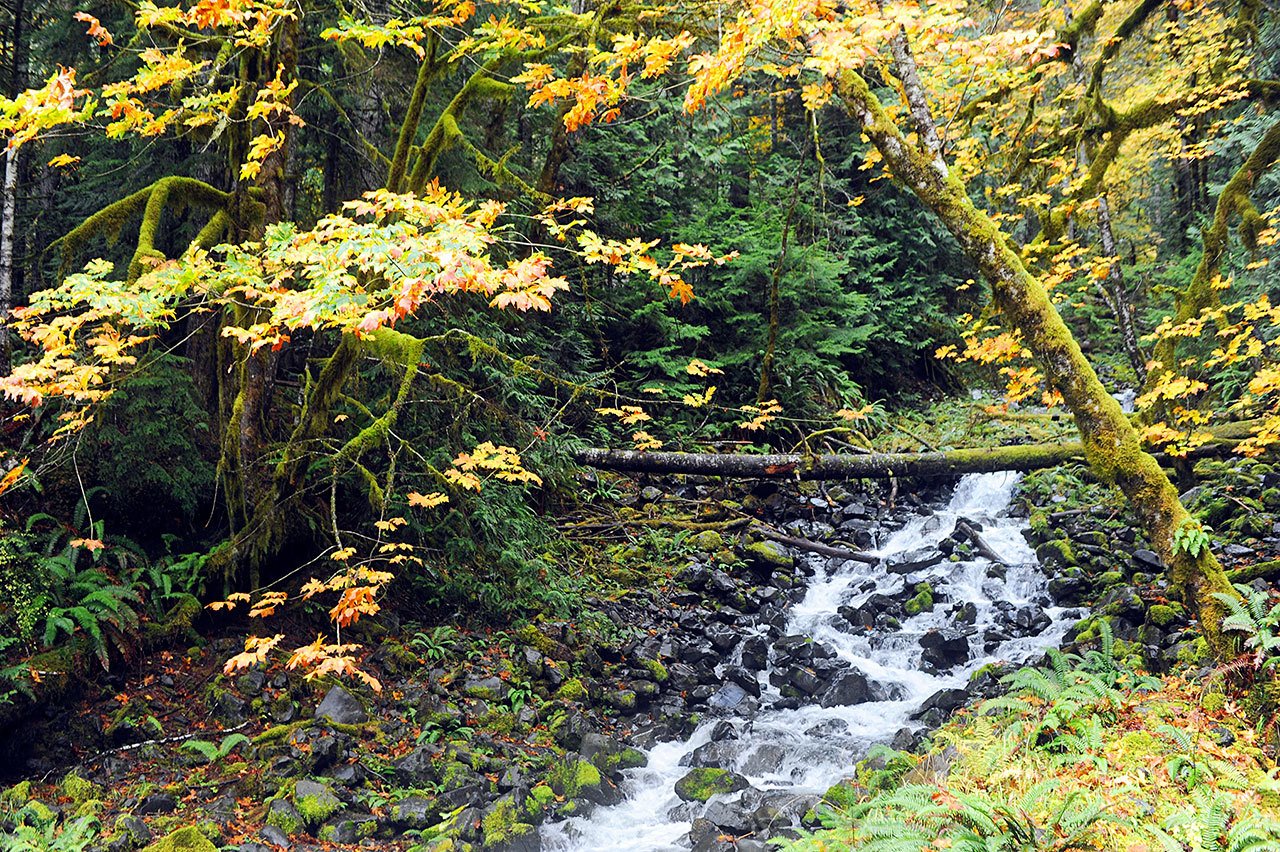
A small stream rushes past maple trees on its way to the waters of Lake Crescent as seen from U.S. Highway 101. (Lonnie Archibald/for Peninsula Daily News)
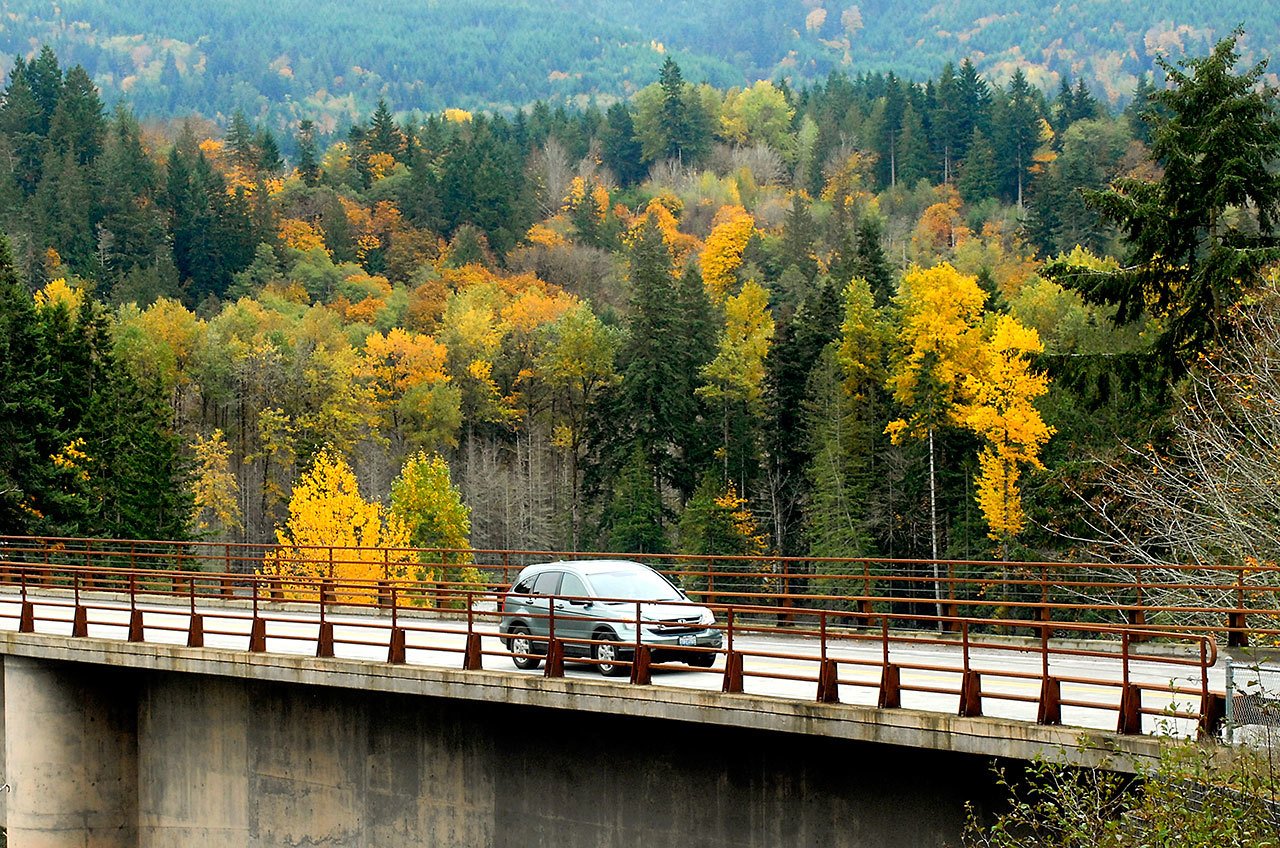
A vehicle makes its way over the Elwha River Bridge west of Port Angeles against a backdrop of trees in their full autumn colors. (Keith Thorpe/Peninsula Daily News)