
EDITOR’S NOTE — See sidebar on depression, “Signs of clinical depression are varied, as are ways to treat it” — https://giftsnap.shop/article/20150908/NEWS/309089985
PORT ANGELES — You say an employee called in sick this morning?
Dr. Josh Jones may know why.
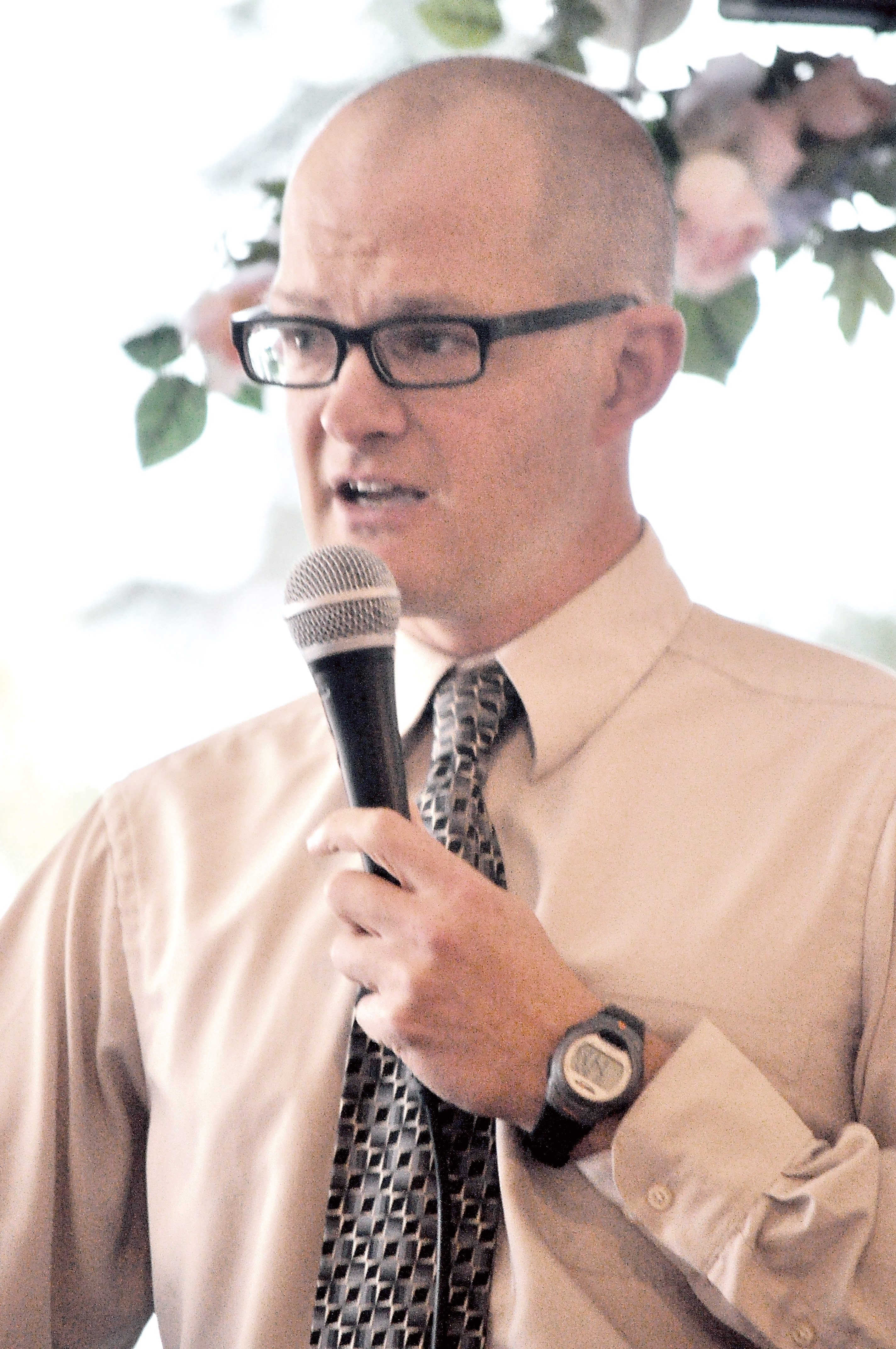
Jones, medical director for Peninsula Behavioral Health since 2010, says the No. 1 reason workers take a sick day isn’t a minor illness or injury.
It’s depression, and yes, it is a physical ailment, Jones said.
Depression is rooted in someone’s body’s inability to produce the chemicals he or she needs to function normally, he told about 20 members of the Port Angeles Business Association on Aug. 25.
The deficiency produces feelings of sadness to the point of not reacting to happy stimuli and other symptoms that persist for two weeks or longer.
Why should his audience of business people care?
Lost productivity is the “quiet reason,” Jones said. “It’s not the thing police get called about.”
“A lot of people may not say, ‘I’m taking a sick day for depression,’” Jones said.
But that’s minor compared to the disruption if depression deepens to the point of suicide, he said, calling that one of the “noisy reasons” that include people misbehaving in public or becoming addicted to alcohol or illicit drugs — and supporting their addiction by committing crimes.
Unlike ailments that can be diagnosed with lab tests and treated with common medicines, behavioral illnesses are harder to uncover and medicate, although depression can be treated effectively with psychotherapy and drugs.
“Our science hasn’t caught up with the rest of the medical profession,” Jones said.
That, however, is on the verge of major change.
The Affordable Care Act, no matter what one thinks of its politics, Jones said, is creating parity among primary care, behavioral health and chemical dependency.
That puts Peninsula Behavioral Health staff into Olympic Medical Physicians’ primary care clinics in Port Angeles. The agency also will be a full partner in Family Medicine of Port Angeles when it becomes a federal community health clinic, he said.
That means that if a doctor or other provider suspects that a patient has a behavioral issue, the provider can summon a mental health clinician immediately to examine the person, then confer to craft a cooperative treatment, Jones said.
A primary provider might say, “I’m going to treat their diabetes right now, and then I’m going to step out of the room and have this behavioral specialist come in and talk to them, and then we’re going to work together,” Jones said.
Early treatment is important for both kinds of ailments, he said.
“One of the biggest issues is that they don’t come to the attention of clinicians sometimes until it’s too late,” he said.
“This [early intervention] is a very effective way to treat depression, and it also improves physical health.”
Evidence also has led to the coordination of mental health care with substance-abuse therapy. The two once were treated one before the other but now are blended to address what are called “co-occurring disorders.”
That treatment is making its way into such institutions as the Clallam County jail, where intervention “can break the cycle of offense, jail and reoffense,” Jones said.
Still, it’s far to go before treatment is seamless among primary care, behavioral therapy and treatment of substance abuse.
Jones, 39, a native of White Salmon and a graduate of the University of Washington School of Medicine, is the sole full-time psychiatrist at Peninsula Behavioral Health.
However, he has about 100 nurse practitioners, social workers and therapists to help, he said.
The expanded emergency department at Olympic Medical Center will include two rooms for patients having behavioral crises, and Peninsula Behavioral Health is having success with the six-bed Respite Center it opened earlier this year, Jones said.
There, patients who pose no danger to themselves or others can stay voluntarily for a few days, consult counselors, “remove themselves from the conditions that may have caused the crisis, have their medications readjusted and then return to their productive lives,” Jones said.
Yet comprehensive treatment centers still are lacking for people addicted to opiates, whether they be heroin or oxycodone.
“I think that’s a real shame, Jones said. “I think that’s a public issue we need to figure out.”
To casual observers, progress seems halting against behavioral disorders, Jones said.
Victories, he said, “are kind of invisible.
“A colleague says mental health is like the CIA: Successes are many but hidden, whereas failures are few but noticed. We struggle to succeed in getting people access to care.”
But Peninsula Behavioral Health is making progress, he said, despite individuals who act out on the street and seem to resist attempts to help them.
“The vast majority of people with behavioral health issues are like us,” Jones said.
“They’ve got a brain disease. We’re doing our best to help them.”
_______
Reporter James Casey can be reached at 360-452-2345, ext. 5074, or at jcasey@peninsuladailynews.com.
