
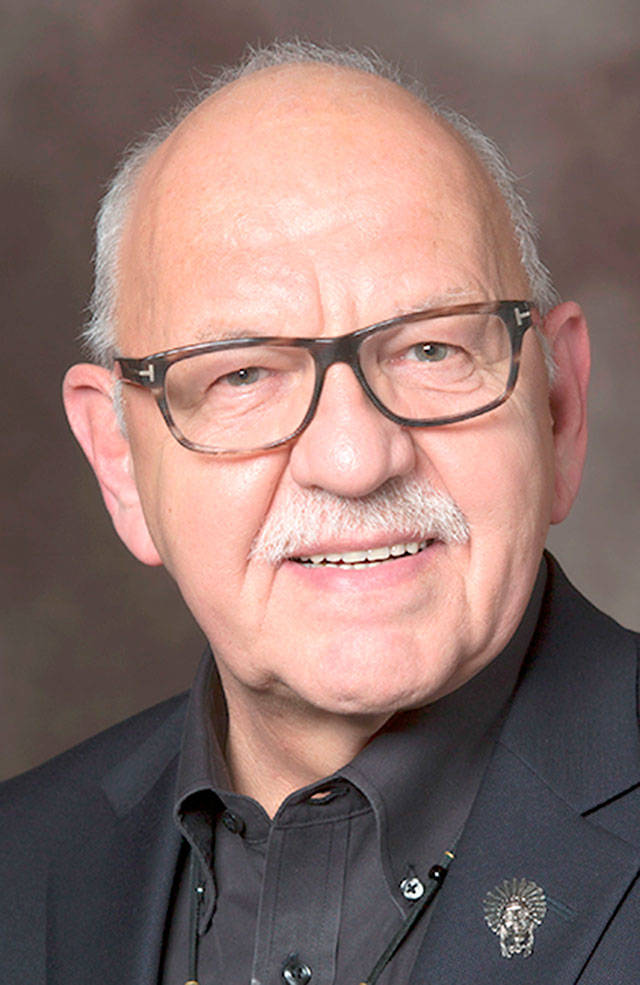
PORT ANGELES — Tribal leaders nationwide last week were informed that the partial federal shutdown that began at midnight Dec. 22 could result in some tribal clinic employees working without pay and others getting laid off, Jamestown S’Klallam Tribal Chairman Ron Allen said.
Tribal officials contacted Friday said that so far, there have been no cuts in services or staffs.
But they said that could change as they dip into reserves to cover costs while the federal budget impasse stretches on between President Donald Trump and Congress, including the House of Representatives, newly controlled by the Democratic Party.
Allen said Clallam County’s five tribes — Jamestown S’Klallam, Lower Elwha Klallam, Quileute, Hoh and Makah — have about 3,000 tribal members eligible for federally funded tribal medical and other services.
Allen, current treasurer and former president of the National Congress of American Indians, said Native American leaders were informed in a conference call Thursday with Indian Health Service officials that only doctors, nurses and other specialists will continue to be paid with federal funding during the shutdown.
Non-core essential employees such as some clinic administrative personnel and accountants are required to work without federal pay, while non-essential employees such as some nurse practitioners, administrators and receptionists could be laid off, he said.
The Jamestown S’Klallam clinic is continuing to operate as tribal funding fills in the gap created by the lack of federal funds, Allen said.
The Sophie Trettevick Indian Health Center, operated by the Makah Tribe in Neah Bay, was open Friday and was operating as usual, Health Director Libby Cope said.
“It hasn’t affected us in any way so far,” she said.
One new staff member, though, could not set up an email account through the Indian Health Service’s Portland, Ore., office.
Cope said that federal officials encouraged tribes right after the beginning of the shutdown to keep their clinics running.
A front desk receptionist at the Lower Elwha Klallam Tribe’s clinic said the shutdown “has not affected us in any way so far.”
Acting tribal Medical Director Dr. Cephus Allin and tribal Chairwoman Frances Charles did not return calls for comment Friday.
The Quileute Tribe’s acting General Manager Larry Burtness said Friday that tribal clinic services have not been interrupted and that the facility can remain fully staffed for another 45 days to 60 days, if not longer.
Quileute law enforcement is half-funded by the federal Bureau of Indian Affairs and half through other locally generated funds, but those services, too, will stay intact for some time during a shutdown, he said.
The tribe has enough reserves to keep running strong until the tribe is reimbursed for money it spends to cover the federal shortfall. Burtness isn’t too worried about the tribe not getting reimbursed.
“They could break the contracts, but it would be ramifications to that,” he said.
Hoh tribal officials could not be reached for comment late Friday.
Allen said the five tribes receive a combined total of “tens of millions” of dollars annually from the federal government for various programs.
They range from medical services, through the Indian Health Service, which is a branch of the Department of Health and Human Services, to law enforcement, through the Bureau of Indian Affairs, an agency of the federal Department of the Interior.
If the shutdown persists, “there’s a possibility that they may only take care of their most urgent needs,” Allen said.
“They will be affected, no question about that.
“Services will definitely be curtailed.
“Most tribes will shift into only critical and essential services and try to find ways to address those issues.
“If there are issues of great urgency, life-saving or that kind of thing, they will find ways to solve that problem.”
Allen said tribal communities are more affected by the shutdown than non-Native American communities.
“Non-Indian communities depend on local and state government for fundamental programs and services that are essential for stability within those communities and to those individuals and families,” he said.
Tribal members, on the other hand, “depend on the tribes themselves,” Allen said.
“In that sense, we are more affected by the federal shutdown than state and federal government because they have more sources they can rely on.”
Allen was not confident that tribes that spend tribal money on services not federally funded during the shutdown will get their money back.
“Whether we get reimbursed by the appropriate federal agency, that’s another question,” Allen said.
________
Senior Staff Writer Paul Gottlieb can be reached at 360-452-2345, ext. 55650, or at pgottlieb@peninsuladailynews.com.
