
By Gillian Flaccus | The Associated Press
DETROIT LAKE, Ore. — Oregonians are grieving the loss of some of their most treasured natural places after wildfires wiped out campgrounds, hot springs and wooded retreats that have been touchstones for generations in a state known for its unspoiled beauty.
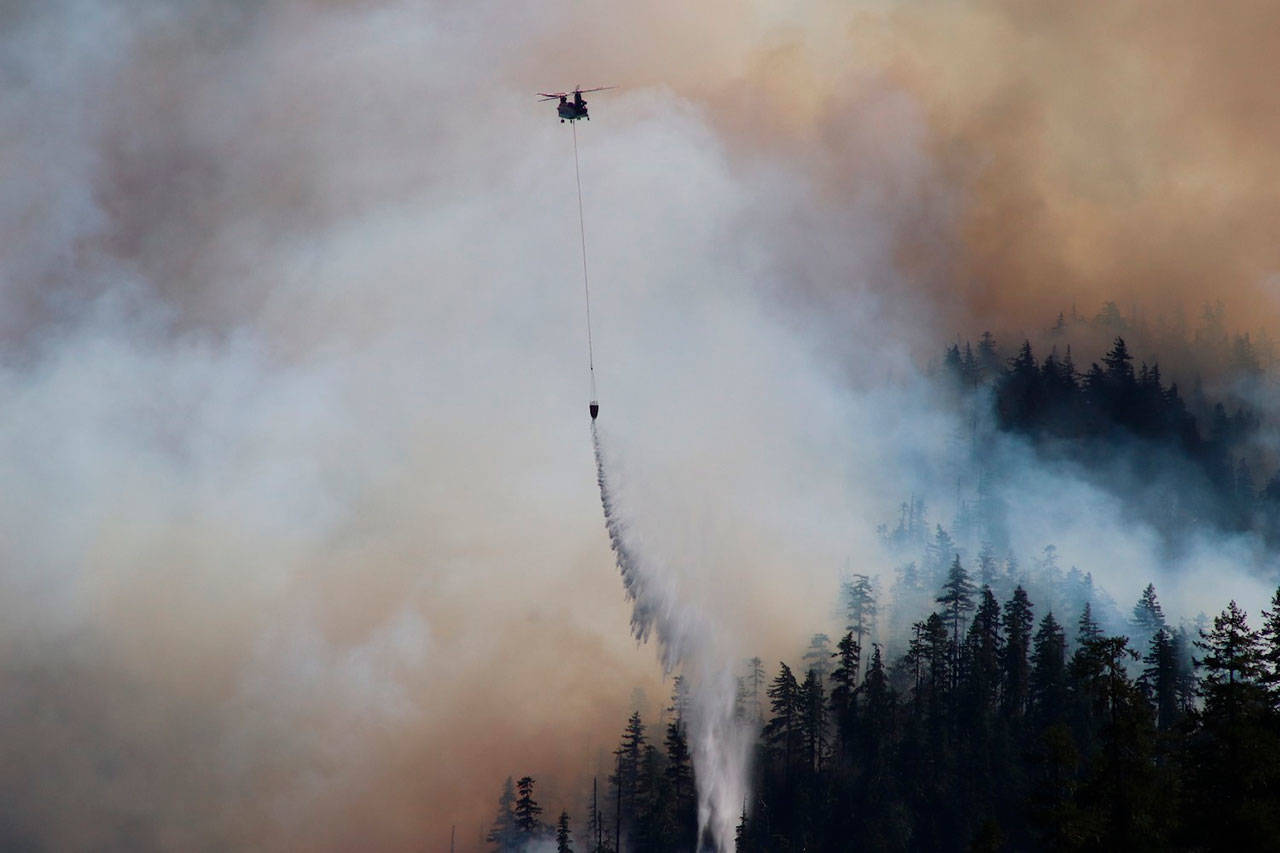
The flames that destroyed hundreds of homes and killed at least nine people also encroached on beloved state parks, scorched some of Oregon’s best-known hiking trails and raged through a whitewater rafting mecca.
“Nature IS the icon in Oregon. We have this collective grief and some of that is (from) growing up here,” said Eden Dawn, an editor at Portland Monthly magazine who wrote an essay about the wildfires. “We just didn’t have New York City. We didn’t have Hollywood. We didn’t have these big fancy things, and Portland wasn’t cool until a few years ago.”
The fires damaged one of the nation’s last low-elevation, old-growth forests, which includes Douglas fir trees up to 1,000 years old. A forest center built on the ruins of an old mining town that hosted thousands of Oregon children was largely reduced to ashes.
“My memories of growing up are sitting in a river and looking at the fish go by and spotting osprey around you,” Dawn said. “In this moment, when you’re watching your state and your childhood burn, it’s utter hopelessness. There’s really nothing you can do — and that is the feeling we’re all feeling.”
Detroit Lake, a state park south of Portland founded in the 1950s, sustained damage to its campground, and it’s unclear if the tiny town along its shores will rebuild. Cedars Restaurant & Lounge, a famous stopping point for people traveling to the high desert of central Oregon or for those returning from backpacking in the surrounding wilderness, is also gone.
“It’s a life full of memories and history, gone. We used to ski and boat every single day after I got off work all through the summer,” said Sandi Elwood, who was born and raised on Detroit Lake and worked for nearly a decade at the Cedars, from the age of 14. “I learned to swim in that lake all by myself with no swimming instructor.”
Oregon State Parks said Monday that 900 acres within various parks had burned. The worst hit was Collier Memorial State Park near Klamath Falls, which lost 400 acres of ponderosa pine and a historic cabin.
A string of tiny towns along nearby Highway 22 provided a launching pad for hikers exploring the old-growth forests and for fishermen headed to prime destinations along the North Santiam River and its tributaries. Those communities have been largely reduced to ashes. Fisherman’s Bend, a favorite fishing and recreation area, is gone too.
“It’s difficult to overstate how emotionally impactful this is for people who love the land in those places, whether they’re locals or they’re people who would only visit it once a year,” said Steve Pedery of Oregon Wild. “These places are sanctuaries for people trying to find a little bit of peace and solitude in nature and the modern world.”
Fire also tore through Jefferson Park, a popular alpine backpacking destination on the flanks of Mount Jefferson. The flames crept to the edges of Silver Falls — one of Oregon’s most popular state parks and its largest — and burned up half the buildings at Breitenbush Hot Springs, a forest retreat where Oregonians bathed nude in natural hot springs, sat in saunas and practiced yoga.
Further south, another inferno leveled the town of Blue River, east of Eugene, and singed the forests around the McKenzie River, a premier whitewater rafting destination that attracts tourists from around the nation.
“So this is just a beautiful river corridor and … some really beautiful stretches and beautiful views, and that will be very different,” said Chandra LeGue, western Oregon field coordinator for Oregon Wild. “And it will have an impact on businesses and river guides for years to come.”
The biggest worry for many environmentalists is the condition of the old-growth forest known as the Opal Creek Wilderness. Before the fire, hikers who visited the 36 miles of trails were rewarded with views of trees that were hundreds of years old with bark 6 inches thick. Deep, clear blue pools at Opal Creek were inviting on a hot day.
Anxiety over the condition of the forest has been amplified by the news that George Atiyeh, a storied logger-turned-conservationist who was instrumental in saving the forest, died in the blaze.
Studies of ash and carbon layers show that the area burned at least twice before, in the 1500s and the 1800s. But the conditions this time were so dry and hot, with fierce winds pushing burning embers a mile ahead of the fire line, that the forest’s future is uncertain.
“It’s a special place. It’s a place that grabs you, and it’s a magical place for so many people,” said Dwayne Canfield, the executive director of the Opal Creek Ancient Forest Center, which is housed in the old mining town and hosted 3,000 Oregon schoolchildren a year.
Aerial photos taken Sunday by the U.S. Forest Service show the fire burned the trees but hopscotched around, leaving patches of green among the black. That type of burn — a so-called mosaic pattern — is encouraging because it means the old-growth will likely recover but not quickly, Canfield said.
“The forest lives on time scales much longer than humans do, and so I’m sure much of the forest will survive and recover, and it will be there for future generations,” he said. “But for the people living now, it’s going to be a long time before it’s anything like it used to be.”
