
By Jeff Barnard
The Associated Press
GRANTS PASS, Ore. — For the first time, federal biologists are assessing whether illegal marijuana gardens in the back woods of the West could threaten the extinction of a wild animal.
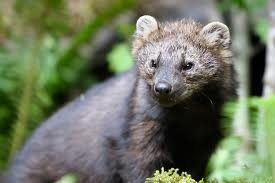
The object of their attention is the fisher, a small but fierce forest predator related to the weasel.
The fisher was reintroduced to Olympic National Park from Canada from 2008 to 2011. Before then, the most recent reported sighting of a fisher on the North Olympic Peninsula was in 1969.
The U.S. Fish and Wildlife Service is interested in rat poisons used at the thousands of illegal pot plantations that overlap the fisher’s range on national parks, national forests and Native American reservations.
Although only a handful of fisher deaths in California have been blamed directly on the poisons, nearly 80 percent of those examined in one study were found with the poisons in their systems.
Scientists think fishers get poisoned from eating rats that eat the poisons, which are spread around young marijuana plants and irrigation systems by the pound.
“We absolutely do have to evaluate the marijuana threat,” said J. Scott Yaeger, a wildlife biologist for the U.S. Fish and Wildlife Service in Yreka, Calif., who leads the team of scientists doing the Endangered Species Act review.
“We need to make that link, or if the information can be discredited, we would do so in this evaluation. My gut feeling is, though, we are going to find a strong link.”
Yaeger said rat poisons also have been found in fishers in Washington, but it is not known if they picked it up in British Columbia before being relocated.
Based on their evaluation of existing research, Fish and Wildlife is due to decide whether to list West Coast fishers as a threatened or endangered species by the end of September 2014
The fisher is now listed on the Washington state endangered species list.
The fisher is common across Canada and the Northeast U.S., but not in the West, where fur trapping, logging and the spread of people into the dense forests where it lives have caused numbers to plummet.
Biologists estimate 3,000 to 5,000 remain in California, Oregon and Washington.
They make up what is known as a distinct population segment, which qualifies for protection, though healthy populations exist elsewhere.
The fisher was formally classified in 2004 as a candidate species, likely worthy of protection. After conservation groups sued, Fish and Wildlife agreed to a timetable for evaluating 250 species.
The fisher’s turn comes just as evidence has been building of poisonings from pot plantations.
The National Marijuana Initiative, part of the war on drugs, has provided researchers with maps of pot busts in Northern California and Yosemite showing they overlap the range of poisoned fishers, said director Tommy LaNier.
He has briefed White House Drug Czar Gil Kerlikowske.
LaNier said since the 1990s, when California and Oregon legalized medical marijuana, the bulk of the backwoods pot gardens are planted by growers from Mexico, though there is little evidence of a connection to the big drug cartels. Law enforcement has been weeding them out, but only about 2 percent get cleaned up, leaving thousands of backwoods toxic waste dumps.
The initiative is working with Mourad Gabriel, a doctoral candidate at the University of California at Davis Veterinary Genetics Laboratory and president of the Integral Ecology Research Center in Blue Lake, Calif., who was lead author on a study published last year that established fishers were getting poisoned.
The study found 46 of 58 dead fishers sampled from the southern Sierras and Northern California — 79 percent — carried one or more of the rat poisons, including a female that passed it on to her babies through her milk.
The first was found in 2009 on the Sierra National Forest just south of Yosemite.
“It just looked like it died in its sleep,” said Gabriel. “We brought it in and found a massive amount of bleeding throughout all the cavities.”
Tissue tests showed large amounts of poisons known as secondary anticoagulant rodenticides, the compounds used in commercial rat poisons.
Necropsies determined that of the 46 dead fishers carrying rat poison, four of them died from the chemicals. After the study concluded, researchers determined that two more fishers from Northern California had died from rat poison.
All the dead fishers were found because they carried GPS tracking collars that sent out a death alarm.
“It would not be farfetched to think that non-monitored fishers are also being exposed and poisoned as well,” Gabriel said.
Gabriel said researchers in his study looked for rat poisons around remote cabins and campgrounds, power pole rights-of-way, and private timber plantations. The only places they found them — as much as 90 pounds at one site — were illegal marijuana gardens.
An EPA assessment says the poisons have also been found in endangered San Joaquin kit foxes, mountain lions, bobcats, owls, hawks, eagles, crows, squirrels, raccoons, and deer.
“If this continues, I don’t think this will be the only species” considered for protection due to illegal pot plantations, Gabriel said.
