
By GENE JOHNSON
The Associated Press
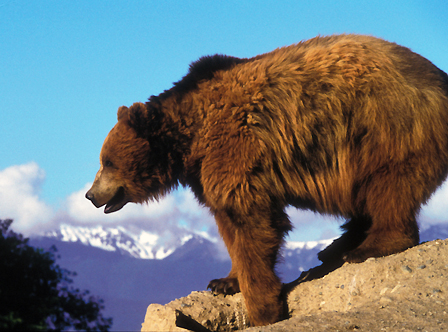
SEATTLE — The National Park Service said Thursday it will consider moving grizzly bears into the North Cascade Mountains of Washington state to aid their recovery.
The agency is launching a three-year process to study a variety of options for helping their population. Director Jonathan B. Jarvis stressed that the process is required under federal law but no decision had been made.
Native American tribes and conservation groups have pressed for years for the federal government to do more to bring back the bears.
“It marks the potential turning point in the decades-long decline of the last grizzly bears remaining on the U.S. West Coast,” Joe Scott, international conservation director of Conservation Northwest, said in a written statement.
“Without recovery efforts, these bears may soon be gone forever.”
Numerous grizzly bears roamed north-central Washington state in the past, but early settlers and trappers killed thousands for fur in the mid-19th century. The region’s booming population has also encroached on their habitat.
The tribes have cited their cultural connection to the bears in urging their preservation.
Federal authorities listed the grizzly bear as threatened in the lower 48 states in 1975 and ultimately designated five areas in Washington, Idaho, Montana and Wyoming to focus on boosting the population.
A small population of grizzlies exists in Washington’s Selkirk Mountains, and the park service says the animals have been seen recently in the Cascades north of the Canadian border. But they haven’t been seen in the Washington Cascades in years.
Officials have been looking hard, too. In the past three years, they’ve set up “hair-snare” traps — basically bait surrounded by stretches of barbed wire that snag samples of a bear’s hair — in about one-third of the North Cascades region.
The traps have produced many samples of black bear hair, as confirmed by DNA tests, but no grizzly hair, said Bob Everitt, northwest Washington regional director of the state Fish and Wildlife Department.
“It doesn’t mean there aren’t grizzly bears, but it sure suggests they’re pretty rare,” Everitt said.
In 1997, the U.S. Fish and Wildlife Service added a chapter on the North Cascades to its grizzly bear recovery plan.
The document said that within five years, authorities should evaluate options for recovering bears in the region, which covers a 9,800-square-mile swath of north-central Washington state, including the eastern and western slopes of the Cascades, North Cascades National Park, Lake Chelan
National Recreation Area, Okanogan-Wenatchee National Forest and Mount Baker-Snoqualmie National Forest.
It suggested that a sustainable grizzly population in the North Cascades might be about 200 to 400 bears.
Since that chapter was added, some work has been done to improve conditions for grizzlies in the North Cascades that mainly involved securing garbage to keep bears away from humans, Everitt said.
“There’s only so much you can do when you don’t have any bears,” he added.
A Washington Farm Bureau spokesman sounded a note of caution.
“Grizzly bears are incredible, wonderful animals,” Tom Davis, Farm Bureau director of government relations, told The Seattle Times.
“I just wouldn’t want them living next door to me, and I think that’s how farmers and ranchers . . . feel.”
Even though recovery efforts will occur primarily on federal lands, nearby private landowners are likely to be affected, said Jack Field, executive vice president of the Washington Cattlemen’s Association.
Ranchers in the northeastern part of the state are already dealing with livestock losses caused by the return of wolf packs, Field told The Times.
Lawmakers made clear in the mid-1990s that they didn’t want bears introduced in the state.
A law passed at the time directs the Fish and Wildlife Department to work to encourage the natural recovery of grizzly populations but says: “Grizzly bears shall not be transplanted or introduced into the state.
Only grizzly bears that are native to Washington state may be utilized by the department for management programs. “
The park service said it would work with the U.S. Forest Service, the state and the public in making any decisions, including about whether to bring grizzlies into the area.
“Grizzly bears are controversial,” Everitt said. “We want to make sure everyone is heard on this issue before it gets concluded.”
