
By The Associated Press
ANCHORAGE, Alaska —
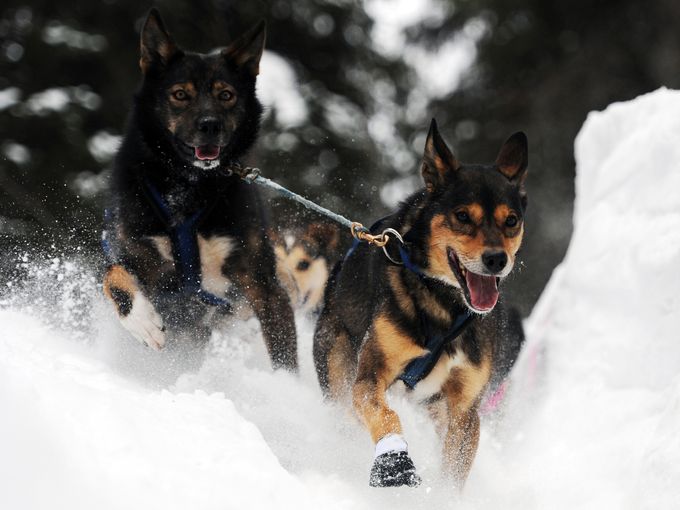
Imagine standing on a sled behind a team of 16 dogs, traveling mile after desolate mile in the Alaska wilderness without any sign of other human life.
All of a sudden, lights shine off in the distance, the first village to come into view in a very long time.
Whether it’s a single cabin or a booming village of several hundred people, for mushers on the Iditarod Trail Sled Dog Race, the villages are not only checkpoints to eat, rest and recharge, but a chance to interact with someone other than their dogs.
“There are no checkpoints that I dislike,” said defending champion Dallas Seavey. “Every time you come around the corner and see the lights of a checkpoint approaching, it’s a great sight.”
Four-time champion Martin Buser rested at the checkpoint in Rohn after a blistering fast 170-mile run that had put him hours ahead of the other teams.
Buser reached Rohn Monday and took his mandatory 24-hour rest there, watching other mushers arrive and leave, before he departed at 12:03 p.m. Tuesday.
Buser’s layover put Aaron Burmeister in the lead Tuesday. He was the first in and out of the Nikolai checkpoint 75 miles past Rohn, arriving at 8:11 a.m. and departing a little more than four hours later. Running second was last year’s Iditarod runner-up, Aliy Zirkle, who left Nikolai at 1:13 p.m. Tuesday.
There are 26 checkpoints along the 1,000-mile trail from Anchorage to Nome, and for Zirkle, the reception that teams receive are truly Alaska events: Villagers welcome the dogs first.
“And it’s an open-armed greeting, where they want to make sure all the dogs are OK, and they get straw for them and food for them,” said Zirkle, running her 13th Iditarod. “Then they say, ‘How are you doing, Aliy?'”
There are two ghost towns that serve as checkpoints along the trail, including the race’s namesake, the former mining village of Iditarod, which once boasted a population of 10,000 people.
The ghost towns fill up with support staff during the race, but are empty the rest of the year.
But other villages are just like small towns in the Lower 48.
“They have schools, they have post offices, they have a runway,” race spokeswoman Erin McLarnon said.
“They’re basically like any small town community except inaccessible,” she said of the state’s limited road system. “You can only get there by dog team, snowmachine or air.”
The checkpoints serve a purpose. Veterinarians staff the checkpoints to examine the dogs, and race officials make sure the mushers are fit to continue.
Mushers are required to take three mandatory rest periods during the race. They take one 24-hour layover any time during the race. They must take one eight-hour rest at a checkpoint along the Yukon River, and the other eight-hour rest at White Mountain, 77 miles from the finish line in Nome.
The village of Takotna is becoming a popular place for mushers to take the longer rest period. It comes 329 miles into the race, at a time when the dogs are ready for a break and mushers need a good meal.
And why not at a foodie village? The town of about 50 people on the Takotna River is renowned for filling the school gym with homemade pies, moose stew, moose chili, steaks and made-to-order breakfasts for grateful mushers.
Seavey takes his 24-hour layover at Takotna, where the town’s volunteers provide mushers hot food and other things that might seem minor, such as “a microwave with a hot wet towel to take care of a quick — well, I wouldn’t call it a shower, but wipe your face off and get some of the grime off your hands and face.”
Some mushers are finding Takotna a little too crowded these days.
“It doesn’t matter if you’re first or 50th, it seems like the whole damn race is in Takotna at the same time,” four-time champion Lance Mackey said.
Overcrowding is leading some mushers to continue 23 miles to the next checkpoint at Ophir — another ghost town where they, and the dogs, can recharge for the next grueling stretch.
