
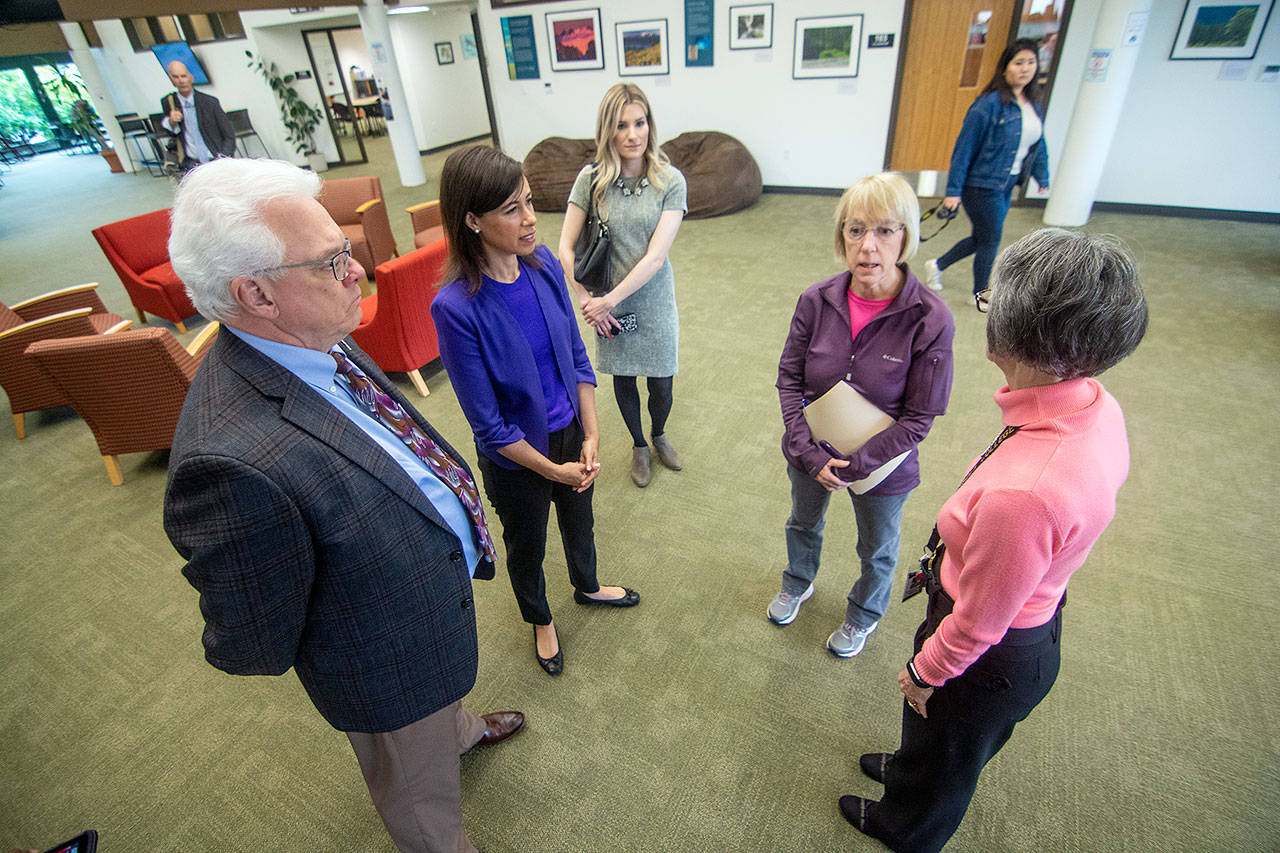
FORKS — U.S. Sen. Patty Murray said Tuesday she was not surprised to learn of the challenges students and businesses on the West End face due to limited access to high-speed internet and technology and she is proposing a solution for all rural communities.
Murray, D-Seattle, and Commissioner Jessica Rosenworcel, member of the Federal Communications Commission (FCC), toured Peninsula College’s Forks campus Tuesday to discuss the senator’s legislation, the Digital Equity Act, that would create two new $125 million grant programs to increase broadband access in rural communities.
“I wish I could say I was surprised, but unfortunately what I’m hearing is exactly what I know: that especially in a community like this there are people who are being left behind,” Murray said. “They don’t have access to technology at home.”
Murray and Rosenworcel learned that three out of every four Peninsula College students are on financial aid and that more than half of the students on the West End are persons of color.
Peninsula College President Luke Robbins said that though the college is connected to the fiber connection that follows U.S. Highway 101, people living on tribal land face challenges in getting internet.
Many classes have online components, including assignments and quizzes that must be submitted online.
“If a student doesn’t have access to broadband at home, they are disadvantaged because they cannot access that repetitious work … that is so valuable for success,” Robins said.
Murray introduced the Digital Equity Act in the Senate on April 11.
She said Tuesday there will be challenges in getting the bill passed through Congress, but she hopes by hearing from people in communities without access to high-speed internet she will be able to convince other lawmakers to support the bill.
“It’s always hard to get something passed in Congress and one of the reasons I’m here today … is to hear those stories because often times you tell other members of Congress this is something we need to do and they have no idea,” Murray said.
“Coming here to hear personally what’s going on is one of the most important steps in convincing other people that we need to do this.”
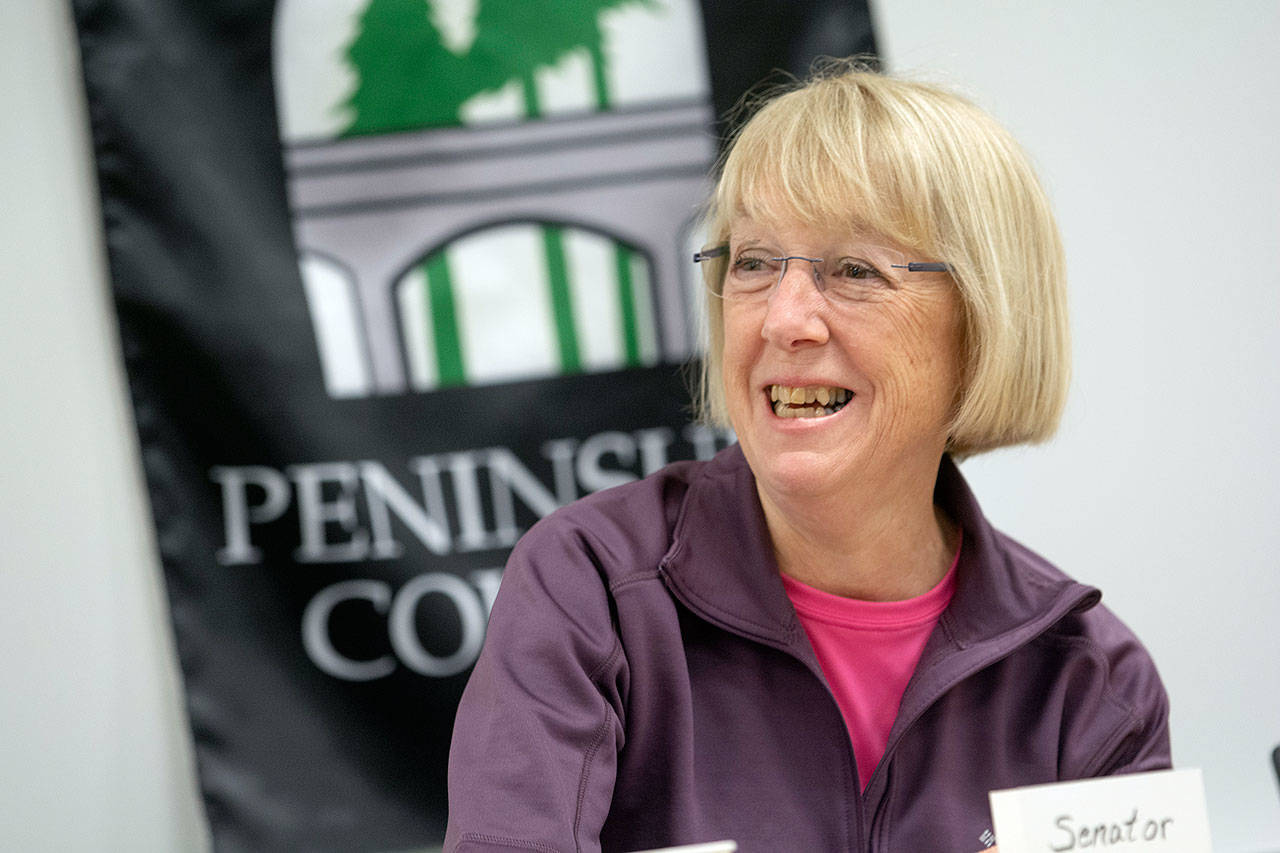
U.S. Sen. Patty Murray is seen during her visit to the Peninsula College campus in Forks, where she discussed new legislation that would tackle the nationwide digital equity gap. (Jesse Major/Peninsula Daily News)
The grants would allow states and communities access to funds to build skills and get equipment to start “bridging the digital equity divide,” Murray said.
According to the Pew Research Center, nearly one in five teenagers in the U.S. say they have been unable to complete homework assignments because they lack reliable internet connections.
In Clallam County, 88.2 percent of households have access to high-speed internet and in Jefferson County 86.5 percent of households have access to high-speed internet, according to Broadband Now.
“We do have a digital divide in this country, but what I worry is if we don’t develop strategies to tackle it, that divide is going to grow into a chasm,” Rosenworcel said.
“That’s why I think this digital equity legislation that Sen. Murray has offered is so terrific, because it thinks not just about the infrastructure but how we’re going to plan for that future to make sure everyone has access.”
Murray said she was most surprised to hear of Peninsula College student Autumn Greiner’s experience in teaching community computer classes while she was in high school.
She said she was nervous at first about teaching a class, but when she realized how basic the need was she became more confident that she could help people.
Greiner described teaching what could be considered the basics, such as how to access social media and email.
“One of the biggest things was teaching people how to use Google,” Greiner said.
She saw that younger generations needed access to the internet for their schooling and that older generations needed access so they could stay in contact with grandchildren.
Murray and Rosenworcel also heard from a man who owns a business in the Upper Hoh Valley, who said lack of high-speed internet has made it difficult for businesses to interact with vendors and to attract customers.
“Serving the thousands of visitors that are in the area on a daily basis is becoming increasingly difficult without high-speed internet,” said Gary Peterson, owner of the Peterson Ranch.
He described cabin booking as “awkward” because many visitors who are there to escape the city still want access to internet. Guests decline or limit stays because of the lack of internet, he said.
He said businesses have been able to survive by cobbling together an “embarrassing patchwork of couriers, snail mail, fax machines, dumb phones, smart phones and off-site computers with access.”
“In the Upper Hoh Valley we feel like Port Townsend in the 1890s waiting for the rail,” Peterson said. “The train never made it to Port Townsend. We are hoping sometime soon high-speed internet does come to the Hoh Rain Forest.”
________
Reporter Jesse Major can be reached at 360-452-2345, ext. 56250, or at jmajor@peninsuladailynews.com.
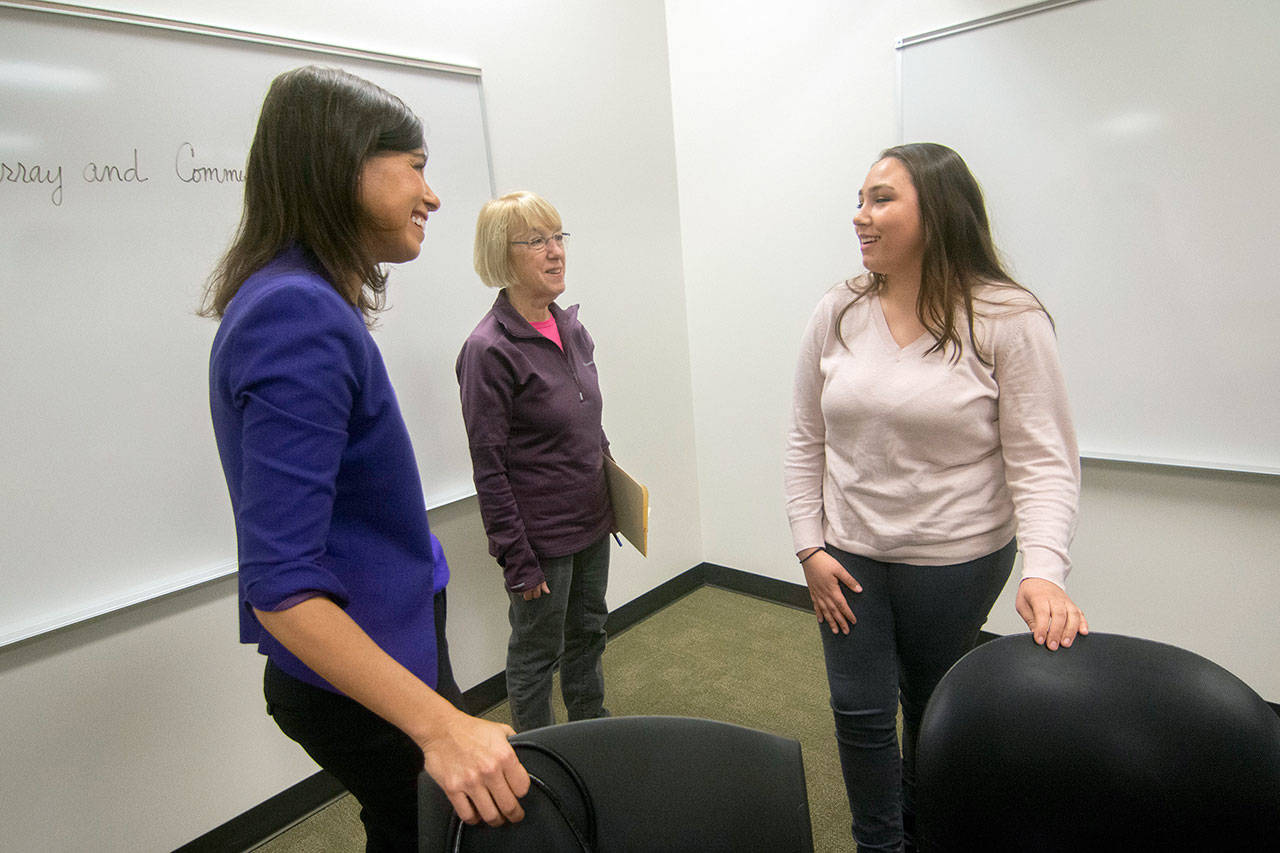
Jessica Rosenworcel of the FCC, left, and U.S. Sen. Patty Murray talk with Peninsula College student Autumn Greiner about a computer class Greiner taught while she was in high school. (Jesse Major/Peninsula Daily News)
