
By Lindsay Whitehurst and David Crary
The Associated Press
SALT LAKE CITY — Planned Parenthood clinics in several states are charging new fees, tapping financial reserves, intensifying fundraising and warning of more unintended pregnancies and sexually transmitted diseases after its decision to quit a $260 million federal family planning program in an abortion dispute with the Trump administration.
The fallout is especially intense in Utah, where Planned Parenthood has been the only provider participating in the nearly 50-year-old Title X family planning program and will now lose about $2 million yearly in federal funds that helped 39,000 mostly low-income, uninsured people. It plans to maintain its services — which include contraception, STD testing and cancer screening — but is considering charging a small copay for patients who used to get care for free.
Planned Parenthood in Minnesota is in a similar situation, serving about 90 percent of the state’s Title X patients, and plans to start charging fees due to the loss of $2.6 million in annual funding.
The organization is concerned about the spread of unintended pregnancies and sexually transmitted diseases.
“We believe there will be a public health crisis created by this denial of care,” said Sarah Stoesz, the Minnesota-based president of Planned Parenthood North Central States. “It’s a very sad day for the country.”
Planned Parenthood and several other providers withdrew from the program earlier this week rather than comply with a newly implemented rule prohibiting participating clinics from referring women for abortions.
Anti-abortion activists who form a key part of President Donald Trump’s base have been campaigning to “defund Planned Parenthood.” Among its varied services it is a major abortion provider, and the activists viewed the grants as an indirect subsidy.
About 4 million women are served nationwide by the Title X program, which makes up a much bigger portion of Planned Parenthood’s patients than abortion. But the organization said it could not abide by the abortion-referral rules because it said they would make it impossible for doctors to do their jobs.
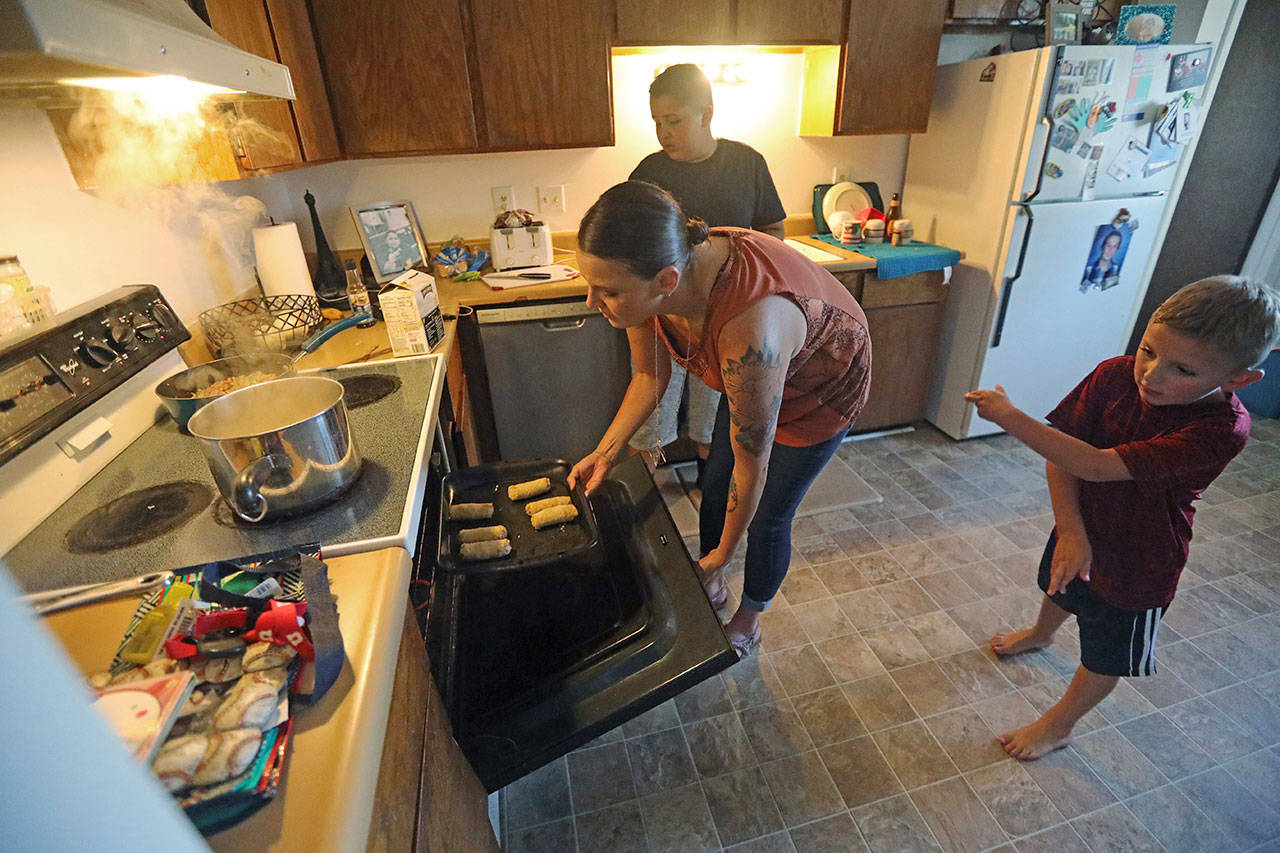
Misty Dotson, a single mother in Utah, started going to Planned Parenthood as doctors’ bills for treating recurring yeast infections mounted. The services became even more important when she gave up her employer-sponsored health insurance because she couldn’t afford the $500 monthly bill.
She is unsure what she’d do if the family planning services she gets stop.
“It would put me in a very dangerous position,” said Dotson, who works as an executive assistant for an accounting and consulting firm. “It covers so many things: STD testing, emergency contraception, birth control, lifesaving cancer screenings … you name it, they have treated me for it.”
Planned Parenthood said it’s dedicated to maintaining its current services in Utah, but CEO Karrie Galloway acknowledged it won’t be easy and could cause some “pain on all sides.”
She said the organization plans to lean heavily on donors to make up the funding gap while staff members assess how they’ll cope. Among the possibilities are instituting copays of $10-$15 per visit, shortening hours and trimming spending. She doesn’t plan to lay off staff but said she may not be able to fill jobs when people leave or retire.
Minnesota is planning fees as well.
“We’ll continue to offer all services, and keep clinic doors open, but we’ll be charging patients on a sliding scale who we didn’t charge before,” Stoesz said. “Vulnerable people who previously were able to access birth control and STD testing for free will no longer be able to do so.”
Elsewhere, the impact of Planned Parenthood’s withdrawal will vary from state to state.
In the Deep South there will be little impact because Planned Parenthood did not provide Title X services in most of the region’s states.
Governments in some Democratic-controlled states, including Hawaii, Illinois, New York and Vermont, said they will try to replace at least some of the lost federal funding.
In Washington state, Democratic Gov. Jay Inslee — fresh from quitting the presidential campaign — vowed to join that group of states. His administration is pulling Washington out of Title X because of the new rule and will ask the Legislature to make up for the $4 million in federal funding that will be lost.
“We will not comply with their dangerous, unconstitutional, illegal rules,” Inslee said Thursday. “We will make sure this health care continues.”
The chief operating officer for Planned Parenthood of the Greater Northwest and Hawaiian Islands, Rebecca Gibron, said Southern Idaho could be hit hard by the changes, with other health care providers in the area saying they can’t fill the gap if the roughly 1,000 low-income women served by Planned Parenthood in Twin Falls are no longer able to receive care.
“This was not money that can simply be made up by raising dollars from donors,” Gibron said. “We have rent to pay, we have staff salaries … there are limits to what we are able to do in terms of providing free care without the Title X program.”
Among other providers withdrawing from Title X is Maine Family Planning, which oversees a network that serves about 23,000 patients per year and will be losing $1.8 million in annual funding. Its CEO, George Hill, said the organization will rely on reserves and intensify fundraising efforts to bridge the gap while seeking more aid from the state.
In anticipation of the changes, Democrats in neighboring New Hampshire added about $3.2 million in the state budget they passed earlier this year to make up for the federal funding. But that’s on hold after Republican Gov. Chris Sununu vetoed the budget in June for other reasons.
Planned Parenthood will continue to participate in Medicaid, the federal health-coverage program for low-income Americans. That’s Planned Parenthood’s biggest source of government funding — about $400 million or more annually in recent years. The Republican-controlled legislatures in Texas, Iowa and Missouri have taken steps to block that flow of funds in their states.
Maryann Martindale, executive director of the Utah Academy of Family Physicians, said most Title X clients earn slightly too much money to qualify for Medicaid but cannot afford employer-based or private health insurance.
