
PORT TOWNSEND — Rural communities are becoming the preferred living place for millennials, according to the co-founder of an organization that hosted a symposium at Fort Worden.
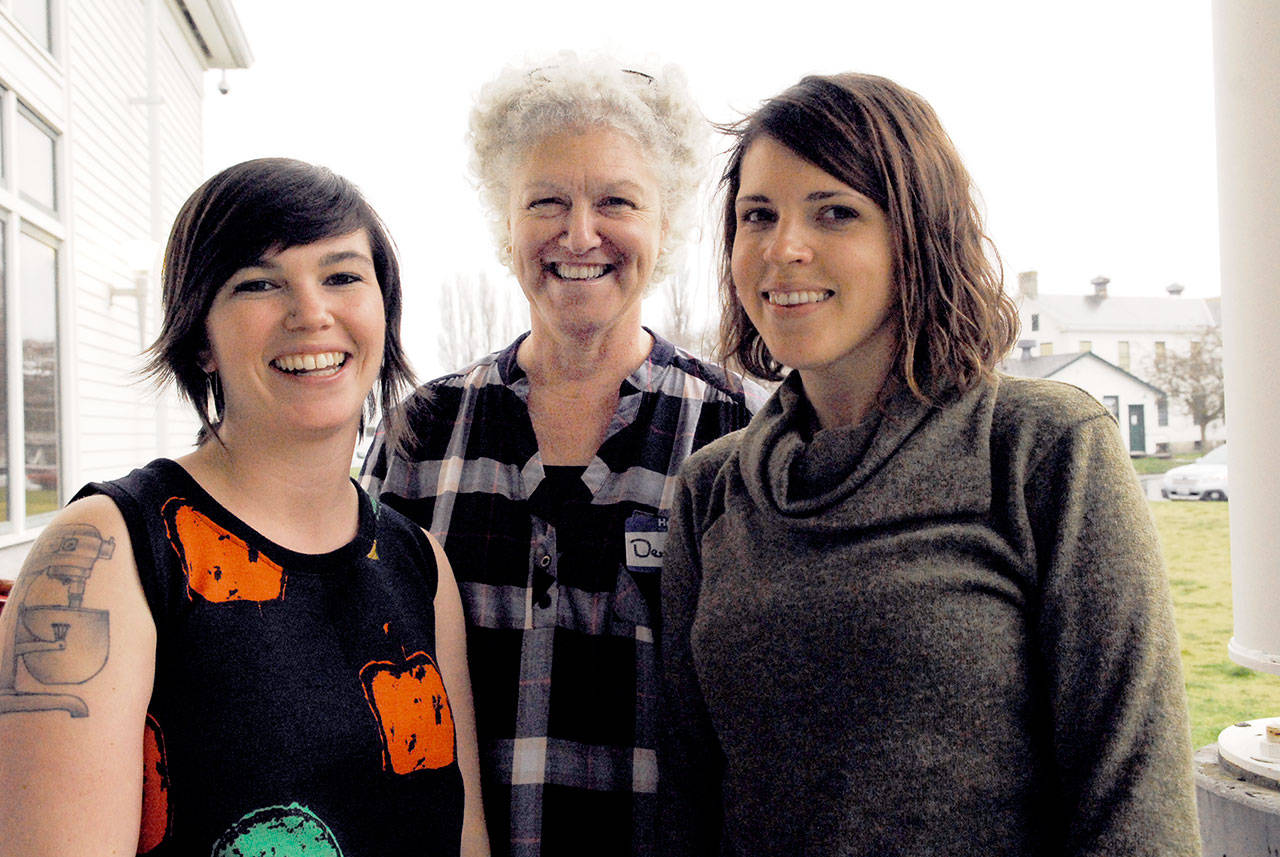
“This is happening and you can see a change in California and Washington,” said Madeleine Moore, executive chef/owner of Pink Poppy Bakery and Willapa Bay AiR Artist in Residency Program from Chinook, who co-founded Rethinking Rural with Malloree Weinheimer of the Jefferson Landworks Collaborative Board of Port Townsend.
“We need to be intentional about how our communities grow. Some will die out, but most of our rural communities are going to get bigger.
“What do we want them to look like? How can they be conducive to the lifestyle we want to lead? As technology grows and chaos in society increases, people are going to want to turn to rural communities and a quieter pace of life.”
Rethinking Rural, which is a start-up nonprofit organization, hosted a symposium at Fort Worden from Monday through Wednesday to discuss the economic, social and environmental topics millennials face living in small, rural communities.
Weinheimer and Moore invited 50 millennial change-makers from rural towns across America to discuss issues critical to their futures at the symposium. Millennials are the first generation to come of age in the new millennium.
The goal of Rethinking Rural is to create a network of the next generation of leaders that are just beginning to move into positions of community leadership.
“We reached out to different regions and sectors across the country, searching for different backgrounds to get as much representation from rural communities as we could,” Weinheimer said.
Weinheimer and Moore wanted the symposium to be nationally focused.
“We pulled cool young people from small towns doing interesting things,” Weinheimer said.
“We were intentional about the people we chose: Millennials who have established themselves in small communities and have been successful.
“Our goal is that these 50 people create a brain trust that moves this agenda forward. We needed these people to be top of the line.”
Among those taking part were tribal representatives, veterans, small business owners, a hotelier, a distiller, farmers, three city council members, teachers, banking institution people, a librarian, farmers, mental health workers and owners of a summer camp. They were from Alabama, Idaho, North Carolina, Minnesota, California, Oregon and Washington state.
In addition to the millennials, a dozen volunteers, all older than 35, participated as mentors and facilitators.
“We wanted to extract institutional wisdom from the older generation to add to the conversation,” Weinheimer said.
“How do we keep millennials in rural communities rather than in the brain drain of urban environment? How can we retain jobs? And, how do we have healthy relationships with our urban counterparts?” she asked.
Jefferson County Commissioner Kate Dean, who is 43, spoke about the need to redefine how rural communities work.
“When I was young, the measure of success was how quickly you could get out of town,” Dean said.
“Our history in Jefferson County is one of resource extraction,” she said. “Those resources are taken away, we get some compensation for that, but they go to build the I-5 corridor. Our economic base has disappeared. That’s the old model.
“The spotted owl was the end of the old era and we haven’t redefined what the new era is. How can rural communities support themselves in viable ways? The old model doesn’t work anymore. This is the generation that’s redefining the rural economic model.”
Dean pointed out that even Fort Worden needs a solution for retaining younger employees.
“The Fort understands the same issues being discussed here. They have a hard time maintaining a work force because of housing costs, training and work force development. They’re invested in this mission, too.”
Moore said Rethinking Rural will help millennials network and develop economic development models and growth strategies that will directly impact their local successes.
“I want them to take away that they are a piece of a larger voice, that they are not alone and this is a national conversation. If we can unify small community leaders we will be louder in national conversations and be taken seriously. Our voices will make us matter again. We can show each other that we care and we can help and engage.”
For more information, see www.rethinkingrural.org.
________
Jefferson County Editor/Reporter Jeannie McMacken can be reached at 360-385-2335 or at jmcmacken@peninsuladailynews.com.
