
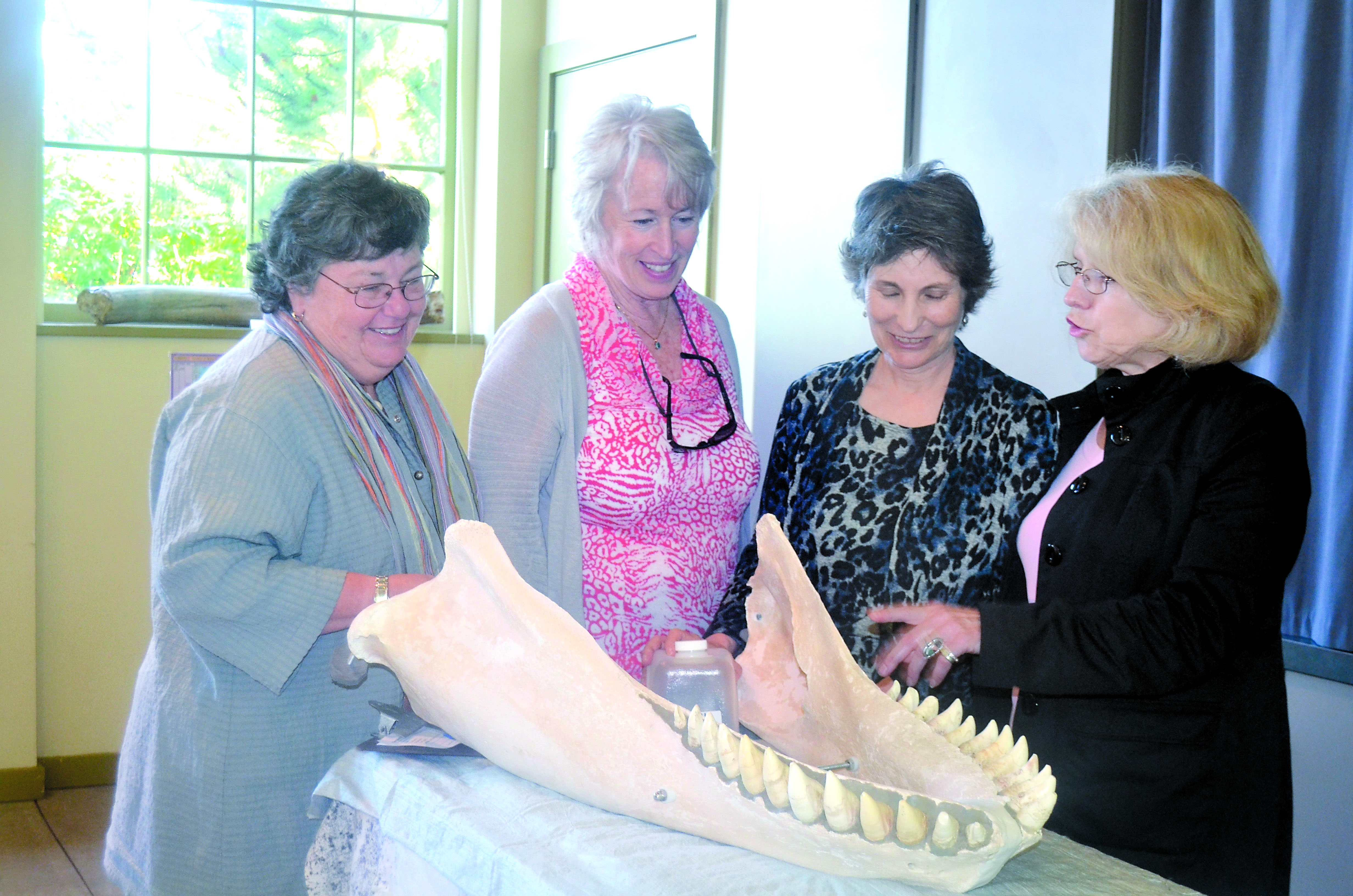
PORT TOWNSEND—Visitors to the Port Townsend Marine Science Center will be able to learn about the effects of toxins in the marine environment thanks to a recent grant from the federal Environmental Protection Agency.
The $56,848 grant will help to create a new permanent educational interactive exhibit, with a first phase scheduled to open in September.
Much of this exhibit will center around Hope, an orca found dead on the Dungeness Spit north of Sequim in 2002 with a high level of toxins in her carcass.
Hope’s skeleton was reassembled by marine science center staff last year, and her story will be used as a learning experience, according to Executive Director Ann Murphy.
“We will tell her story as well as the story of whales and orcas in general,” Murphy said,
“We’ll focus on her necropsy and use it to talk about toxins in our lives and what we can do to decrease them.”
Murphy said the high level toxins found in a “top level predator” like an orca result from their ingesting large amounts of salmon and other fish that have been contaminated by toxins.
The grant is one of 46 awards in 36 states under the EPA’s Urban Waters Program.
While Port Townsend is a rural environment, EPA qualifies it for the distinction because it is part of Puget Sound, which is connected to a variety of urban areas.
Christine Psyk, associate director of EPA’s regional Office of Water and Watersheds in Seattle, said the urban waters program was the idea of the agency’s administrator, Lisa Jackson.
”She wanted to find a way that communities could understand and be connected to the waters in their backyard,” Psyk said of Jackson.
“Puget Sound is both a rural and an urban landscape that is crucial to the area, it’s majestic, it’s beautiful, it’s vibrant and has value aesthetically, recreationally and economically.”
Pysk said the region’s beauty is a drawback when it comes to drawing attention to pollution.
“When people come to this area from other parts of the country, they see the critters and the clear water and can’t believe there is a problem with its beauty,” she said.
“So the very invisibility of the problem is a big challenge.
“Puget Sound isn’t imperiled by visible industrial waste or raw sewage spewing into the Sound.
“It is imperiled by very ordinary activities that are a result of an expanding population,” Pysk said.
Part of the exhibit’s development process is expected to include the collection of roof water runoff samples from 25 homes in the Port Townsend and Seattle areas for lab analysis, measuring the presence of 100 toxic compounds.
This research will fill data gaps on toxins in roof runoff and help inform and influence the development of water restoration techniques, such as rain gardens.
Volunteers will also collect tissue samples from deceased seals that will be analyzed for toxic chemicals.
“We want people to understand what toxins they have in their households and how they end up in the marine environment,” Murphy said.
________
Jefferson County Reporter Charlie Bermant can be reached at 360-385-2335 or at charlie.bermant@peninsuladailynews.com.
