
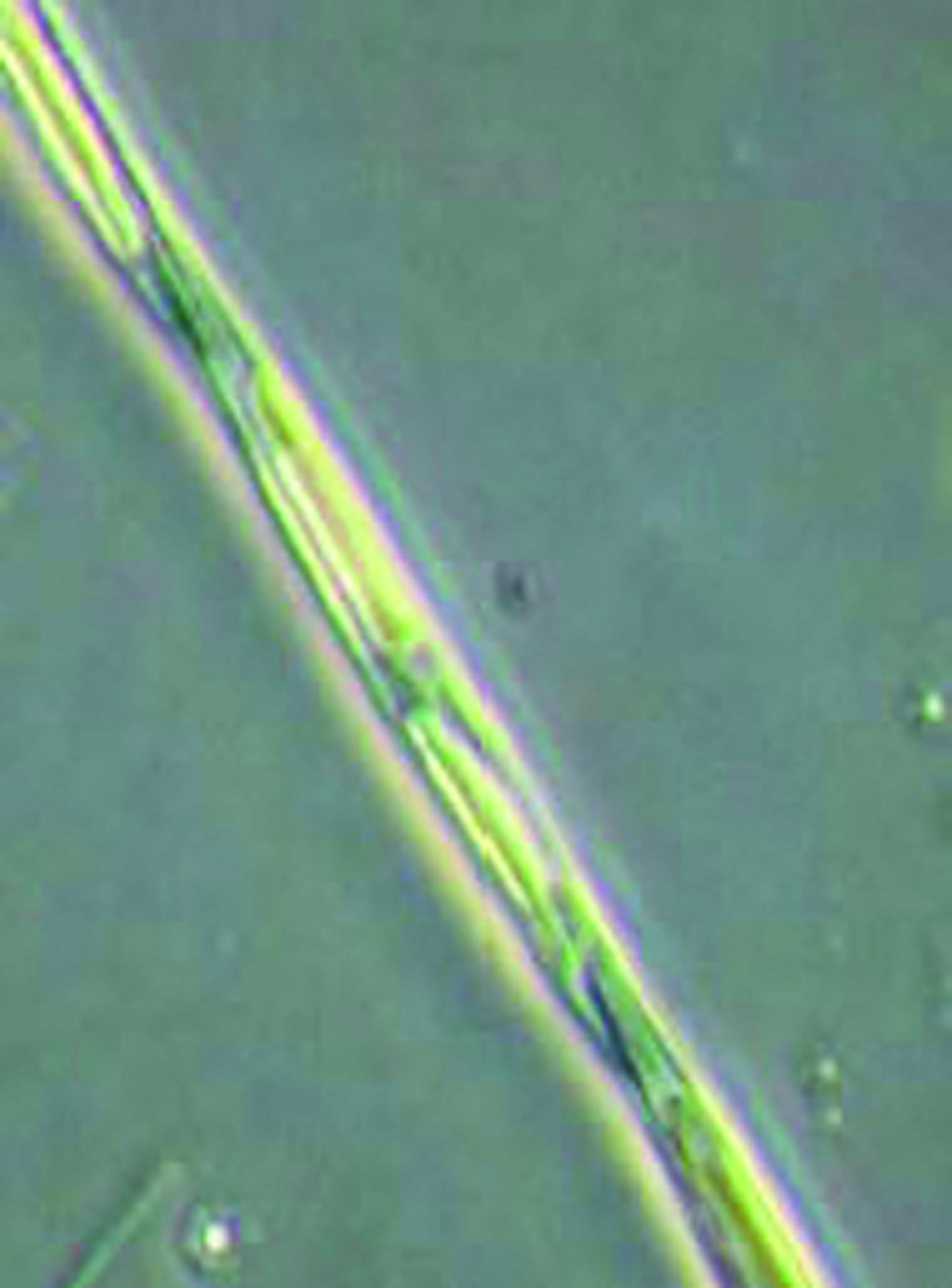
SEQUIM — Although a marine algae that can produce a potential lethal biotoxin has inundated bays off the Strait of Juan de Fuca, the toxin has not been found in shellfish samples on the beaches of the Strait or the North Olympic Peninsula’s Pacific coast.
The toxin — a new danger for the Peninsula — is domoic acid.
If present in high enough concentrations in shellfish and eaten, it can cause amnesic shellfish poisoning.
That can lead to vomiting, nausea, diarrhea, abdominal cramps, headache, dizziness, loss of short-term memory, seizures, profuse respiratory secretions, cardiac arrhythmia and lead to coma and death.
The biotoxin is present on the coast of Oregon and southern Washington in some of the highest concentrations ever observed, experts say.
But it has not been found in shellfish in North Olympic Peninsula.
“As of yet, we really haven’t had any of the toxin being produced” in any inlet on the Strait, said Jerry Borchert, marine biotoxin coordinator for the state Department of Health’s Office of Environmental Health & Safety.
“To date, there has been very little to no domoic acid.”
A bloom of the single-cell algae Pseudo-nitzschia which can, at times secrete the poison, stretches in the Pacific from central California to southern Alaska, the largest of its kind in more than a decade.
It has made its way east through the Strait of Juan de Fuca.
Researchers are studying the algae in Sequim and Discovery Bays.
More than one million cells of Pseudo-nitzschia per liter of seawater were observed in samples taken last week from both bays.
Toxin-producing algae is actively monitored in Sequim Bay by the Jamestown S’Klallam tribe, and in Discovery Bay by the Port Townsend Marine Science Center, who take samples of seawater each week.
They upload the data to an online database as part of SoundToxins, a cooperative partnership led by state managers, environmental learning centers, tribal harvesters, and commercial fish and shellfish farmers.
No information is available to discern if the algae is present in all other inlets stretching west from Sequim Bay to Neah Bay because there is no algae monitoring system currently in place.
However, the state does monitor shellfish for contamination at those locations, Borchert said.
“We test actual shellfish tissue for the presence of toxins. We still analyze shellfish tissues from those locations, we just don’t get any phytoplankton information.”
Present closures of some Strait beaches to recreational shellfish harvesting are due to other biotoxins such as paralytic shellfish poison or diarrhetic shellfish poison, vibrio bacteria or pollution.
“It is important to note that Clallam County from Pillar Point east to the Jefferson County line and Sequim and Discovery Bay are closed to the recreational harvest of all species of shellfish due to the presence of biotoxins — in this case paralytic shellfish poisoning and diarrhetic shellfish poisoning,” said Neil Harrington, Jamestown S’Klallam tribe environmental biologist.
The highest level of paralytic shellfish poisoning (PSP) recently found in Sequim Bay was 424 micrograms per 100 grams of shellfish, according to the state Office of Environmental Health & Safety.
Recreational shellfish harvesting is prohibited once more than 80 micrograms of PSP per 100 grams of shellfish are found in samples.
The highest level of diarrhetic shellfish poisoning (DSP) found recently in Sequim Bay, 43 micrograms per 100 grams of shellfish, was measured from a sample collected June 9.
The recreational threshold is 16 micrograms of DSP.
Discovery Bay peaked also on June 16 with 200 micrograms of PSP per.
There was no more than 15 micrograms of DSP measured in the bay during June.
Levels of PSP and DSP at Clallam Bay, Neah Bay and Slip Point remain well below the closure threshold.
Pseudo-nitzschia does not always secrete domoic acid, and scientists do not know what triggers the process.
The algae may be growing rapidly because of ample sunlight this season and above average water temperatures, experts said.
If the toxin were present in the seawater, it would be absorbed and concentrated by local shellfish, delivering a nasty dose if eaten.
There is no known antidote for domoic acid, and cooking or freezing affected fish or shellfish tissue does not lessen the toxicity.
________
Sequim-Dungeness Valley Editor Chris McDaniel can be reached at 360-681-2390, ext. 5052, or cmcdaniel@peninsuladailynews.com.
