
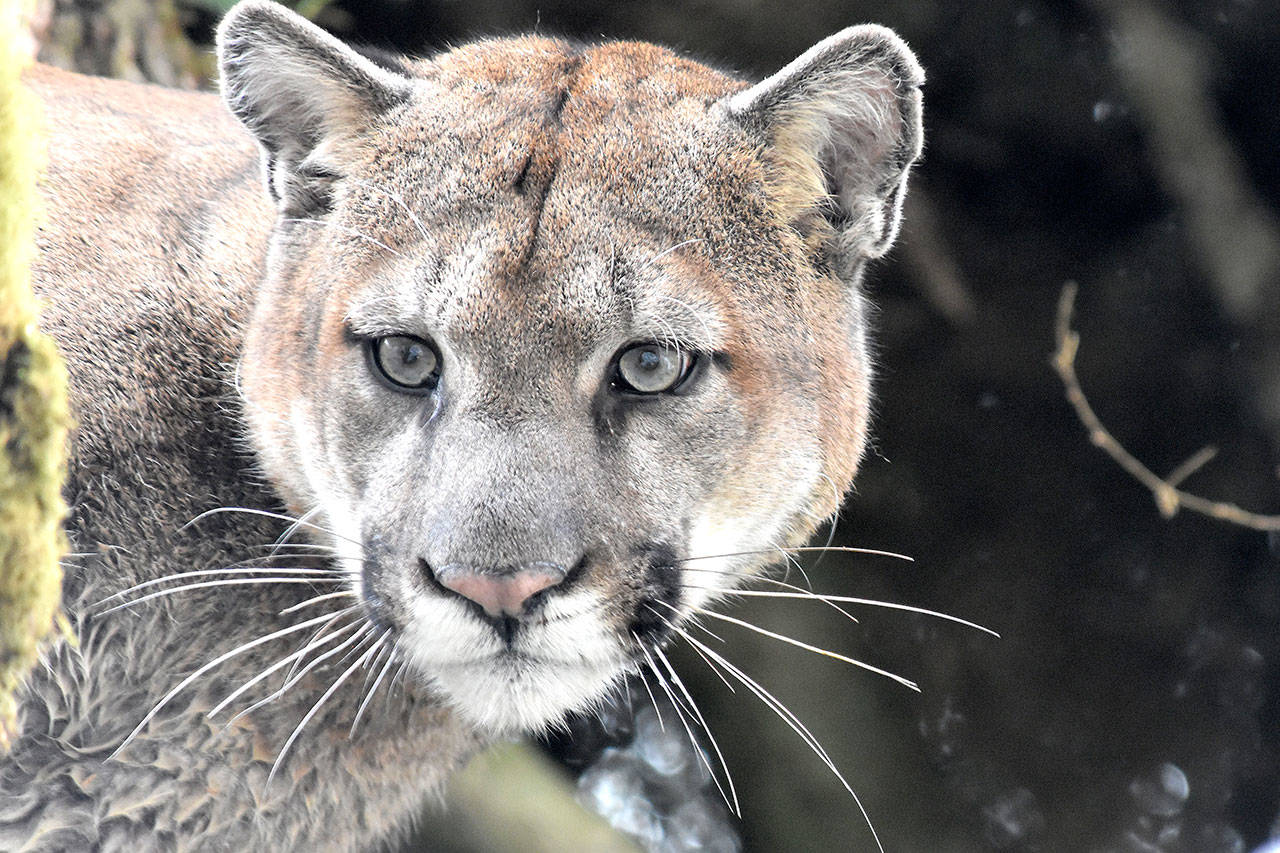
CLALLAM BAY — Researchers with the Lower Elwha Klallam Tribe were tracking a cougar on the west end of Clallam County recently as part of a project to estimate the North Olympic Peninsula’s cougar population.
Kim Sager-Fradkin, a wildlife biologist for the Lower Elwha Klallam Tribe, said the tribe has studied deer for the last four years, but the tribe’s scientists have become interested in the area’s predators — including cougars.
“The bigger context is within our entire … wildlife program we have been doing a lot of deer research, a lot of elk research, doing a lot of research on wildlife recolonization and response to dam removal in the Elwha,” she said. “But we have big data gaps in our knowledge.”
The study area, roughly 250 square miles, includes areas west of the Elwha River, north of U.S. Highway 101 and east of Clallam Bay.
Those helping with the project include Sager-Fradkin; tribal Wildlife Technician Mike Sheldon; tribal biologist Dave Manson; volunteer Dave Shreffler; wildlife technician and University of Idaho graduate student Cameron Macias.
Mark Elbroch, Panthera’s lead scientist for its puma program, also has joined the tribe as a contractor, though he hopes to be formally part of the project in the future.
Sager-Fradkin said as that of yet there haven’t been any solid estimates of cougar populations on the North Olympic Peninsula — partly because the large cats are difficult to find.
She said the easiest way to find a cougar is to wait for fresh snow and then to follow fresh tracks. They use dog teams to track down the large cats and eventually collar them.
“Generally when cats are pursued by dogs, they will climb a tree,” she said. “Once they climb a tree, we can catch up to them and us an anesthetizing drug, dart the animal and safely get it out of the tree.”
That’s when they put a GPS tracking radio collar on the animal and release it. The collars look for satellites every two hours and every fourth time satellites are found, the collar sends the GPS data back to the researchers.
Though one of the project’s goals is to look at how younger cats that haven’t yet established their home ranges move around the area, the team from the tribe’s wildlife program has so far collared one adult male.
The hope was that he would lead them to other cats in the area, but so far that hasn’t happened.
“So far he has given us a lot of good information, but he hasn’t helped us find other cats,” she said.
Their research led them on Thursday to an area near Clallam Bay, where they investigated a site where they believed the cougar they are tracking killed an elk one week prior. They set up a game camera when they first discovered the kill, but waited to examine the scene to allow nature to takes its course.
Nearby they also found the cat’s bed and several latrines, which it used much like a house cat would use a litter box.
By looking over the scene Thursday, they were able to determine that it was in fact the cougar that had killed the elk and that several other species of animals in the area scavenged a meal from the cashed elk.
The cat had ripped up ferns from near the elk and covered the animal the brush. Elbroch said the thought is that this is both to preserve its meal and to hide it from other animals.
Elbroch, an expert on large cats, asked others on the team questions to help them determine what had happened before actually looking at the game camera.
“For me the big question always is was their a bear here,” he said.
All the signs seemed to have pointed to a bear visiting the scene, but after further investigation — and checking the game camera — they realized the cougar was the largest animal that had visited the site.
Others that stopped by included coyotes, bob cats, eagles, skunks and others.
Sager-Fradkin said as the project moves into the summer, the hope is to get help from citizen scientists who are interested in the study.
She said the tribe would install a minimum of 32 cameras in its study area in hopes of capturing images of cougars, bobcats, bears, elk and other animals.
“We’re really interested in having people adopt cameras that they check and we get the data from,” she said. “That would help with the cougar estimate as well.”
She said this could help determine numbers of females and kittens in the area.
Exactly how that program would be operated isn’t yet determined, but Sager Fradkin said she hopes to have more information on how people can help in the coming months.
________
Reporter Jesse Major can be reached at 360-452-2345, ext. 56250, or at jmajor@peninsuladailynews.com.
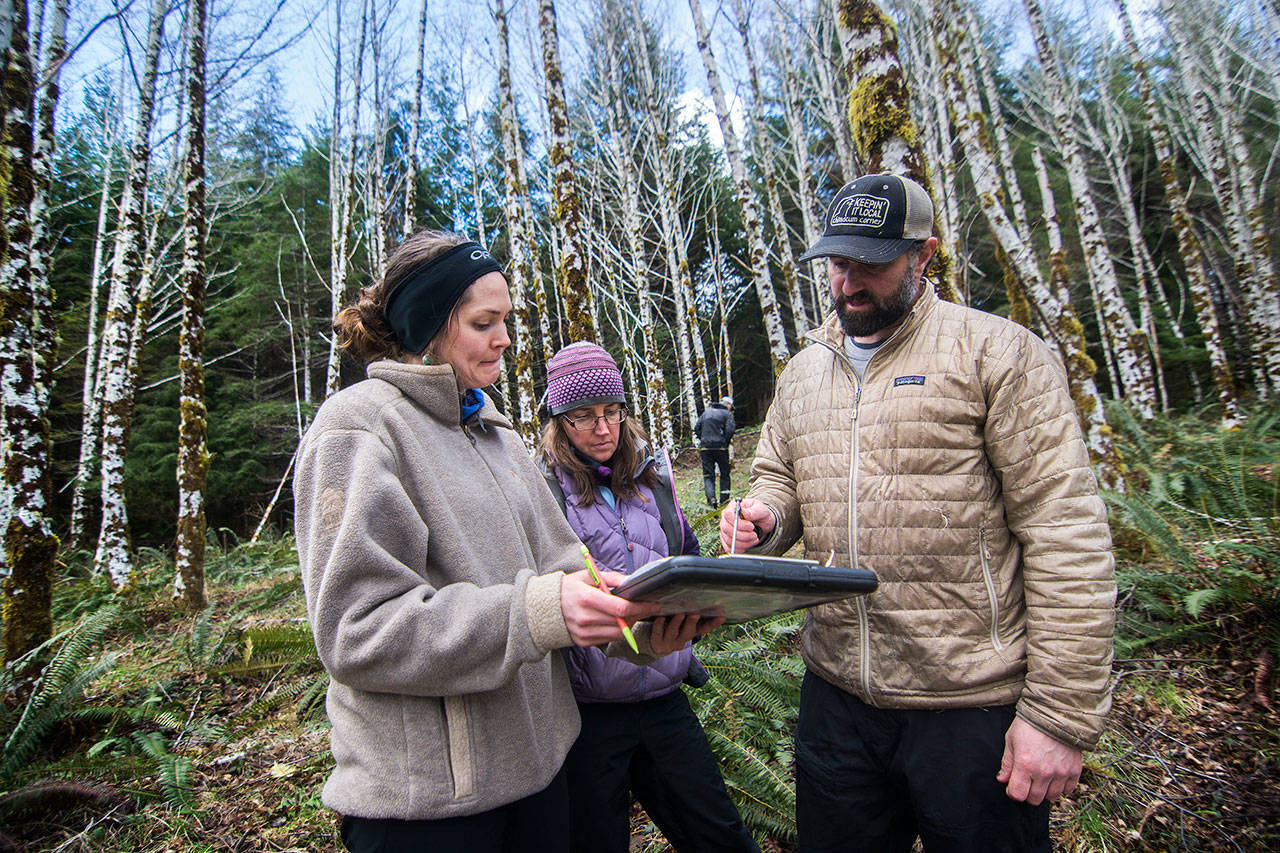
Lower Elwha Tribe Wildlife Technician Cameron Macias, left, tribal Wildlife Program Manager Kim Sager-Fradkin and Panthera scientist Mark Elbroch discuss what they learned after examining the site where a cougar killed an elk. (Jesse Major/Peninsula Daily News)
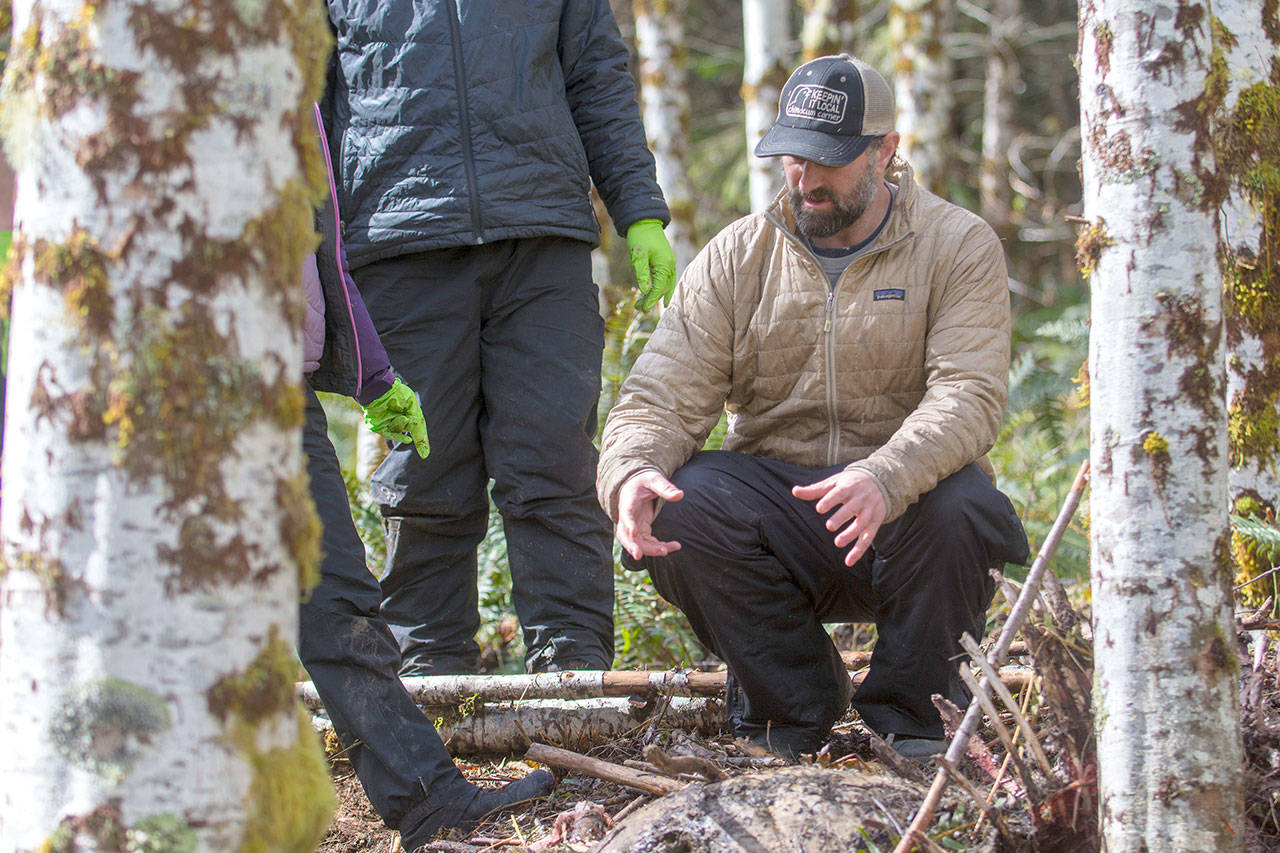
Mark Elbroch, right, lead scientist in Panthera’s puma program, examines an elk killed by a cougar that Lower Elwha Klallam Tribe researchers are tracking. (Jesse Major/Peninsula Daily News)
