
By Sudhin Thanawala
The Associated Press
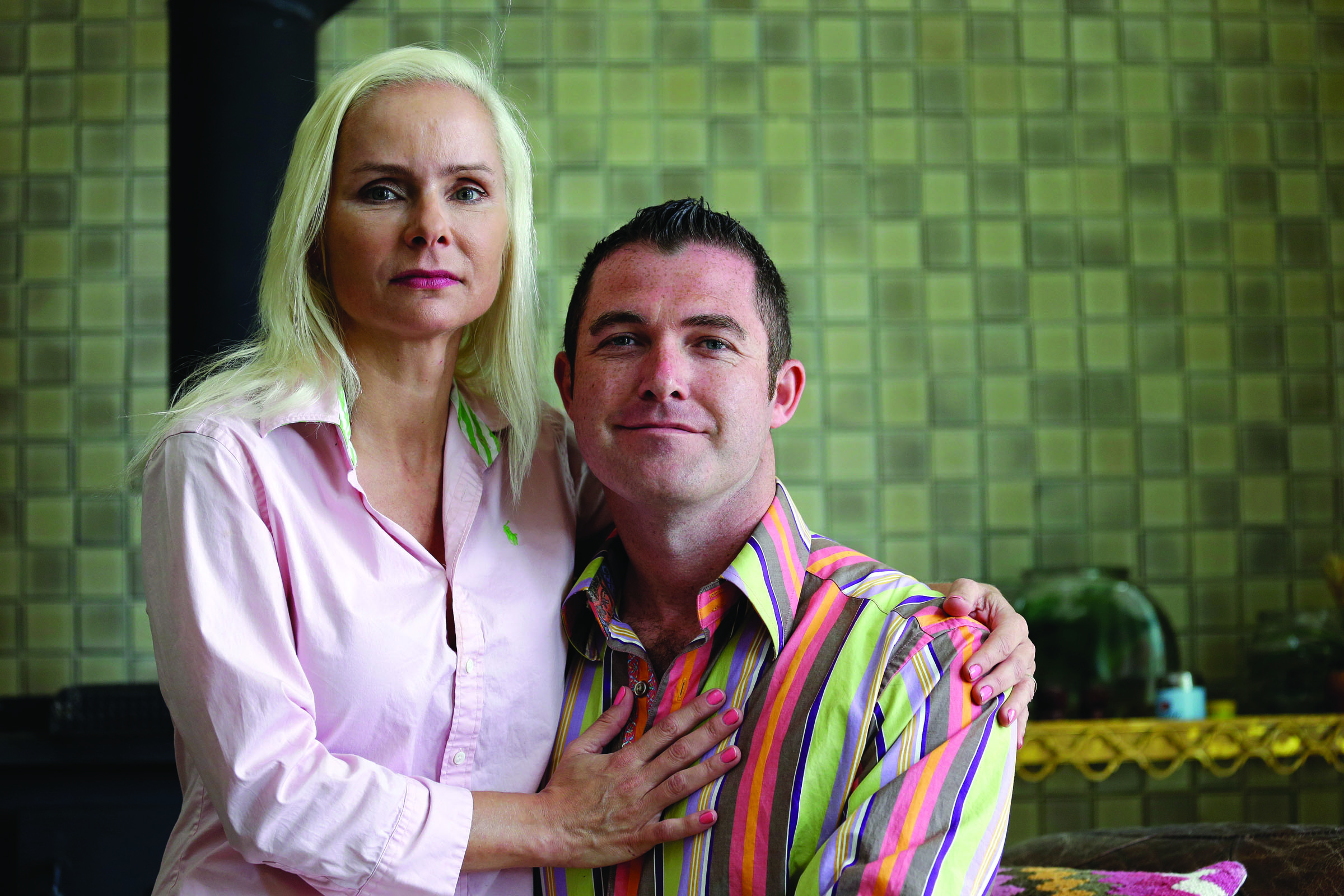
SAN FRANCISCO — Rolland Gregg and his family have fought federal marijuana charges for more than three years, arguing that the roughly 70 marijuana plants investigators found on their property east of Kettle Falls near the Columbia River were for their own medicinal use and fully complied with state law.
A federal jury last year convicted Gregg, his mother and his then-wife of growing 50 to 100 marijuana plants — amounts their attorney said are in compliance with state medical marijuana law.
With prison sentences looming, they have now turned to a recent act of Congress that they say should have stopped the U.S. Department of Justice from prosecuting them because they were doing what their state allowed.
Marijuana is illegal under federal law, and the DOJ disagrees with Gregg’s understanding of the new law.
“It’s been the hardest thing I’ve ever had to deal with in my life when you see the government coming down on you for simply trying to be healthy,” Gregg said.
A federal appeals court is expected to issue a ruling soon on the scope of the law that could pave the way to end or overturn at least six federal marijuana criminal prosecutions and convictions in California and Washington, including Gregg’s, and limit future prosecutions of medical marijuana users and dispensaries in eight Western states that allow them.
“The 9th Circuit is the biggest circuit, one that contains lots of marijuana states. If they were to say, ‘The federal government is prohibited from enforcing medical marijuana law,’ that would be huge,” said Sam Kamin, a professor at the University of Denver Sturm College of Law who studies marijuana regulation.
At issue is a Congressional amendment that said the DOJ could not use funding Congress allocated to it for 2015 and 2016 to prevent states that have legalized medical marijuana from implementing laws that permit its use, distribution and possession.
The amendment’s bipartisan sponsors — California Congressmen Sam Farr, D-Carmel, and Dana Rohrabacher, R-Costa Mesa,— say it prohibits the DOJ from prosecuting people who are complying with state medical marijuana laws.
California and more than 20 other states have legalized marijuana for medical use. The drug, however, remains illegal under federal law.
The DOJ has interpreted the law more narrowly, saying it prevents prosecutors from trying to block state medical marijuana laws or charging state officials who implement them, yet permits U.S. attorneys to go after marijuana dispensaries and growers.
The 9th Circuit is expected to clarify the amendment in appeals by three sets of defendants who have cited it as grounds for judges to dismiss their marijuana charges.
Steve McIntosh, a dispensary owner in Los Angeles, had permits from local officials that show him in compliance with state law, according to his attorney, Marc Zilversmit.
Under the Congressional amendment, the most the federal government can do is refer him to state authorities for prosecution, Zilversmit said.
Another defendant, marijuana grower Samuel Doyle, met Washington’s requirements for collective cannabis grows for medical marijuana patients, his attorney Douglas Hiatt said.
“He was growing medical marijuana for people who needed it, whether they could afford it or not,” Hiatt said.
The DOJ says McIntosh’s dispensary had ties to a street gang, and Doyle and his co-defendants did not meet the legal requirements for medical marijuana in Washington.
Investigators found more than 550 plants growing on the Spokane property Doyle oversaw, and at least one of Doyle’s co-defendants indicated the marijuana was being sold, prosecutors said.
The DOJ did not respond to a request for further comment.
Gregg’s case is not among the ones the 9th Circuit is set to rule on.
But he has raised the same argument as the other defendants, and the 9th Circuit has put his appeal on hold pending the outcome of the other appeals, his attorney Phil Telfeyan said.
“The feds think they have the power to override voters of the State of Washington and the will of Congress,” said Telfeyan, co-founder of the nonprofit civil rights group Equal Justice Under Law. “It’s up to the 9th Circuit to tell them, ‘Enough is enough. You can’t keep prosecuting people who are using medical marijuana for their needs.’”
The DOJ cited a county investigator’s testimony that he saw evidence of a for-profit marijuana growing operation on Gregg’s family property.
The investigator said he found records that he believed were for drug sales, a scale and packaging material in the house as well as firearms, according to court documents.
Gregg, 34, who owns an alternative energy company, denied he sold marijuana, saying he used the drug to treat pain following a snowboarding accident that left him with a broken back and neck.
His mother has rheumatoid arthritis and his then-wife had an eating disorder, he said, adding that all three had medical marijuana authorizations.
But the DOJ argued in his case and Doyle and McIntosh’s cases that the Rohrabacher-Farr amendment doesn’t bar it from prosecuting people violating federal drug law, even if they meet state law.
Alex Kreit, a marijuana law expert at Thomas Jefferson School of Law in San Diego, said the DOJ and marijuana defendants have strong arguments for their conflicting interpretations of the amendment.
“The [amendment’s] language is not a model of clarity,” he said. “It really is open to a number of different interpretations.”
