
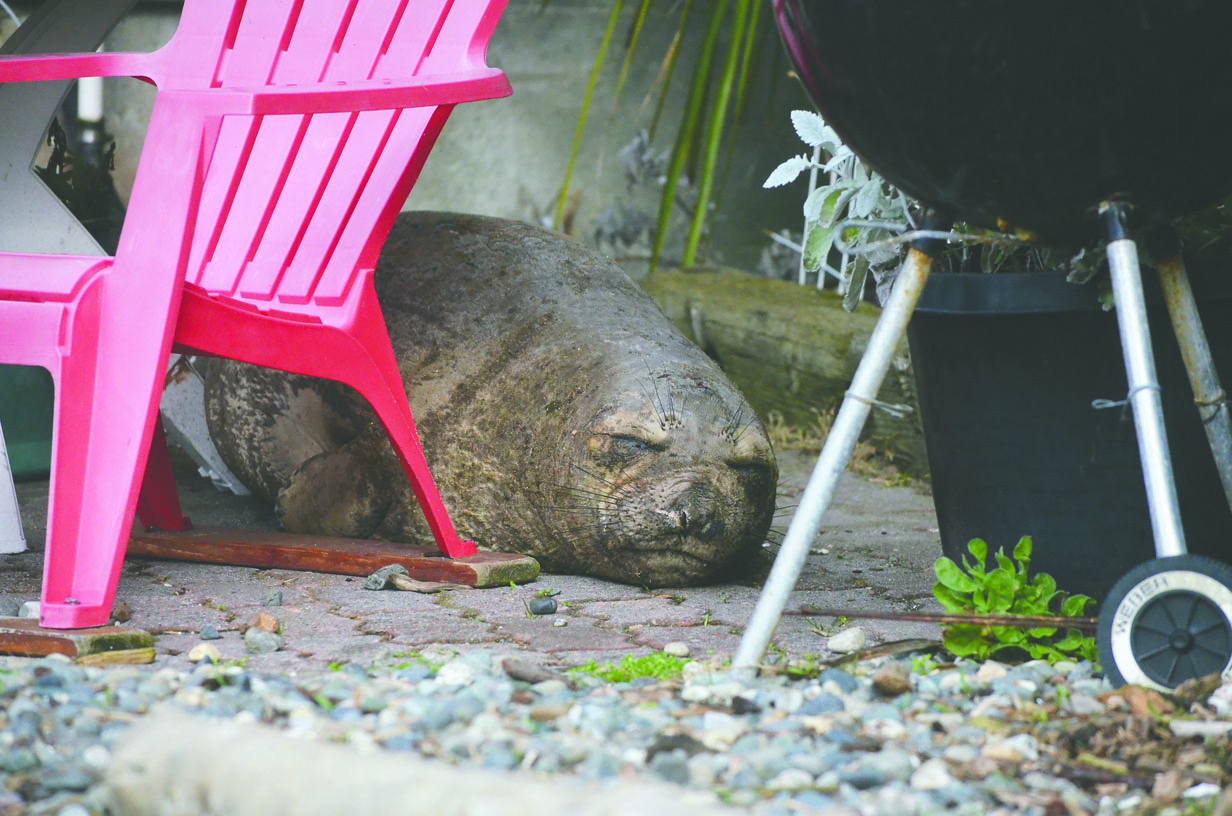
PORT TOWNSEND — A juvenile elephant seal has parked on a Port Townsend beach for a molting process that could take several weeks.
Chrissy McLean, the Port Townsend Marine Science Center’s marine program coordinator, said the large marine mammals typically shed their skin and fur once a year.
“We typically have one or two on our beaches each year as they go through this catastrophic molt process,” McLean said.
The age of the juvenile northern elephant seal resting on the beach near the Admiralty Apartments at 129 Taylor St. is uncertain, though McLean estimates that it is probably 2 years old.
McLean is also not sure of the seal’s weight or its gender, though she said those that beach themselves tend to be male.
For the weeks it is on land, the seal should be given as much space as possible, McLean said.
She asked that members of the public who want to view the animal stay at least 100 yards away and observe it through binoculars.
“This limitation will minimize the potential for disturbing a resting animal and/or reduce stress for an animal that may be recovering from illness or injury,” McLean said.
Anyone getting too close to the seal or disrupting it could be prosecuted under the Marine Mammal Protection Act, she said.
Admiralty Apartments management has closed off access to the beach from its deck out of consideration for the animal, she said.
Some signs have been placed on the beach, but they do not outline an explicit area because of changing tides and the possible movement of the sea, McLean said.
Anyone in the area, which is behind the apartments, should leash their pets, McLean said.
“Seals can easily fall prey to dogs, and the seals may bite in self-defense,” she said.
“Some diseases are infectious to both dogs and seals, and may pose a risk to humans as well if they come in direct contact with an infected seal.”
Seals also will bite humans if they get close enough, McLean said.
Northern elephant seals survive about nine years in the wild, according to the National Geographic website at http://tinyurl.com/bz2xbvz, which also says the animals can grow up to 20 feet long and weigh up to 8,800 pounds.
Jefferson County Editor Charlie Bermant can be reached at 360-385-2335 or at charlie.bermant@peninsuladailynews.com.
