
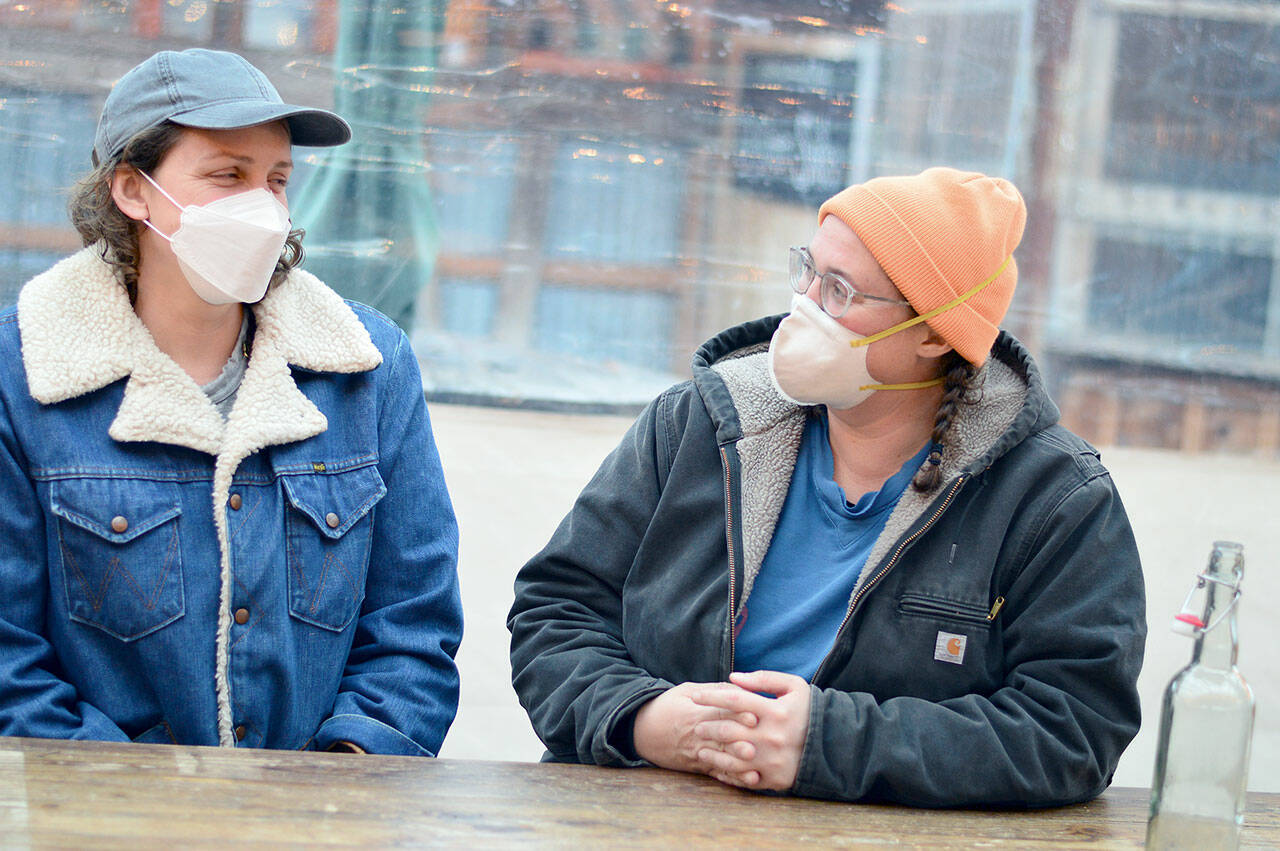
CHIMACUM — The Jefferson County Anti-Racist Fund is based on a radical idea: the sharing of wealth among neighbors.
Begun three years ago this month, JCARF, as it’s known, is about promoting wellness in the BIPOC — Black, Indigenous and people of color — community, said founder Jess Lee, a member of the Indigenous Tlingit tribe.
“Wellness,” she said, “is going to be something different for everyone,” but for JCARF, it can mean fresh produce from local farms, an appointment with a therapist or some help with finding a place to live.
JCARF is a grassroots organization that redistributes monetary resources, as in donations, to BIPOC residents of East Jefferson County. Many thousands of dollars — and pounds of produce — have been shared, said organizer Anya Callahan.
In summer 2020, after the murder of George Floyd, a surge of donations came in, added Lee, as awareness of systemic racism rose across the country.
“We got an enormous amount of support,” Callahan said. “But what we saw is there was a boom, and now a bust,” with contributions dwindling.
As JCARF enters its fourth year, organizers are developing a new donor program and encouraging people to become monthly contributors, Callahan said. She and fellow members are talking with local businesses about discounts and other incentives for JCARF members.
Both www.jcarf.org and the organization’s Instagram page, @jeffersoncountyantiracistfund, have details about how and why to support the effort, she noted.
Another significant element of this fund is the free-farmshare program: vegetables, herbs and flower bouquets from seven Jefferson County farms.
“We started with eight families; now we’re up to 22 families,” said Callahan, adding that the growers donate weekly boxes of food and flowers from spring till fall and monthly boxes in wintertime.
Goosefoot Farm, a nonprofit operation located at Finnriver Farm & Cidery, is the largest provider of produce. Last year, it donated boxes for eight families.
This spring is the volunteer-run farm’s fourth season, said farmer Lex Helbling, adding she’s excited about expanding to boxes for 10 families.
Finnriver, Red Dog and Barefoot Farm in Chimacum, Hopscotch Farm & Cannery in Port Townsend, Midori in Quilcene and Space Twins Provisions in Port Ludlow are also farmshare contributors, Callahan said.
“We get flowers too from Sweet Seed (Flower Farm) and from Goosefoot, and bread from Pane d’Amore and Finnriver Grain,” all of which are donated.
Beyond the nourishment in these farmshares, JCARF seeks to help its members with things like car repairs, utility bills and rent. The fund operates with no barriers, Callahan said: People do not have to disclose what their issues are. Some do, she said, but there’s no qualification form to fill out.
If a member does choose to share what their need is, Callahan said, that may help JCARF connect the person with a mechanic or contractor the organizers know well.
Still, “we believe people know what’s best for themselves,” she said.
“I’m an organizer. I trust people to know how to take care of themselves better than I know.”
Lee added that single parents do receive priority; otherwise, funds are shared on a first-come, first-served basis.
“The only way that we work is if we have people of privilege and wealth sharing their resources,” she said.
In the organization, “we’re not interested in hierarchies,” Lee added.
“We’re a team. We have a BIPOC council that guides what we do, oversees our decisions and gives us feedback. It’s a six-member council, a group with diverse backgrounds.”
JCARF participates in the Port Townsend Farmers Market during spring, summer and fall, handing out information and accepting donations. The message, Callahan said, is that Black, brown, Asian, Pacific Islander and Indigenous people are part of the community, deserve access to resources and want to be treated like neighbors.
Still, many passers-by question the organization’s legitimacy, Lee said.
“We get a lot of racist comments” at the market, she said.
Callahan added that after the election of President Joe Biden and Vice President Kamala Harris, there was a lot of excitement — yet the ascension of those two people doesn’t solve the problem of inequity.
It’s up to white people to “step into their power,” she said.
“As a white person, I know my parents have benefited” from privilege and intergenerational wealth; they had access to bank loans to finance a home. This country’s history is filled, in contrast, with policies that kept BIPOC citizens from obtaining such resources, she said.
Both Lee and Callahan hope for a day when everyone has equal access to secure housing.
“I’m living on S’Klallam and Chimakum land,” Callahan said, adding, “even though I don’t come from a lot of wealth, I still contribute” to JCARF.
“We have lofty goals: a house and land for every BIPOC person in the community,” Lee said.
JCARF is “starting small and dreaming big.”
________
Jefferson County Senior Reporter Diane Urbani de la Paz can be reached at 360-417-3509 or durbanidelapaz @peninsuladailynews.com
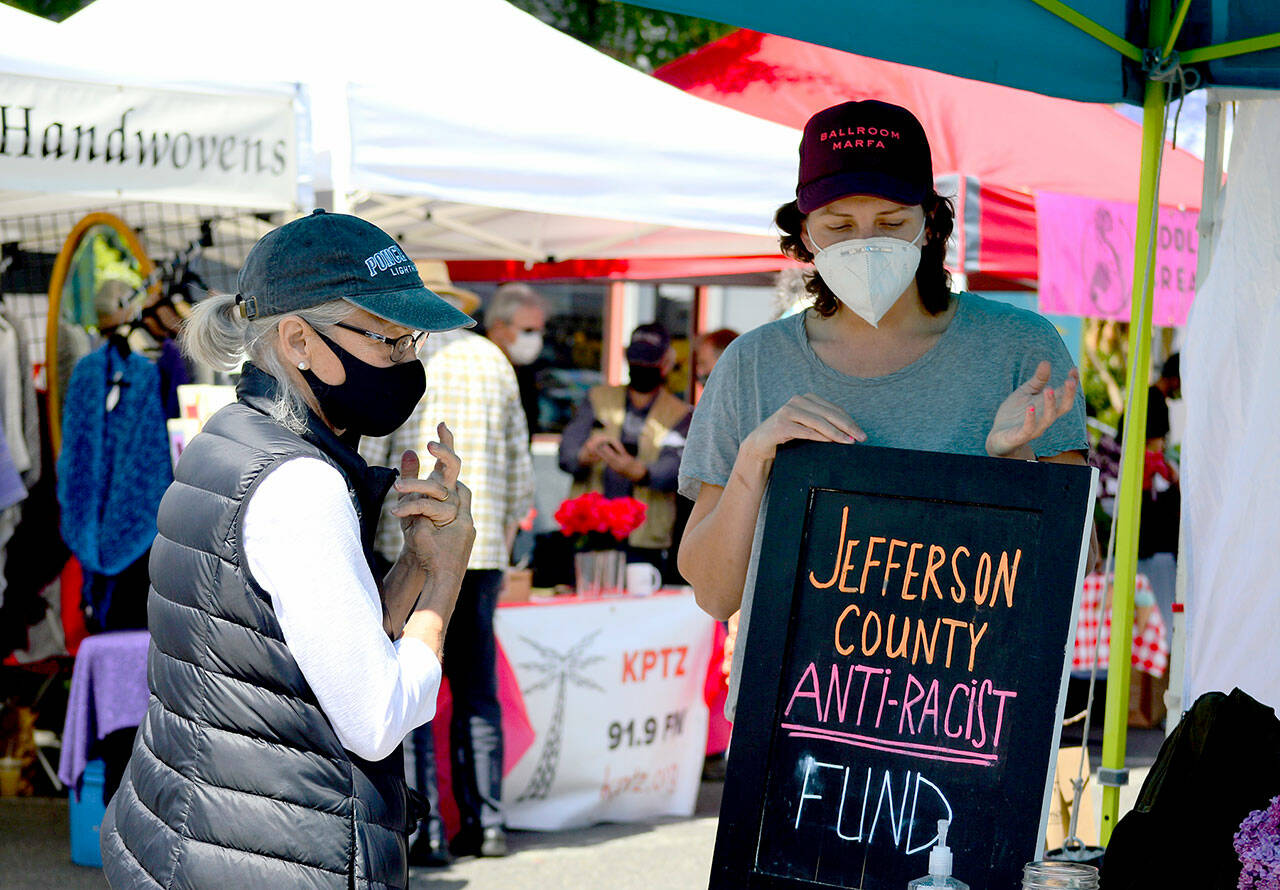
Jefferson County Anti-Racist Fund organizer Anya Callahan, right, talks with a shopper at the Port Townsend Farmers Market in 2021. Fund organizers plan to return to the market this spring to share their message about resource sharing. (Diane Urbani de la Paz/Peninsula Daily News)
