
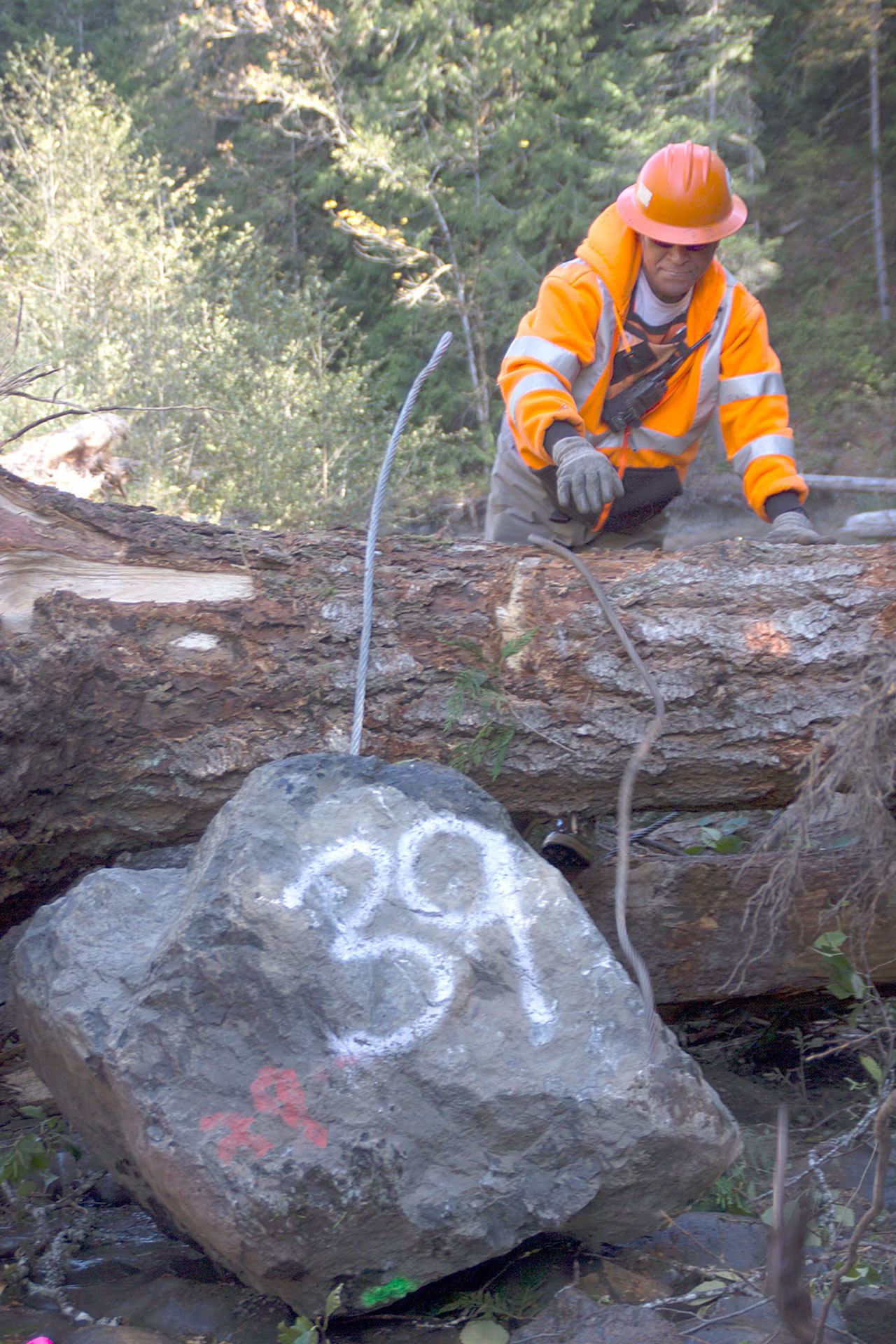
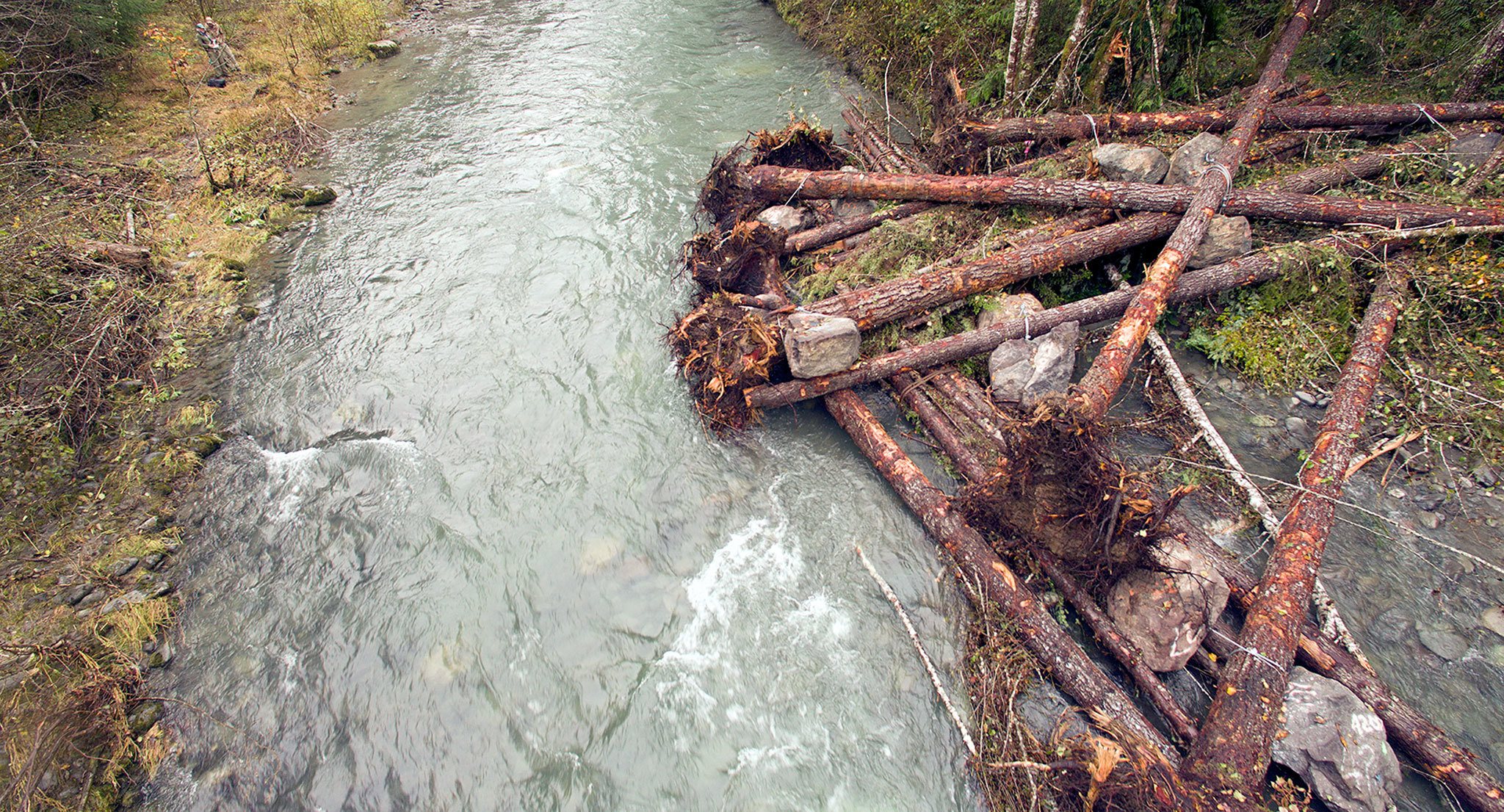
Jamestown S’Klallam Tribe biologists use rocks to anchor structures made out of logs with rootwads in the Gray Wolf River. (Tiffany Royal/Northwest Indian Fisheries Commission)

Jamestown S’Klallam Tribe biologists use rocks to anchor structures made out of logs with rootwads in the Gray Wolf River. (Tiffany Royal/Northwest Indian Fisheries Commission)

Jamestown S’Klallam Tribe builds logjams for salmon habitat

  • By Tiffany Royal Northwest Indian Fisheries Commission
  • Sunday, November 13, 2016 12:37pm
  • NewsClallam County

By Tiffany Royal

Northwest Indian Fisheries Commission

SEQUIM — In building logjams for salmon habitat in the Gray Wolf River, the Jamestown S’Klallam Tribe took lessons from the river itself.

By building structures out of logs with rootwads and using rocks to anchor them, they mimicked how a river would naturally create jams with logs and rocks that tumble downstream during high flows.

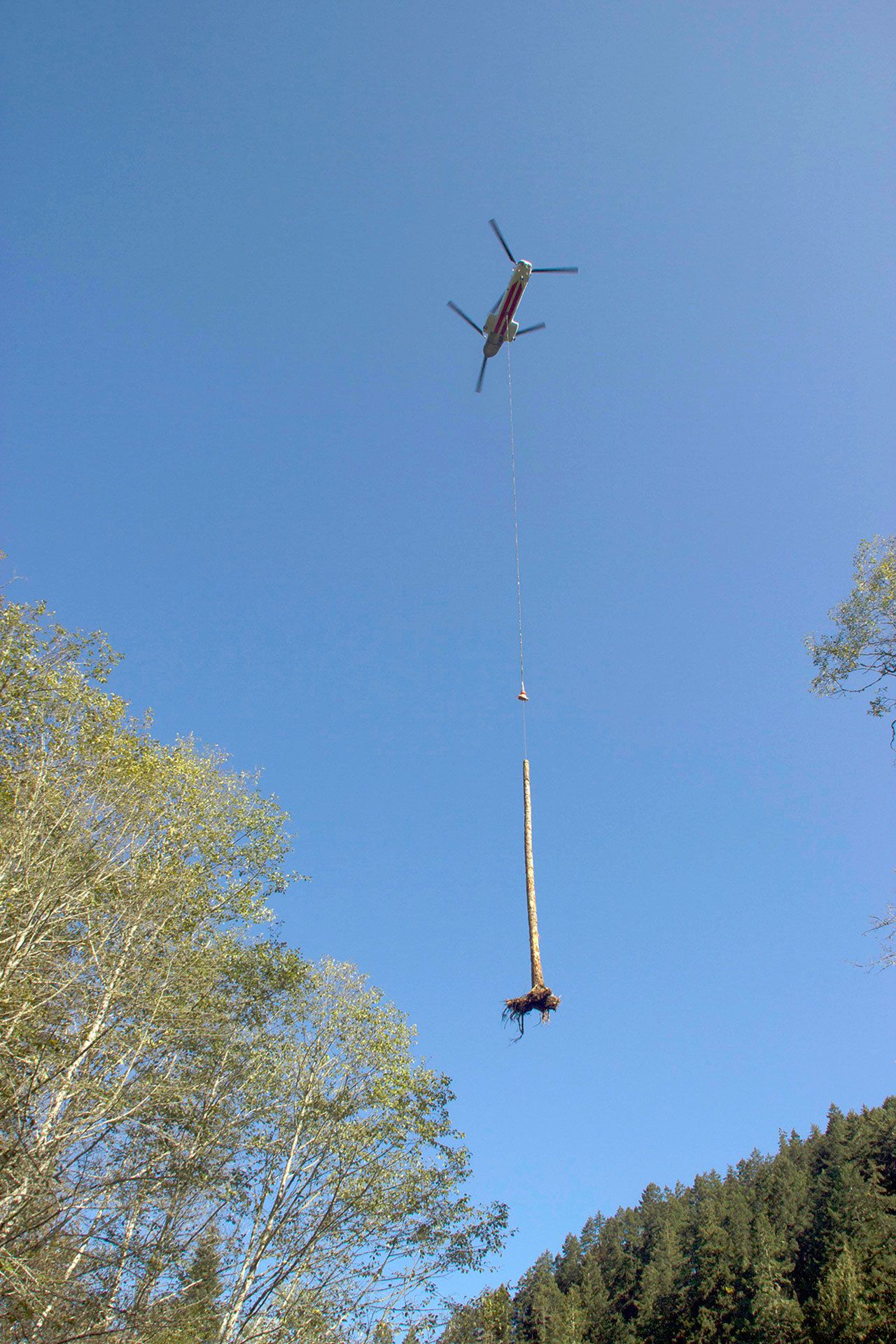
“We used an innovative engineering design, coupled with helicopter delivery of materials to avoid having to use heavy equipment in the river channel,” said Hilton Turnbull, the tribe’s habitat biologist, about the $495,00 project built in two days.

“The idea was to build structures in areas where they would reconnect the river to its adjacent floodplain, allow anchoring points for additional wood moving through the system and also provide refuge for fish to escape the main channel during higher flows,” he said.

Salmon habitat in this area of the Gray Wolf River, a tributary of the Dungeness River, was degraded by wood removal projects in the 1960s and never recovered, said Randy Johnson, the tribe’s habitat program manager.

“Logjams are naturally reforming in the river, but slowly,” Johnson said. “We want to help out the imperiled fish a bit — chinook, steelhead and bull trout, all of which are on the Endangered Species Act list, plus coho and pink — all of which use this river.”

This is a fast-flowing powerful river, as evidenced by the cobblestone river banks, Johnson said.

“The logjams will slow the water’s velocity and allow for fine sediment and gravel to settle, creating better habitat salmon need for laying eggs,” he said.

The tribe and Olympic National Forest worked together on the project to create habitat for salmon and char.

Planning for the project began in 2013 and it was funded in 2014, but the tribe waited to construct it until this fall to avoid overlapping construction during a pink-salmon-run year, Turnbull said.

How is it funded? I gave her the list of funding and resources that Robert had given me.

Funding and resources for this project come from Salmon Recovery Funding Board, Puget Sound Acquisition and Restoration Fund, the U.S. Forest Service and the tribe.

Upon completion of this large wood enhancement project, the tribe will have completed three major floodplain restoration projects in the Dungeness in 2016, including a major floodplain property acquisition/conservation, and the replacement of the damaged trestle along the Olympic Discovery Trail at Railroad Bridge Park.

________

Tiffany Royal is the information officer for the Hood Canal/Strait of Juan de Fuca area for the Northwest Indian Fisheries Commission.
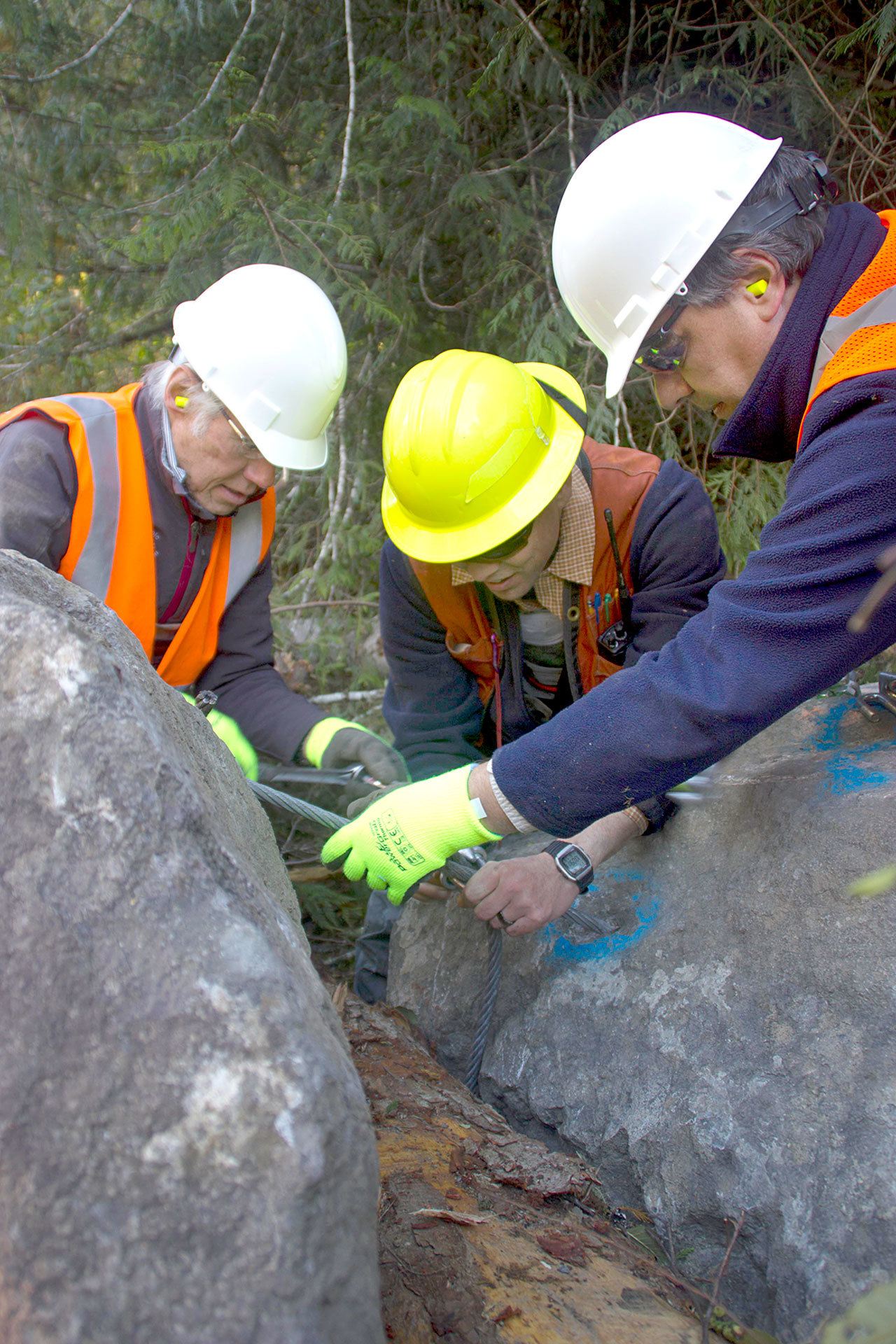
“The logjams will slow the water’s velocity and allow for fine sediment and gravel to settle, creating better habitat salmon need for laying eggs,” said the tribe’s habitat program manager. (Tiffany Royal/Northwest Indian Fisheries Commission )
“The logjams will slow the water’s velocity and allow for fine sediment and gravel to settle, creating better habitat salmon need for laying eggs,” said the tribe’s habitat program manager. (Tiffany Royal/Northwest Indian Fisheries Commission )

A helicopter delivers materials to use in the river channel. (Tiffany Royal/Northwest Indian Fisheries Commission)
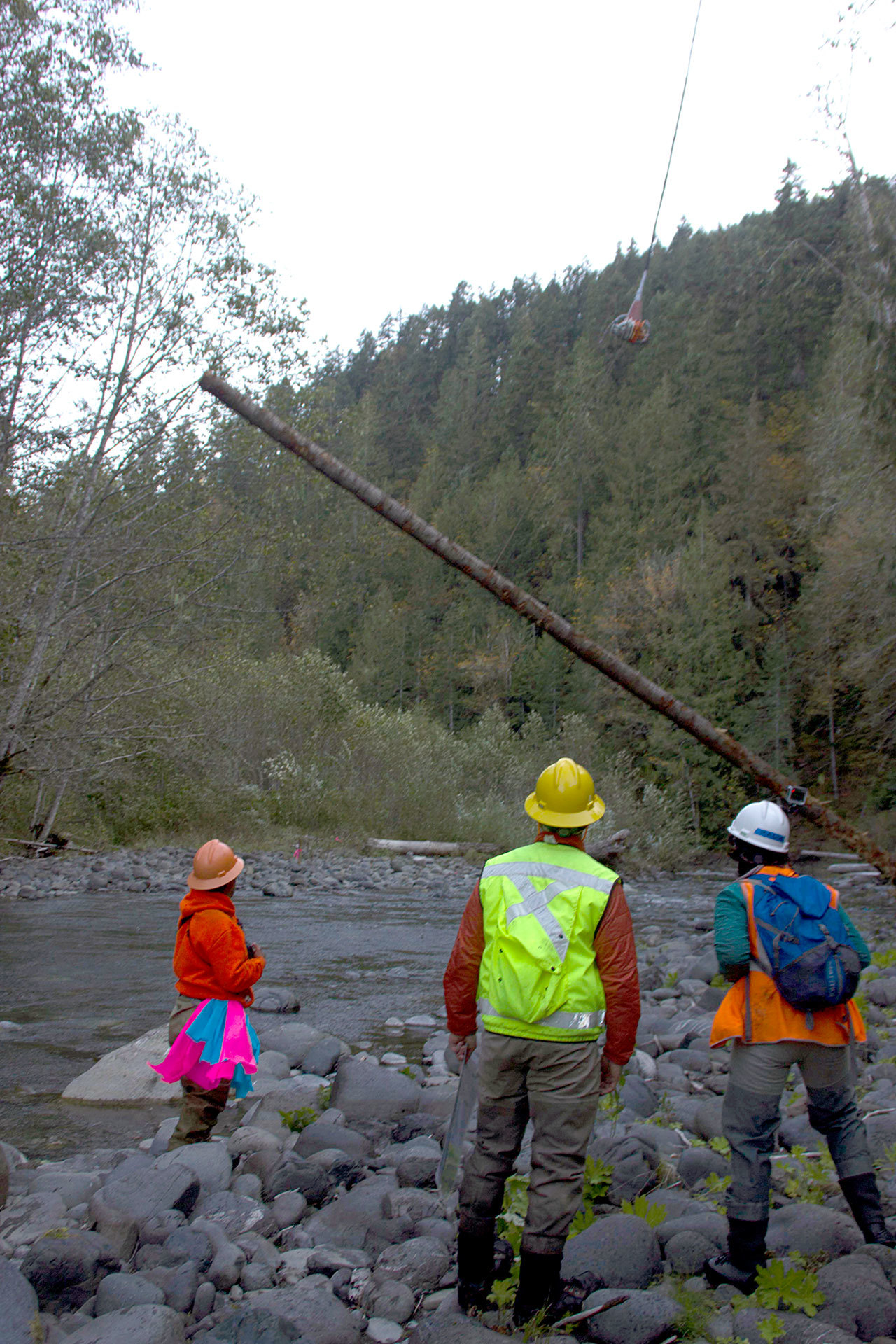
A helicopter delivers materials to use in the river channel. (Tiffany Royal/Northwest Indian Fisheries Commission)

“We want to help out the imperiled fish a bit,” said the tribe’s habitat program manager. (Tiffany Royal/Northwest Indian Fisheries Commission )
“We want to help out the imperiled fish a bit,” said the tribe’s habitat program manager. (Tiffany Royal/Northwest Indian Fisheries Commission )

An aerial view of one of the logjams. (Hilton Turnbull)

An aerial view of one of the logjams. (Hilton Turnbull)

More in News

Sue Long, left, Vicki Bennett and Frank Handler, all from Port Townsend, volunteer at the Martin Luther King Day of Service beach restoration on Monday at Fort Worden State Park. The activity took place on Knapp Circle near the Point Wilson Lighthouse. Sixty-four volunteers participated in the removal of non-native beach grasses. (Steve Mullensky/for Peninsula Daily News)
Work party

Sue Long, left, Vicki Bennett and Frank Handler, all from Port Townsend,… Continue reading

Portion of bridge to be replaced

Tribe: Wooden truss at railroad park deteriorating

Kingsya Omega, left, and Ben Wilson settle into a hand-holding exercise. (Aliko Weste)
Process undermines ‘Black brute’ narrative

Port Townsend company’s second film shot in Hawaii

Jefferson PUD to replace water main in Coyle

Jefferson PUD commissioners awarded a $1.3 million construction contract… Continue reading

Scott Mauk.
Chimacum superintendent receives national award

Chimacum School District Superintendent Scott Mauk has received the National… Continue reading

Hood Canal Coordinating Council meeting canceled

The annual meeting of the Hood Canal Coordinating Council, scheduled… Continue reading

Bruce Murray, left, and Ralph Parsons hang a cloth exhibition in the rotunda of the old Clallam County Courthouse on Friday in Port Angeles. The North Olympic History Center exhibit tells the story of the post office past and present across Clallam County. The display will be open until early February, when it will be relocated to the Sequim City Hall followed by stops on the West End. The project was made possible due to a grant from the Clallam County Heritage Advisory Board. (Dave Logan/for Peninsula Daily News)
Post office past and present

Bruce Murray, left, and Ralph Parsons hang a cloth exhibition in the… Continue reading

This agave grew from the size of a baseball in the 1990s to the height of Isobel Johnston’s roof in 2020. She saw it bloom in 2023. Following her death last year, Clallam County Fire District 3 commissioners, who purchased the property on Fifth Avenue in 2015, agreed to sell it to support the building of a new Carlsborg fire station. (Matthew Nash/Olympic Peninsula News Group file)
Fire district to sell property known for its Sequim agave plant

Sale proceeds may support new Carlsborg station project

As part of Olympic Theatre Arts’ energy renovation upgrade project, new lighting has been installed, including on the Elaine and Robert Caldwell Main Stage that allows for new and improved effects. (Olympic Theatre Arts)
Olympic Theatre Arts remodels its building

New roof, LED lights, HVAC throughout

Weekly flight operations scheduled

Field carrier landing practice operations will be conducted for aircraft… Continue reading

Workers from Van Ness Construction in Port Hadlock, one holding a grade rod with a laser pointer, left, and another driving the backhoe, scrape dirt for a new sidewalk of civic improvements at Walker and Washington streets in Port Townsend on Thursday. The sidewalks will be poured in early February and extend down the hill on Washington Street and along Walker Street next to the pickle ball courts. (Steve Mullensky/for Peninsula Daily News)
Sidewalk setup

Workers from Van Ness Construction in Port Hadlock, one holding a grade… Continue reading