
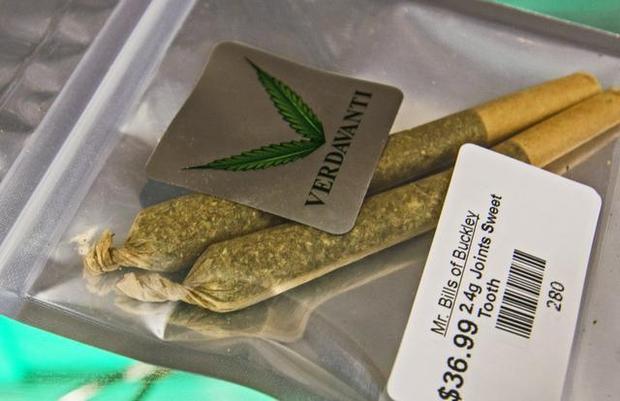
BLYN — The Jamestown S’Klallam are mulling if grass could grow green — if pot could make money — for the Clallam County tribe noted for its enterprises.
“We’re taking a look at it and exploring whether that is a viable consideration for us,” tribal chairman Ron Allen said Friday, a day after the U.S. Department of Justice said Native American tribes can grow and sell marijuana on tribal lands.
The only proviso is that they follow the same federal conditions laid out for states that have legalized the recreational use of the drug — Washington, Oregon and Colorado — although cannabis remains an illicit drug under federal law.
“We’re delighted that they recognized our unique authority for enterprises like that,” Allen said, referring to federal recognition of tribes’ sovereign-nation status.
That same status allows them to operate casinos and to sell tobacco products free from taxes, which would give tribes a leg up in Washington’s nascent marijuana market.
Spokesman for other North Olympic Peninsula tribes also praised the federal recognition of tribal self-determination, although none others said they are actively considering it.
Leaders with the Lower Elwha and the Quinault said they are not planning to go into the marijuana business, while those with the Quileute and Makah said they would have to review the policy before making a decision.
“We’re not sure whether we’re going to do it or not,” Allen said.
The Jamestown S’Klallam, based in Blyn, must ask and answer if they have available land for greenhouses to grow cannabis, how much they would grow, how they might package it, and whether they would market it as a consumer product as they sell tobacco products at their Longhouse Market & Deli on U.S. Highway 101 or as medical marijuana, Allen said.
He named Doug Sellon, tribal economic development director, as the person who would examine these questions, then conduct or contract for a market analysis.
“He’s the one who takes a look at any business portfolio we might be entertaining,” Allen said.
“There might be a marketing advantage for us and what would amount to be a successful venture.”
Lower Elwha
On the Lower Elwha Klallam reservation west of Port Angeles, possessing and using marijuana both will remain illegal, tribal chairwoman Frances Charles said.
Moreover, marijuana possession and use still are banned in the workplace for tribal employees, she said.
As for growing or selling pot, she said, “we really haven’t had any thoughts about that. I think everybody is just listening and understanding it’s a case-by-case [tribe-by-tribe] matter.”
Quileute
“We will have to review the federal policy before reaching a final determination,” said Chas Woodruff, chairman of the Quileute tribe in LaPush.
“But,” he added, “a key factor here is that no matter what direction we go, it’s important that the tribe will have the ability to exercise our sovereign authority in making the final decision that best serves our people.”
Makah
The Makah Tribal Council, likewise, was “aware of the announcement but has not had a chance to discuss the matter,” said Meredith Parker, general manager, speaking from Neah Bay.
Quinault say no
In Taholah, Fawn Sharp, president of the Quinault Indian Nation, said it had no plans to end its ban on using or possessing marijuana.
She said the Department of Justice also had reaffirmed its responsibility to prosecute people who violate tribal laws inside tribal territory, and she echoed Allen’s comments about the department’s recognition of tribal sovereignty.
Other tribes
Meanwhile, reaction to the Department of Justice’s approval was mixed in other areas of Indian Country.
“I would really doubt tribes would be wanting to do something like that,” said Don Gentry, chairman of the Klamath Tribes in Oregon, where voters this year approved a measure to legalize recreational pot.
“We have an alcohol- and drug-free policy at work. It would just not be something we would be looking for into the future.”
Oregon U.S. Attorney Amanda Marshall said tribes that had contacted the Department of Justice had been wary of entering the marijuana market and had asked for federal direction.
“What will the U.S. as federal partners do to assist tribes in protecting our children and families, our tribal businesses, our tribal housing?” Marshall said from Portland.
“How will you help us combat marijuana abuse in Indian Country when states are no longer there to partner with us?”
Ban or bonanza?
Whether tribal pot could become a major bonanza rivaling tribal casinos is a big question. Marshall said only three tribes — one each in California, Washington and the Midwest — have voiced any interest. She did not identify them.
Seattle attorney Anthony Broadman, whose firm represents tribal governments throughout the West, said the economic potential is vast.
“If tribes can balance all the potential social issues, it could be a really huge opportunity,” Broadman said.
Broadman said tribes would enjoy a huge advantage selling pot, as they do with tobacco, because they would not have to charge taxes.
Others in Indian Country were unsure.
The Yakama Nation in eastern Washington recently banned marijuana on the reservation and is trying to halt state-regulated pot sales and growing operations on lands off the reservation where it holds hunting and fishing rights.
The Hoopa Valley Tribe in Northern California has battled illegal pot plantations on its reservation that have damaged the environment.
‘It’s a drug’
In South Dakota, the Oglala Sioux Tribal Council this year rejected a proposal to allow marijuana on the Pine Ridge Reservation.
“For me, it’s a drug,” said Ellen Fills the Pipe, chairwoman of the council’s Law and Order Committee.
“My gut feeling is we’re most likely going to shoot it down.”
Walter Lamar, a member of the Blackfeet Nation and former FBI agent who advises tribes on drug issues, noted that unemployment is high in Indian Country.
Many of the jobs that are available, such as wildland firefighting, teaching and U.S. Bureau of Indian Affairs positions, require drug testing.
“Once there’s an easier availability for marijuana, it’s going to create some issues that could have an impact on our employment pool,” he said.
________
Reporter James Casey can be reached at 360-452-2345, ext. 5074, or at jcasey@peninsuladailynews.com.
The Associated Press contributed to this report.
