
By Manuel Valdes
The Associated Press
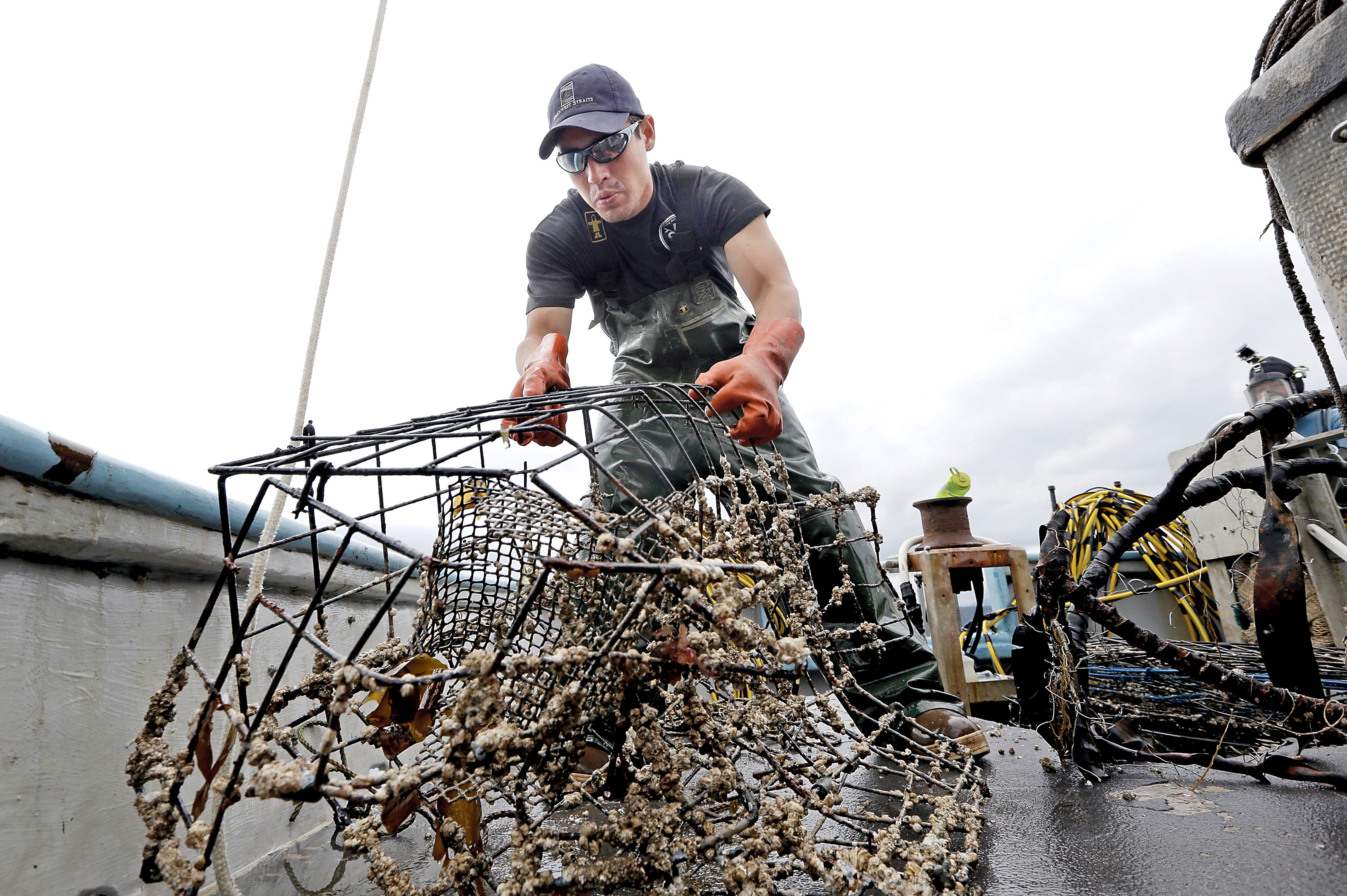
PORT TOWNSEND — More than 12,000 crab pots are lost in Puget Sound every year, costing an estimated $700,000 in lost harvest revenue while damaging the sea floor environment.
Using sonar to find the pots, divers and scientists venture into the waters to clean up and learn why pots are lost.
The lost pots continue to attract Dungeness and red-rock crabs for up two years, trapping them until they die, and the dead crabs then attract more crabs, said Joan Drinkwin, programs director at the Northwest Straits Foundation of Bellingham, which spearheaded the crab pot cleanup project a decade ago.
“It just keeps on self-baiting itself,” Drinkwin said during a survey of Port Townsend Bay recently.
Crabs are not an endangered or threatened species, so what’s the issue?
Scientists have estimated that a derelict crab pot can impact up to 30 square feet of the sea floor around it, depending on where the pot landed.
For example, a pot digging out cavities in the sea floor can damage eelgrass beds.
“If you think about 12,000 pots sitting out there every year, and you add that up, the numbers are pretty alarming in terms of the kind of impact they are having on marine habitat,” Drinkwin said.
Research by the Northwest Straits Foundation has found a variety of reasons why pots are left behind.
Lines attached to the pots can be cut by boats, a problem exacerbated when people place pots in heavily used waterways.
Badly tied knots can come undone.
Pots are left in water that’s too deep for the line.
And sometimes, even sabotage among competing fishermen is a cause.
“We see people putting their pots in the middle of ferry lanes. And obviously that’s a terrible place to put your pot,” Drinkwin said.
After using sonar to pinpoint crab pots on the sea floor, a diver plunges into the cold, dark Puget Sound waters using a rope with a weight thrown near the pot as a guide.
Once the pot is found, it’s tied to the rope and reeled in.
The team uses divers in an attempt to minimize the impact on the sea floor.
In a 2010 trip to Boundary Bay near the U.S.-Canada border, the team found more than 1,000 pots in a 6-square-mile area.
“When the divers went down to remove them, they tripped over the pots,” Drinkwin said.
More than 336,000 animals from more than 240 species have been found in derelict fishing nets and crab pots, according to the foundation.
The nets have killed porpoise, sea lions, chinook and many more species, she said.
Since 2002, the Northwest Strait Foundation teams have removed 4,700 nets and 3,400 crab pots from the Puget Sound.
The law now requires fishing vessels to report a lost net, and there’s no penalty.
Crabbing is relatively easy and accessible, but that also leads to people setting up pots without knowing how to do it well.
Drinkwin and her teams can’t pick up every crab pot left behind. So they’ve been focusing on areas with high concentrations of pots.
“We recognized that what really needs to happen is a combined approach that includes some targeted removals in areas where the concentrations of derelict crab pots may be having an ecological impact in the area,” Drinkwin said.
That is combined “with really aggressive prevention campaigns that will educate crabbers how not to lose their pots,” she added.
“Also, we want to work more to making sure that crab pots used in Puget Sound have appropriate escape mechanisms.”
