
LA PUSH — All was quiet in a misty clearing surrounded by a coastal forest near La Push on Tuesday.
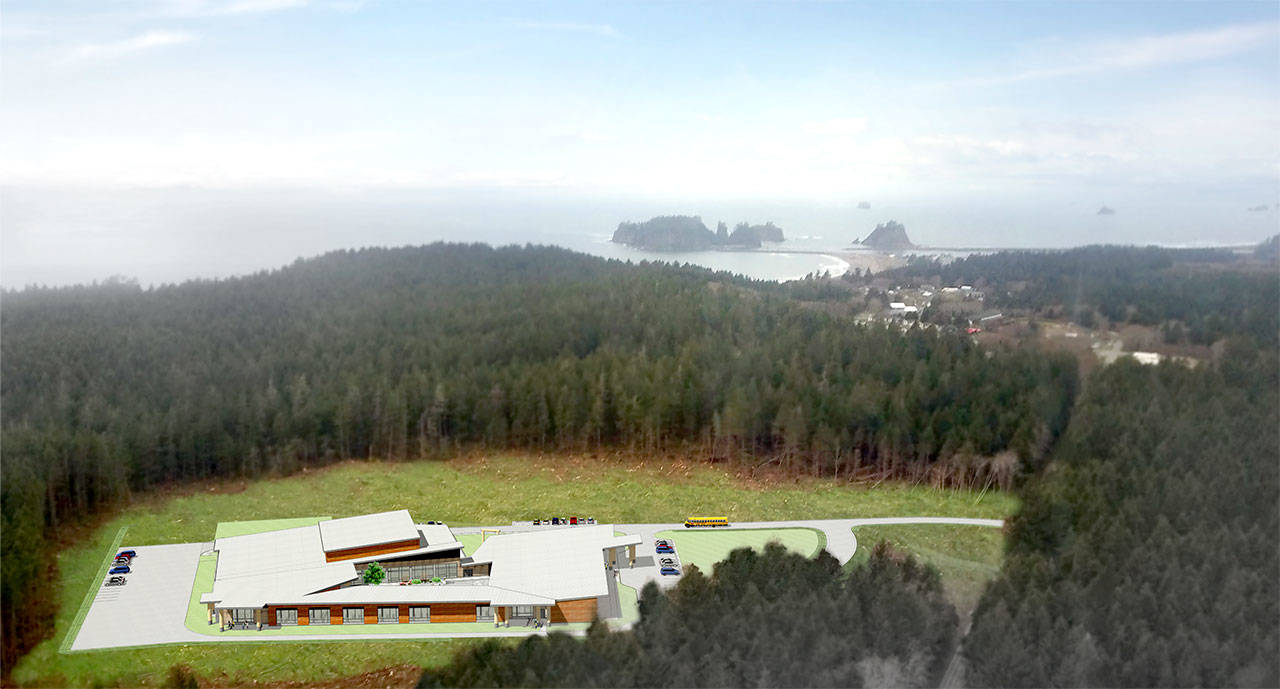
Three years from now, the empty land on the southern end of the Quileute Reservation will be teeming with children playing and learning in a state-of-the-art school campus.
The Quileute Tribe is ramping up efforts to move students from the existing Quileute Tribal School, which is in the tsunami zone, to a recently-harvested, 278-acre tract on higher ground.
Construction of the new school is expected to begin as early as next summer, project manager Susan Devine said.
“I think the most important thing is kids should be safe from tsunamis,” Mark Jacobson, Quileute Tribal School superintendent, said during a School Board meeting on Tuesday in his office overlooking the surf.
“That’s the No. 1 concern.”
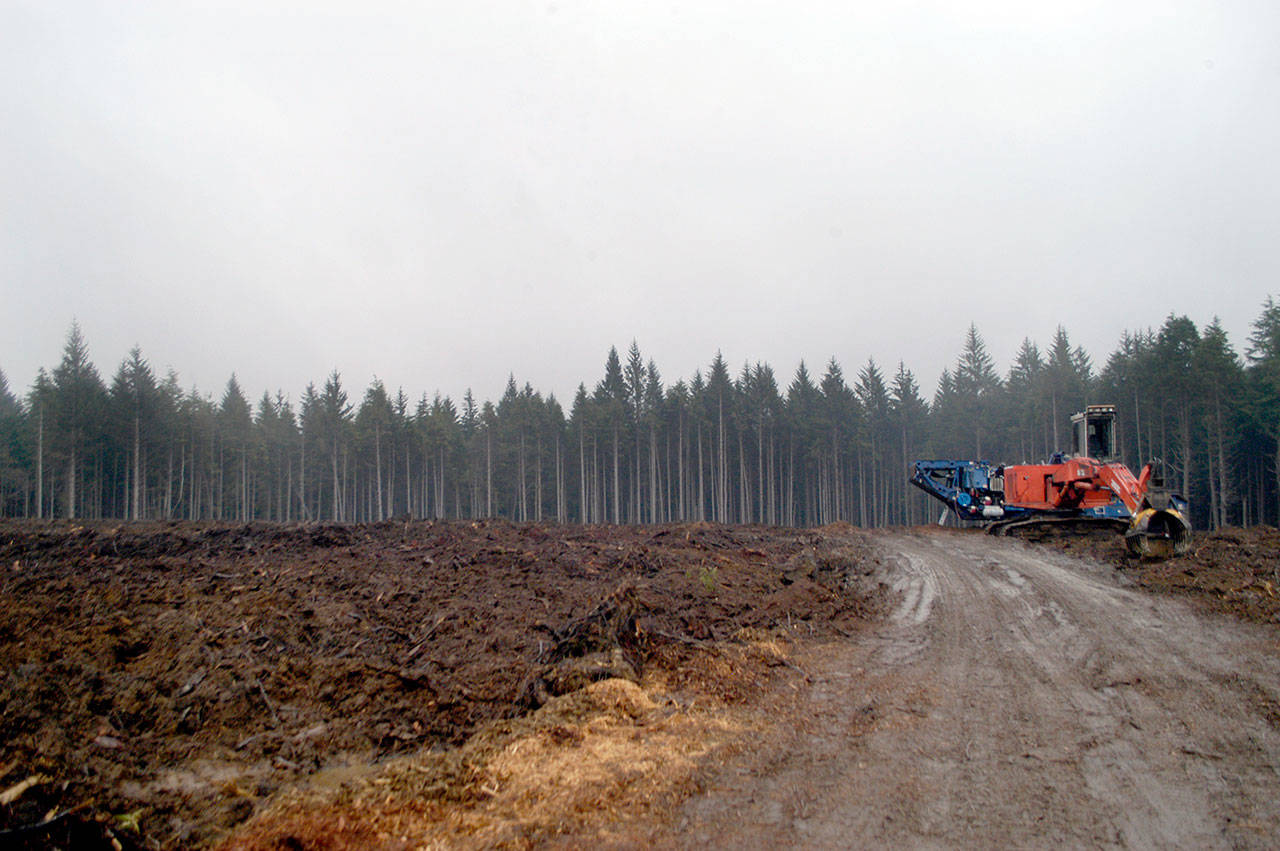
The site of the future Quileute Tribal School is shown. Officials hope to complete the state-of-the-art facility in 2021. Future phases of the higher ground project include a tribal campus and housing. (Rob Ollikainen/Peninsula Daily News)
The Quileute Tribe’s long-awaited Move to Higher Ground project received a shot in the arm with the Sept. 25 announcement of a $44.1 million federal grant for school design and construction.
The tribe will use the Bureau of Indian Affairs funding to build infrastructure and a 60,950-square foot, energy-efficient school for about 175 kindergarten-to-12th-grade students on a 29-acre section of the Move to Higher Ground site.
“It’s the culmination of a lot of years of work,” said Larry Burtness, the tribe’s interim general manager.
The school is the first phase in a multi-generational effort to move tribal facilities and housing out of the tsunami and storm-prone lower village.
“Our focus has always been on moving our children out of the tsunami and flood zone and we are grateful for this funding that will ensure the safety and protection of our children for the next seven generations,” the Quileute Tribal Council said in a joint statement.
Perched on a hill about 250 feet above sea level, the higher ground site is about 2 miles southwest of the lower village off La Push Road.
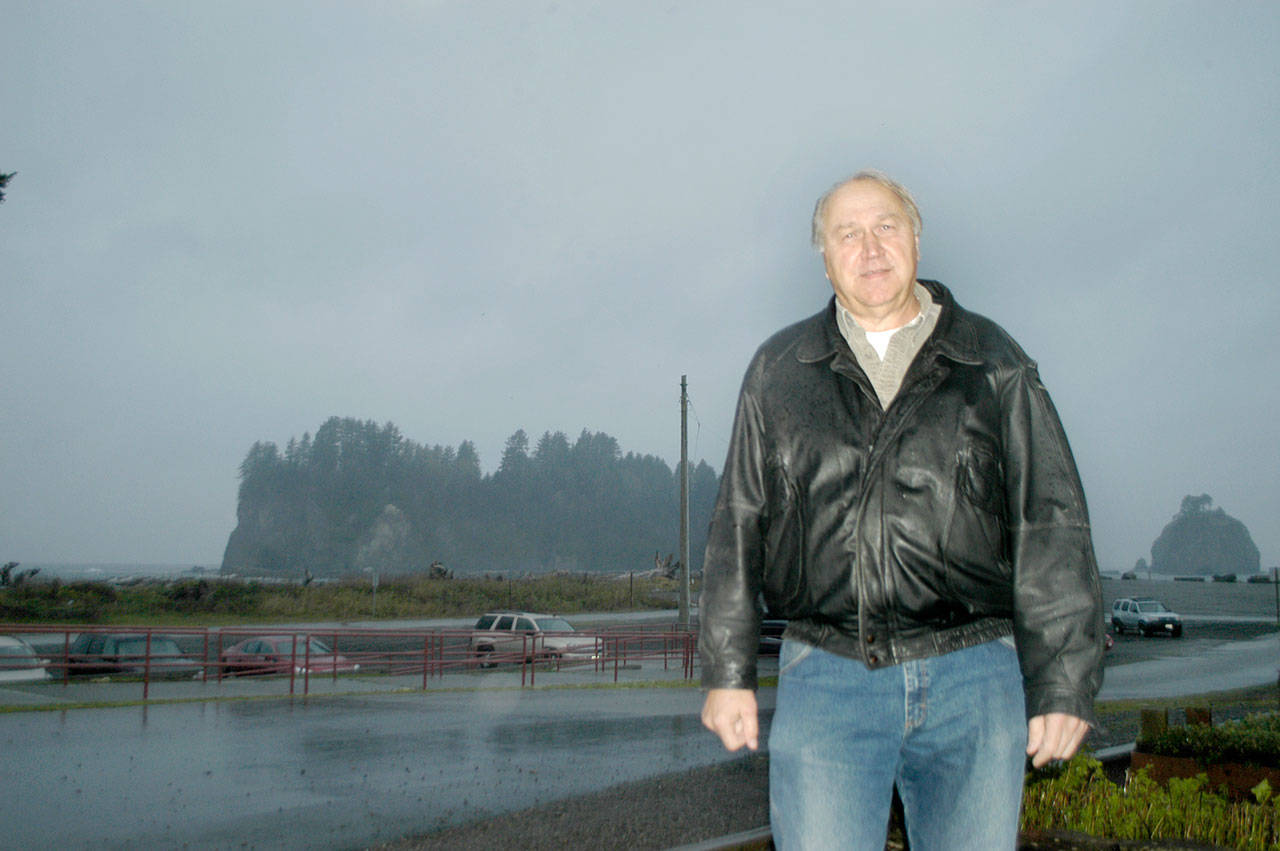
Larry Burtness, interim general manager of the Quileute Tribe, stands near the exit of the Quileute Tribal School in La Push. The tribe received a federal grant to build a new school on higher ground out of danger from tsunamis and winter storms. (Rob Ollikainen/Peninsula Daily News)
It is between the Third Beach trailhead and the A-Ka-Lat Center, where students are bused for physical education classes because the existing school lacks a gymnasium.
The new school will have a full-sized gymnasium, library, cafeteria, science and technology labs, language and cultural classrooms, performing arts stage, vocational shop for woodworking and natural grass athletic fields.
“The design of the school is state of the art,” Burtness said in a Tuesday interview in La Push.
Elementary, middle-school and high-school students will be housed in separate wings that surround a central courtyard.
“We’re not building an elementary school or a middle school or a high school,” Devine said in a Thursday telephone interview.
“We’re building all three.”
As more funding becomes available in future years and decades, the tribe will add to the site a tribal services campus, retail center and housing for up to 280 families.
”We have a plan and a vision for what it’s going to look like, but the implementation depends on money,” Burtness said.
The relocation of the Quileute Tribal School was one of two projects funded in a 75-tribe, nationwide competition for BIA grants.
Blackwater Community School in the Gila River Indian Community in Coolidge, Ariz., received the other grant, a $30.1 million allocation.
Devine said the recent funding was a “really big milestone” for the Quileute Tribe and the entire community.
She and others credited Quileute tribal councils past and present for their longstanding commitment to the Move to Higher Ground project.
“I think the reason it’s all coming together now is because it’s been a focus of all councils to prioritize the students,” Devine said.
Federal legislation that passed in 2012 transferred 785 acres of Olympic National Park land, including the Move to Higher Ground site, back to the Quileute Tribe.
The tribe is now in negotiations with an owners representative firm to provide day-to-day oversight of the project’s scope, budget and schedule.
A 40-acre portion of the higher ground site on the northeast side of La Push Road is being harvested for a future tribal services campus, which will include an elders center, law and justice facilities, cultural center and possibly a health clinic.
Revenue from the timber sales is being used to clear stumps and to prepare the school site for construction.
About $30 million of the total project cost is for vertical construction. Additional funding is needed for architectural design and infrastructure like roads, power and water, Burtness said.
With a current enrollment of 100, the Quileute Tribal School has grown by 60 percent in the past year, Jacobson said.
The school recently became a State-Tribal Education Compact (STEC) school, which allowed it to add staff and expand its curriculum, Burtness said.
”When the school is constructed, it will be able to house more than double what the historical population of the school has been, and there’s every indication from the demographics that we’ll have that kind of enrollment in the very near future,” Burtness said.
The new school will be designed to withstand 85 mph winds and 100 inches of annual rainfall. Stainless steel will be used in construction to prevent corrosion and rust from the salty air.
”It’s a really significant issue to build a school that is comfortable and sustainable long term in this kind of environment,” Burtness said.
“That site is just right up the hill from Second Beach, actually. It’s not very far from the ocean.”
Jacobson said the cost of school construction is about $500 per square foot statewide. He added that La Push’s remote location adds to the cost.
“You’ve got additional travel costs and fuel costs for getting stuff here,” Jacobson said.
“And then when you’re looking at construction, where do the workers stay? They’re either going to have to stay in Forks or Port Angeles or Sequim, so that adds to those costs.”
Burtness said the energy-efficient design will reduce the school’s long-term operational costs.
The existing Quileute Tribal School was built in 1992 about 20 feet above sea level.
Scientists predict a magnitude-9.0 earthquake will again occur on the Cascadia Subduction Zone at some time and send a 40-foot tsunami crashing into low-lying coastal areas. The last Cascadia event occurred on Jan. 26, 1700.
“The effort here in the school construction is to get the kids out of harm’s way and making sure that we don’t have an unnecessary exposure to risk for a really high-risk population,” Burtness said.
Heavy surf during winter storms is another reason for the move to higher ground.
Charlotte Penn, a Quileute school board member and Quileute tribal member, said a storm flooded the school grounds last winter.
“It was really scary and intense,” Penn said.
“Living here in Ground Zero, it’s scary that our kids have to be here. And the teachers and the administration, they have to be here.
“When these storms hit, that’s the only thing that we worry about, our school.”
Penn added that the Move to Higher Ground project “couldn’t happen any faster.”
Burtness said the tribe will look for other uses for the existing school building when the students move into their new campus.
“I’m just thankful that the Tribal Council, the school board, staff and community have all been able to work together to pull this off,” said Michelle Black, school board treasurer.
“Without that cooperation between the entities, it wouldn’t happen.”
________
Reporter Rob Ollikainen can be reached at 360-452-2345, ext. 56450, or at rollikainen@peninsuladailynews.com.
