
Peninsula Daily News and news services
PORT ANGELES — High levels of mercury have been found in fish from a lake in Olympic National Park and in remote areas of other Western national parks, proving that even the most isolated lakes and streams in the U.S. aren’t immune to mercury pollution.
The finding was included in a recently published study by the U.S. Geological Survey and National Park Service.
But overall, the report had fairly good news for sport anglers.
Researchers said that most fish they caught had “acceptable” mercury concentrations below the U.S. Environmental Protection Agency’s fish tissue criterion for safe human consumption.
But 4 percent exceeded healthy levels — including those from one of five lakes sampled in Olympic where mercury, a cumulative neurotoxin that can cause brain damage, approached levels unsafe for humans and fish-eating birds.
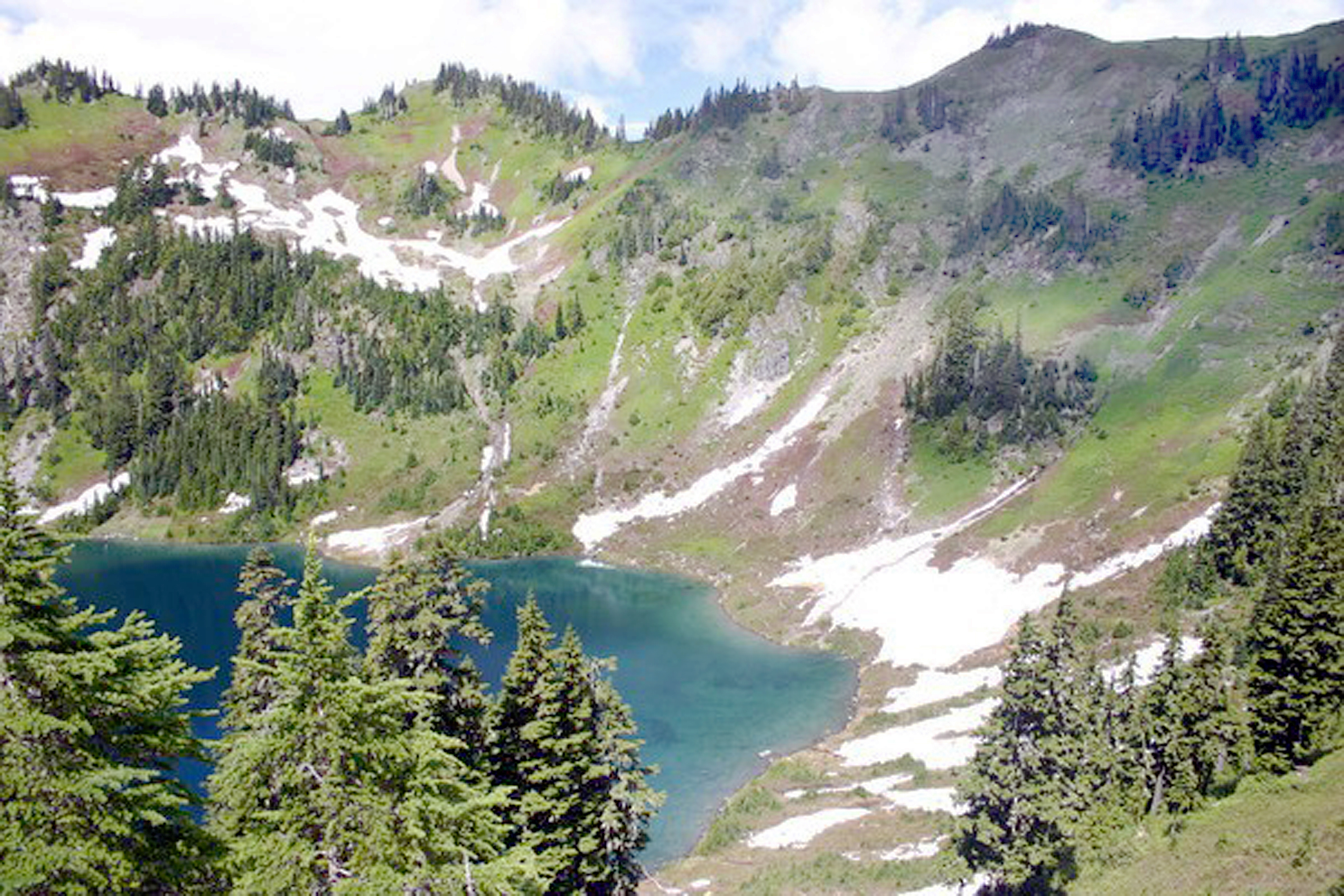
Hoh Lake was the only spot sampled in Washington’s three national parks — Olympic, Mount Rainier and North Cascades — where the study found fish “are likely to approach or exceed the Environmental Protection Agency criterion for protection of human health” and for “reproductive impairment” of fish-eating birds.
The Geological Survey and National Park Service don’t regulate health guidelines, but they are working with officials in Washington and the nine other states studied on possible fish consumption advisories.
Western parks were selected because of the significant role atmospheric mercury plays in remote places, and the lack of broad-scale assessments on mercury in fish in remote areas of the West, said Colleen Flanagan Pritz, a Park Service ecologist in Denver and coauthor of the study.
While previous studies documented mercury at the Olympic and Mount Rainier parks and other places in the West, this latest study “is a wake-up call,” Flanagan Pritz said.
“We need to see fewer contaminants in park ecosystems, especially contaminants like mercury where concentrations in fish challenge the very mission of the national parks to leave wild life unimpaired for future generations.”
Olympic National Park fish were sampled from five lakes — Gladys, Hagen, Hoh, Sun Up and Upper Lena lakes.
Researchers took samples from rainbow, cutthroat and brook trout.
Samples from the five lakes showed mercury concentrations averaging 85 nanograms per gram wet weight, slightly higher than the mean for the study.
Size-adjusted concentrations at Hoh Lake were 253 ng/g ww. The EPA’s human risk threshold is 300 ng/g ww.
At the low end of the spectrum was Gladys Lake, with a concentration of 71.5 ng/g ww.
Hagen was 109.1 ng/g ww; Sun Up, 99.4 ng/g ww; Upper Lena, 81.1 ng/g ww.
The National Park Service has blamed the Centralia Big Hanaford power plant in Lewis County, 55 miles from the southern borders of Olympic National Park, for mercury emissions as well as causing serious haze in the park.
It is a major coal-fired power plant supplemented with newer natural-gas-fired units.
Concerned about emissions of nitrogen oxide, particulate matter, mercury and sulfur dioxide, state and federal regulators in early 2011 struck a deal with the plant’s owners that will result in both coal boilers being shut down by 2025.
Mercury is also believed to arrive in Washington state from pollution blown across the Pacific Ocean from coal-fired industries in China.
In two Alaskan parks, the average level of mercury in fish found bypassed the federal standard for human consumption.
In addition to Hoh Lake, the amounts of mercury also exceeded healthy levels at parks in California, Colorado and Wyoming, the study found.
Generally, the older and larger the fish, the more mercury they contain.
The fish study was the first of its kind to incorporate information from remote places at 21 national parks in 10 western states.
From 2008-2012, researchers sampled 1,486 fish from 16 species from 86 individual sites in the parks.
High mercury concentrations in birds, mammals and fish can result in reduced foraging efficiency, survival, and reproductive success.
Mercury concentrations in fish exceeded the most conservative fish toxicity benchmark at 15 percent of all sites, and levels exceeded the most sensitive health benchmark for fish-eating birds at 52 percent of all sites.
There were three sites in sampled in North Cascades National Park.
Results showed the mean mercury concentration below the average of all fish sampled in the study.
After standardizing the fish to 200 mm in length, the mean mercury concentration was 73.3 nanograms per gram wet weight.
At Mount Rainier, fish were sampled at 17 sites.
The average mercury concentration was 71.5 ng/g ww, similar to the studywide mean for all the fish in the study.
When adjusted to the 200 mm standardized size, concentrations ranged from 8.5-193.2 ng/g ww.
That large variation “emphasizes the need to sample from multiple locations in order to accurately characterize mercury risk to park resources as a whole,” the report said.
Among the most widespread contaminants in the world, mercury is distributed globally from natural sources such as volcanic eruptions and from human sources such as burning fossil fuels in power plants.
Mercury is distributed at local or regional scales as a result of current and historic mining activities, the report said. These human activities have increased levels of atmospheric mercury at least threefold during the past 150 years, the researchers wrote.
Mercury, whether naturally occurring or in pollution, easily enters the food chain.
According to the Centers for Disease Control and Prevention, exposure to high levels of mercury in humans can damage the brain, kidneys and a developing fetus. Pregnant women and young children are particularly sensitive to mercury.
In birds that eat fish, the effects of mercury can range from reduced nest success rates – a bird might not return to a nest to incubate its eggs – and reduced ability to forage.
In fish, there are levels where changes in behavior are noticed, while higher levels could be lethal.
The full U.S. Geological Survey and National Park Service report is available at http://tinyurl.com/natparkfish.
