
EDITOR’S NOTE — See related story today, “Where to see the gray whales — good viewing sites along North Olympic Peninsula’s Pacific coast” — https://giftsnap.shop/article/20140406/NEWS/304069974
By DIANE SCHOSTAK
Amazing.
I just checked the North Olympic Peninsula Visitor Bureau Facebook page, and there it is:
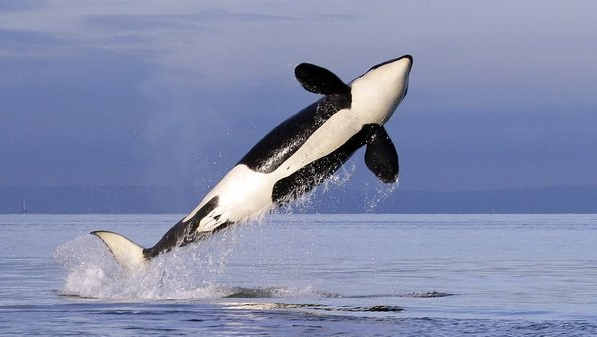
The reach from a recent post of orca whales jumping out of the water was nearly 130,000.
Nearly 3,000 “likes” and 1,400 “shares” brings the numbers up because so many see the photo in their news feeds and in their friends’ activity.
I had a chance recently to visit with a local whale enthusiast who enlightened me on just how amazing the Olympic Peninsula is for whale watching.
I learned that the Olympic Peninsula is truly the best spot in the Northwest to watch a variety of whales from shore or boat.
Let me share what I’ve learned.
Gray whales are our day-by-day whale on the shores along the Strait of Juan de Fuca and outer coast.
They hug the coastline all the way from Mexico on their way north, and a genetically distinct band will peel off from the main route heading to Alaska and turn right into the Strait, where they feed and forage for the summer season or, if they are not calving, perhaps all year.
Humpback whales winter near Hawaii, where they have their young and then head for the Pacific Northwest and northern waters.
Again, a distinct group stays near the outer coast of the Olympic Peninsula and in the Strait all summer and into the fall.
We don’t see them as often from shore because they need deeper water and feed on small fish and krill in the water column.
Then, there are the minke whales, a very fast, smaller whale that not much is known about — yet.
Finally, there are the orcas, about which we have a lot of information.
It is practically common knowledge that there are three resident pods in Puget Sound: the J, K and L pods that are individually named and on which there are lots of generational data.
They are social, use echo location and sound to locate their favorite food — salmon.
In addition, transient orcas come through the region in smaller family groups. These silent hunters seek after seals.
So what does all this mean for the Olympic Peninsula?
Yes, it is a very cool thing, but these whales are adding to our tourism product in a big way — and we can do more to grow it!
Seeing these wondrous and mysterious creatures from shore or boat is a memorable, bucket-worthy experience.
Memorable, bucket-worthy experiences inspire sharing and bragging, which lead to more travel — all of which leads to spending.
Spending equals economics.
I get a thrill when I hear the squeal of a person seeing a whale. But I also get a thrill when small-resort owners tell me they have had the “best year ever.”
As my friend pointed out, we have cultural assets in public art around whales. We are a key player in the Whale Trail
(whaletrail.org), with 15 sites to view whales from shore.
The Makah are an ancient whaling society, as are most coastal tribes, and the Quileute people will host their annual Welcome the Whale ceremony this Friday.
We have three marine life centers on the Peninsula and the Olympic Coast National Marine Sanctuary.
We have many other whale assets here on the Olympic Peninsula.
One can take a whale watching charter into the San Juans from Port Townsend to see the resident orcas all summer, with trips to see gray whales and the visiting orcas, too (www.pugetsoundexpress.com).
In August, Port Angeles will welcome an established whale watching company that will offer daily tours to see humpbacks in the Strait (orcawhales.com).
It is not unusual to see whales and sea mammals from the MV Coho, the Port Angeles-Victoria ferry.
In the spring, the migration is fun to watch off the coast, particularly at LaPush, where the grays tarry and feed with their young.
Cape Flattery is a hot spot to watch the grays and other sea mammals.
It is time we planted our flag firmly in regard to whale watching. How do we do that?
We talk about it, we embrace it, we tell the story, and we look for opportunities to share information and expand awareness.
Tell your customers, repeat their stories and share their pictures on your sites, pages, in your brochures.
We have the whales. We just need to embrace, share and promote the Olympic Peninsula whale experience.
________
Diane Schostak is executive director of the North Olympic Peninsula Visitor Bureau.
She can be reached via www.olympicpeninsula.org/contact.
